

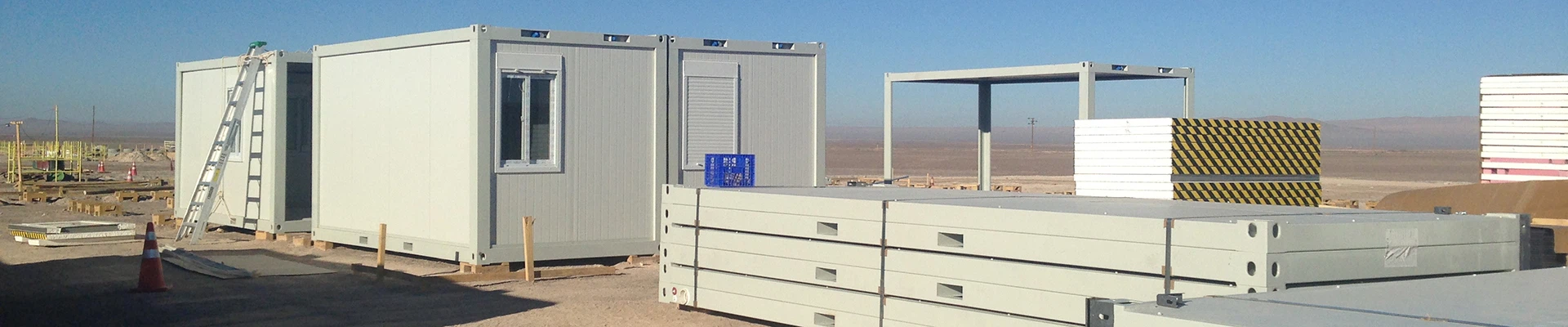


Mining Camp Dormitory Design Scheme (Based On CBC Flatpack Container House Modules)
This scheme is fully designed based on the CBC flatpack container house product modules, leveraging the product's advantages of flat-pack transportation, rapid assembly, and structural durability to meet the special needs of mining camp accommodation. The core specifications and structural features of the modules are consistent with CBC's standard flatpack container house series, ensuring product reliability and supply stability.
Product Introduction
Mining Camp Dormitory Design Scheme (Based on CBC Flatpack Container House Modules)
1. Basic Design Parameters
This scheme is fully designed based on the CBC flatpack container house product modules, leveraging the product's advantages of flat-pack transportation, rapid assembly, and structural durability to meet the special needs of mining camp accommodation. The core specifications and structural features of the modules are consistent with CBC's standard flatpack container house series, ensuring product reliability and supply stability.
1.1 Accommodation Requirement
Management Staff: 50 single rooms (1 person/room)
Workers: 600 persons, 2 persons/room, totaling 300 double rooms
Total Rooms: 50 + 300 = 350 rooms (each room is one container module)
1.2 Module Specifications
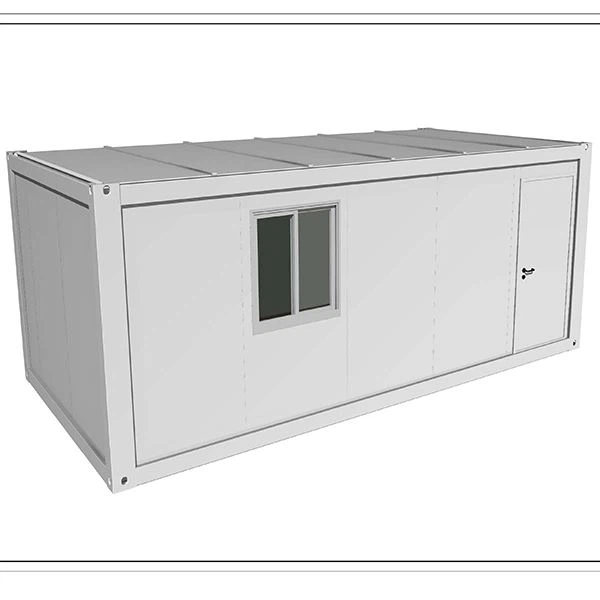
External Dimensions: Width 2.438m, Length 6m, Height 2.7m (consistent with CBC flatpack container house standard module dimensions)
Structure: Adopts CBC flatpack container house's integrated prefabricated system, including integrated roof, prefabricated load-bearing floor, 4 high-strength steel columns, and 14 pieces of 75mm thick flame-retardant sandwich panels (5 on long sides, 2 on short sides per module). The prefabricated doors and windows are factory-installed in panels according to CBC's strict quality control standards, ensuring airtightness and dust-proof performance.
Connection Mode: Utilizes CBC flatpack container house's dedicated long-side connection system-each module is firmly connected by its 6m long sides through high-strength corrosion-resistant bolts matching CBC's product specifications. Doors are set on the 2.438m short side of each module, with two parallel rows of modules arranged door-to-door, and a central corridor reserved between them. This layout is optimized based on CBC flatpack modules' assembly characteristics, maximizing space utilization while ensuring structural stability.
1.3 Building Limitation
Maximum 3 floors; Light steel roof; Central corridor, stairs and walkways included.
2. Overall Layout & Dimensions
2.1 Layout Principle
The building has 3 floors in total, adopting a two-row door-to-door layout optimized for CBC flatpack container house modules, which is highly compatible with the intensive accommodation demand of mining camps. Each CBC flatpack module is connected by its long side (6m side) to form continuous rows, leveraging the product's inherent structural rigidity to enhance overall stability against frequent wind and dust disturbances in mining areas. The door of each CBC module is opened on the short side (2.438m side), directly facing the central corridor-this design not only aligns with the module's structural layout but also minimizes exposure of door gaps to mining dust, reducing cleaning costs. To meet mining camp management needs, the building is divided into two independent functional areas using CBC modules: management single rooms and worker double rooms, arranged by floors with separate stair access. This separation is achievable through the flexible combination of CBC flatpack modules, avoiding personnel mixing and facilitating safety control, which is fully adapted to mining project management modes.
2.2 Room Quantity Allocation per Floor
Total 350 rooms, 3 floors → Average 117 rooms/floor (116 rooms for 2 floors, 118 rooms for 1 floor, balanced distribution).
Two rows layout → 58-59 rooms per row per floor (58 rooms/row for 2 floors, 59 rooms/row for 1 floor).
2.3 Overall External Dimensions
Length (L): Determined by the number of modules per row (long-side connection). Each module length = 2.438m; 59 modules per row → Total length = 59 × 2.438m = 143.842m (considering 20mm gap between modules for connection, total gap = 58 × 0.02m = 1.16m) → Final length = 143.842m + 1.16m = 145m.
Width (W): Two rows of modules + central corridor. Single module width = 6m; Central corridor width = 1.8m (standard for pedestrian passage). Total width = 6m × 2 + 1.8m = 13.8m.
Height (H): 3 floors of modules + light steel roof. Each module height = 2.7m; 3 floors height = 3 × 2.7m = 8.1m; Light steel roof height (ridge height) = 1.5m (gable roof, slope 1:5) → Total building height = 8.1m + 1.5m = 9.6m.
Summary of Overall Dimensions: Length 145m × Width 13.8m × Height 9.6m.

3. Material List & Quantity Calculation
3.1 Container Modules (350 units)
|
Material Name |
Specification |
Quantity per Module |
Total Quantity |
Remarks |
|||||||||||||||||||||||||||||||||||
|
Integrated Roof |
Matching module size, 75mm thick sandwich panel |
1 set |
350 sets |
Prefabricated with module |
|||||||||||||||||||||||||||||||||||
|
Prefabricated Floor |
Matching module size, load-bearing structure |
1 set |
350 sets |
Integrated with module frame |
|||||||||||||||||||||||||||||||||||
|
Steel Columns |
Customized, 160×160×2.5mm, height 2.7m |
4 pieces |
1400 pieces |
Anti-corrosion treated |
|||||||||||||||||||||||||||||||||||
|
Sandwich Wall Panels |
75mm thick, long side (1.15m×2.7m) |
10 pieces |
3500 pieces |
With prefabricated doors/windows |
|||||||||||||||||||||||||||||||||||
|
Sandwich Wall Panels |
75mm thick, short side (1.15.438m×2.7m) |
4 pieces |
1400 pieces |
Door on one short side panel |
|||||||||||||||||||||||||||||||||||
|
Connecting Hardware |
Bolts, nuts, gaskets |
20 sets |
|
Roof type: Gable roof, optimized for mining areas with frequent wind and dust, and matched with CBC flatpack container house's top structure. Coverage area: Building length × building width = 145m × 13.8m ≈ 2001㎡; Additional 0.5m eave overhang on each side prevents rainwater backflow and dust accumulation. Considering mining area conditions, the roof structure is reinforced to match CBC modules' load-bearing capacity, with roof panels treated with anti-corrosion and anti-dust coatings consistent with CBC's product surface treatment standards, reducing dust adhesion and extending service life. Anti-falling rock protection nets are added under eaves, compatible with CBC modules' exterior structure without damaging the original integrity. |
3.2 Light Steel Roof
Roof type: Gable roof, optimized for mining areas with frequent wind and dust; Coverage area: Building length × building width = 145m × 13.8m ≈ 2001㎡; Additional eave overhang: 0.5m on each side to prevent rainwater backflow and reduce dust accumulation on the corridor. Considering the heavy dust and potential falling rocks in mining areas, the roof structure is reinforced to improve impact resistance, and the surface of roof panels is treated with anti-corrosion and anti-dust coatings to reduce dust adhesion and extend service life.
|
Material Name |
Specification |
Quantity |
Remarks |
|
Light Steel Purlin |
C profile, C120×50×20×2.5mm, spacing 1.2m |
297 pieces (length 7.676m/piece) |
Total length: 297×7.676m≈2280.77m |
|
Light Steel Ridge Beam |
H profile, H150×100×6×8mm |
1 piece (length 145m) |
Supports roof slope |
|
Roof Panel |
Color steel sandwich panel, 75mm thick, 1.0mm outer sheet |
2500㎡ |
Including eave overhang |
|
Roof Waterproofing Material |
Butyl waterproof tape, sealant |
100 rolls (tape) + 50 buckets (sealant) |
For panel joints and ridges |
|
Roof Fasteners |
Self-tapping screws with washers |
50,000 pieces |
Fix roof panels to purlins |
3.3 Central Corridor & Walkways
Corridor specification: Width 1.8m (sufficient for two-way pedestrian flow and transportation of daily necessities/equipment in mining camps), length 145m, 3 floors; Walkway floor: Galvanized steel grating (priority for mining areas) with anti-slip convex points-this material not only resists corrosion from mining wastewater and chemical substances but also allows dust and rainwater to fall through, avoiding accumulation and reducing the risk of slipping. The corridor handrail is heightened to 1.2m (higher than the standard 1.1m) to adapt to the scenario where workers carry tools and materials, enhancing safety.
|
Material Name |
Specification |
Quantity |
Remarks |
|
Corridor Frame Steel |
Square steel, 80×80×3mm |
435m (3 floors × 145m) |
Supports corridor structure |
|
Corridor Floor Panel |
Cement fiber board, 12mm thick |
783㎡ (3×145×1.8) |
Anti-slip, wear-resistant |
|
Corridor Handrail |
Round steel, φ50×2.5mm, height 1.1m |
290m (2 sides × 145m) |
3 floors, connected to stairs |
|
Handrail Posts |
Square steel, 60×60×2.5mm, spacing 1.5m |
474 pieces (3 floors × 2 sides × 79 pieces) |
Fix handrails |
3.4 Stairs
Design: 4 sets of external stairs (evenly distributed along the building length, 1 set every 29m) to ensure rapid evacuation in case of mining area emergencies (such as dust explosions, gas leaks). Each set: 3 floors, 2 flights per floor, step width 1.2m (accommodating workers wearing work boots and carrying tools), step height 150mm (reducing fatigue from frequent up and down), step depth 300mm. Stairs are equipped with anti-collision guards on both sides to prevent injury from heavy tools, and the base is fixed with reinforced expansion bolts to resist ground settlement caused by mining activities.
|
Material Name |
Specification |
Quantity |
Remarks |
|
Stair Frame Steel |
Square steel, 100×100×3mm |
96m (4 sets × 24m/set) |
Stair stringers and platforms |
|
Stair Steps |
Galvanized steel grating, 30mm thick |
48㎡ (4 sets × 12㎡/set) |
Anti-slip, corrosion-resistant |
|
Stair Handrail |
Round steel, φ50×2.5mm, height 1.1m |
48m (4 sets × 12m/set) |
Matching corridor handrail |
|
Stair Posts |
Square steel, 60×60×2.5mm |
32 pieces (4 sets × 8 pieces/set) |
Fix stair handrails |
3.5 Auxiliary Materials
|
Material Name |
Specification |
Quantity |
Remarks |
|
Anti-corrosion Paint |
Industrial anti-rust paint |
100 buckets (20kg/bucket) |
For steel structures |
|
Expansion Bolts |
M12, M14 |
2000 pieces |
Fix structure to foundation |
|
Sealing Strip |
EPDM rubber strip |
500m |
Module joints, window gaps |
4. Structural Design Notes
Module Connection & Anti-Dust: Adopt CBC flatpack container house's dedicated high-strength corrosion-resistant bolts to connect adjacent modules' long sides, ensuring consistency with the product's assembly system. Joints are sealed with mining-grade EPDM rubber strips compatible with CBC modules (wear-resistant and dust-proof) to block mining dust. Upper and lower modules are reinforced with steel plates matching CBC's structural design and anchored to the foundation, resisting deformation from mining-induced ground vibration without compromising the module's original structure.
Foundation Requirement for Mining Areas: Use reinforced strip foundation under the module rows and stair positions, with foundation depth ≥ 1.2m (deeper than the standard 0.8m) to adapt to the loose soil and potential settlement in mining areas. Add gravel cushion and anti-seepage membrane at the bottom of the foundation to prevent erosion from mining wastewater and avoid foundation damage.
Roof Load-Bearing for Mining Environments: The light steel roof is designed to bear snow load (≥0.7kN/㎡) and wind load (≥0.9kN/㎡), higher than the standard value, to cope with the harsh weather (strong wind, heavy snow) in remote mining areas. Add anti-falling rock protection nets under the eaves to prevent damage to the roof and modules from falling rocks during mining operations.
Fire Protection for Mining Camps: The sandwich panels shall be A-level flame-retardant type with fire-resistant core material (mineral wool) to meet the fire protection requirements of dormitories in mining areas with flammable dust and gases. Equip each floor corridor with fire hydrants and fire extinguishers (every 30m) that are resistant to dust and corrosion, and pre-embed fire alarm pipelines in the module walls to connect to the mining camp's central fire control system.
Ventilation & Dust-Proof Lighting: Utilize prefabricated windows on the long-side panels with dust-proof screens (detachable for cleaning) to realize natural ventilation while blocking mining dust. Install explosion-proof exhaust fans in toilets of each module (suitable for mining areas with flammable gases) and explosion-proof LED lights in rooms and corridors, which are dust-proof, shock-proof and energy-saving, adapting to the harsh electrical environment of mining camps.
5. Summary
The mining camp dormitory covers an area of approximately 2001㎡, with overall dimensions 145m (L) × 13.8m (W) × 9.6m (H), tailored to mining areas' needs and designed based on CBC flatpack container house modules. It consists of 350 CBC flatpack modules (long-side connected to enhance vibration resistance), 4 sets of explosion-proof anti-slip external stairs, a dust-proof central corridor, and a reinforced light steel roof matched with CBC modules. The door-on-short-side and door-to-door corridor design leverages CBC modules' structural advantages, optimizing flow, minimizing dust intrusion, and facilitating management-key for mining camps. The material list prioritizes CBC's standard components and compatible accessories (e.g., CBC flame-retardant panels, dedicated connecting hardware) and mining-adapted enhancements, coping with dust, vibration, and safety hazards. The scheme complies with the 3-floor limit, meets separate accommodation needs, and fully exerts CBC flatpack container house's advantages in rapid construction, durability, and flexibility for mining camp scenarios.

6. Application Scope & Main Markets
6.1 Application Scope
The container building, designed with CBC flatpack container house modules (long-side connection, short-side door, door-to-door corridor), integrates CBC's product advantages of flexible combination, rapid assembly, and durability. It is particularly optimized for mining camp scenarios, with core applicable scenarios closely linked to mining operations and CBC's product positioning:
Metal/Coal Mining Camp Housing: As the core scenario, this scheme relies on CBC flatpack container house modules to adapt to surface/underground mining camps. CBC modules' long-side connection enhances stability against mining vibration and strong wind, while their flat-pack design reduces transportation costs for remote mining areas-CBC's modules can be flattened for bulk transport, reducing logistics volume by over 60% compared to traditional containers, then quickly assembled on-site via CBC's dedicated tools. The short-side door and corridor design minimizes dust intrusion, and each CBC module has a built-in toilet (standard for CBC's residential series), improving workers' living conditions. CBC's modules are recyclable, enabling disassembly and relocation with mining site transfers, reducing enterprises' long-term costs-aligning with mining projects' mobility.
Infrastructure Project Temporary Buildings: For large-scale infrastructure projects such as highways, railways, subways, bridges and water conservancy projects, this type of building can be used as temporary dormitories, offices, meeting rooms and canteens. Its modular characteristics allow for rapid assembly and disassembly, matching the phased construction rhythm of the projects.
Field Operation and Exploration Accommodation: It is applicable to field operation scenarios such as oil, natural gas, geological exploration and forestry investigation. The building is resistant to wind, rain and corrosion, and can be transported to remote areas for on-site installation, meeting the living and working needs of field teams.
Temporary Relief and Emergency Housing: In the event of natural disasters such as earthquakes, floods and mudslides, this modular building can be quickly transported to the disaster area for assembly, providing safe and comfortable temporary housing for the affected people. It can also be used as temporary medical points and command posts.
Community and Commercial Supporting Temporary Space: It can be transformed into community service stations, temporary study rooms, community activity rooms and mobile commercial stalls. The flexible layout can adapt to the limited space of the community and meet the diversified supporting needs of residents.
6.2 Main Markets
Driven by the demand for efficient, environmentally friendly and temporary buildings, the main markets of this type of container building are concentrated in the following fields:
Construction and Infrastructure Industry: This is the core market. Construction enterprises, infrastructure contractors and engineering project management companies have a stable demand for temporary accommodation and office space. The characteristics of low cost, rapid construction and recyclability of container buildings are highly consistent with the cost control and construction schedule requirements of the industry. Many professional container service companies provide one-stop services including design, manufacturing, transportation, leasing and recycling for this market.
Resource Development Industry (Mining Core Segment): Mining projects are CBC flatpack container house's key target market, and this scheme is a typical application of CBC products in this field. Mining areas' harsh environments (dust, temperature differences, vibration) are addressed by CBC's product features: corrosion-resistant steel structures, flame-retardant panels, and rigid frames. CBC's flatpack modules allow flexible room quantity adjustment based on worker shifts, with rapid assembly (2-3 weeks for full deployment via CBC's professional team and standardized process). Mining enterprises favor CBC products for reliable quality, mature supply chain, and customized mining adaptations (e.g., anti-dust seals, explosion-proof accessories). The separate management-worker area design uses CBC's modular combination, aligning with mining safety management and enhancing CBC's product competitiveness in the mining market.
Government and Public Welfare Fields: Government departments in charge of emergency management, civil affairs and urban construction are important customers. They purchase or lease such buildings as emergency reserve housing, temporary community service facilities and urban renovation supporting space. In public welfare projects such as disaster relief and poverty alleviation, this type of building can play a role in rapid support.
Commercial and Cultural Creative Fields: With the rise of container building renovation, it has gradually entered the commercial and cultural creative markets. It can be transformed into mobile cafes, fashion stores, exhibition pavilions and cultural and creative parks. The unique appearance and flexible combination mode meet the personalized needs of commercial operators and cultural creative projects, and open up a new market segment.
Overseas Emerging Markets: In emerging economies with booming infrastructure construction, such as Southeast Asia, Africa and Latin America, there is a strong demand for low-cost and efficient temporary buildings. The mature container building technology and service system can meet the construction needs of these regions, and the export market has broad development prospects.
In general, this scheme is a mining-customized application of CBC flatpack container house products, integrating the brand's core advantages in flat-pack transportation, rapid assembly, and structural durability with mining camps' special needs for dust prevention, vibration resistance, and management efficiency. CBC's flatpack container house products provide a reliable foundation for the scheme, ensuring construction efficiency, operational safety, and cost control. As mining enterprises upgrade workers' living conditions and safety standards, CBC flatpack container house's demand in the mining industry will grow steadily. The product can be further customized (e.g., coal mine explosion-proof upgrades, desert heat insulation) based on mining types, deepening CBC's market penetration in the resource development field and highlighting the brand's professional capabilities in temporary building solutions.
You Might Also Like


Send Inquiry
