

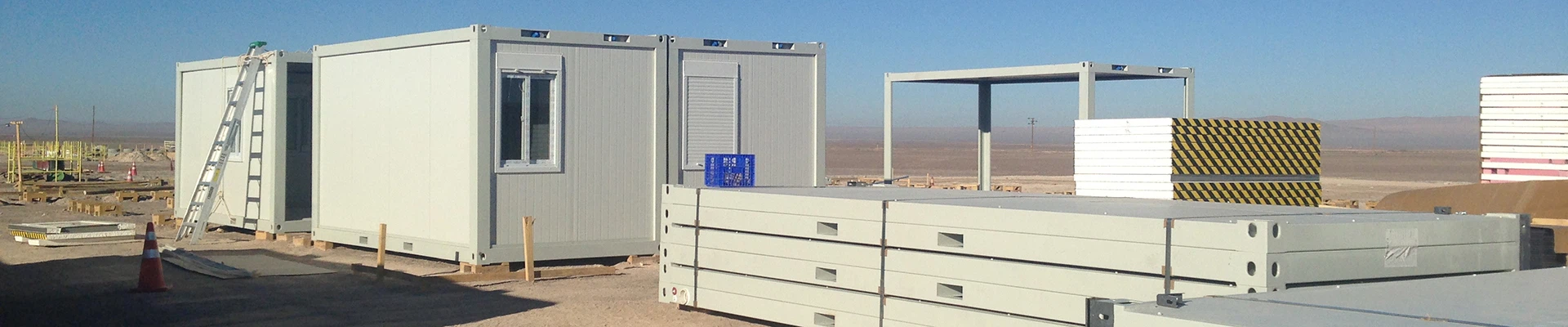


CBC Steel Structure Office Building Design For Port Moresby, Papua New Guinea
The main structural design of an office building using the CBC steel structure building system for a client in Port Moresby, Papua New Guinea. It includes detailed structural design parameters, structural analysis, and an analysis of the applicability of the design in the markets of the Philippines, Chile & Peru, Tonga, South Africa, and Indonesia, along with corresponding adjustment suggestions.
Product Introduction
CBC Steel Structure Office Building Design for Port Moresby, Papua New Guinea - Structural Design, Analysis and Market Applicability
This document presents the main structural design of an office building using the CBC steel structure building system for a client in Port Moresby, Papua New Guinea, in the form of Q&A. It includes detailed structural design parameters, structural analysis, and an analysis of the applicability of the design in the markets of the Philippines, Chile & Peru, Tonga, South Africa, and Indonesia, along with corresponding adjustment suggestions.

1. General Design and Structural Parameters
Q1: What are the basic overall parameters of the office building designed for the Port Moresby client?
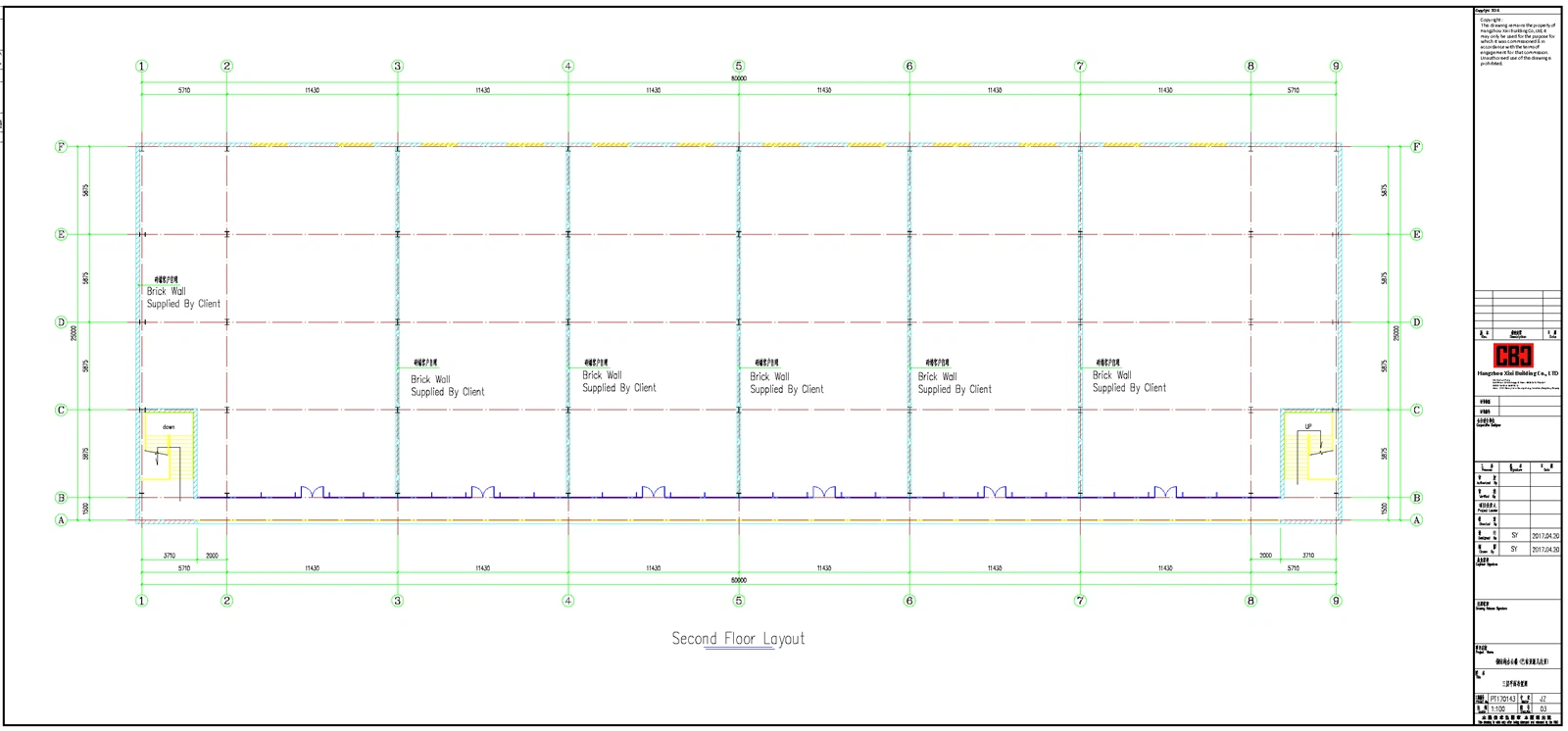
A1: The office building adopts the CBC (Customized Building Company) steel structure building system, with the following basic overall parameters: Total length of the building is 80 meters, divided into 8 sections with the span combination of 5.71m + 11.43m + 11.43m + 11.43m + 11.43m + 11.43m + 11.43m + 5.71m. The two 5.71m-wide sections at both ends are allocated for stairs and toilets, while the middle 6 sections are independent office areas. The total width of the building is 25 meters, including a 1.5-meter-wide corridor on the south side. The height of each floor is 4 meters (specific number of floors can be adjusted according to client needs, with the structural design compatible with 3-5 floors). The building is equipped with 0.5-meter-wide eaves around it. The roof is a single-slope roof, the south wall is fully covered with glass curtain walls, the north wall (back of the building) is equipped with large glass windows, the floor deck adopts CBC 1mm steel deck with cast-in-place concrete, and all external and internal walls adopt local hollow bricks.
Q2: Why is the CBC steel structure building system selected for this office building design?
A2: The CBC steel structure building system is selected mainly based on the design requirements and local construction conditions in Port Moresby, with the following key reasons:
1. High structural efficiency: The CBC system integrates steel columns, composite beams and steel deck, which has the characteristics of light weight, high strength and good load-bearing capacity, and can effectively bear the load of cast-in-place concrete floor deck and hollow brick walls while reducing the self-weight of the structure;
2. Flexible space adaptability: The system's flexible node design can well adapt to the 8-section span combination (especially the special 5.71m span at both ends) and the functional division of stairs, toilets and independent offices, ensuring the integrity of the structure while meeting the space use requirements;
3. Construction efficiency: The prefabrication degree of CBC steel components is high, which can shorten the on-site construction cycle, adapting to the relatively tight construction schedule requirements in Port Moresby;
4. Compatibility with local materials: The system can be perfectly matched with local hollow bricks (walls) and cast-in-place concrete (floor deck), reducing the cost and difficulty of material transportation;
5. Durability: The galvanized treatment of steel components can improve corrosion resistance, adapting to the hot and humid marine climate in Port Moresby.

2. Detailed Structural Design
Q3: What is the design of the column grid and main steel components (columns, beams) of the office building?
A3: The column grid and main steel components are designed according to the span combination and functional requirements, specifically as follows: 1. Column grid layout: The column grid is arranged along the length direction (80m) according to the 8-section span, and along the width direction (25m) is divided into 3 spans: 1.5m (south corridor) + 22m (office area) + 1.5m (north side), with a column spacing of 5.71m or 11.43m along the length direction, ensuring that each independent office area and functional area (stairs, toilets) has a clear column grid boundary.
2. Steel columns: H-shaped steel columns are adopted, and the section size is adjusted according to the span and load: the column section in the 11.43m span area (middle office area) is H400×200×8×12, and the column section in the 5.71m span area (stairs and toilets at both ends) is H350×175×7×11 (the load is relatively small, so the section is appropriately reduced); the column height is 4m per floor, and the column feet are designed as fixed supports to enhance the lateral stiffness of the structure.
3. Steel beams: CBC composite beams are adopted, which are composed of steel beams and cast-in-place concrete slabs (combined with 1mm steel deck). The section size of the beams in the 11.43m span is H450×200×9×13, and the section size of the beams in the 5.71m span is H350×175×7×11; the beams in the corridor area (1.5m span) adopt H250×125×6×9; the beam-column connection nodes adopt rigid connections (core design of CBC system) to effectively transfer bending moment and shear force, ensuring structural stability.
Q4: What is the design of the floor deck, walls, eaves and single-slope roof?
A4: The design of each component is combined with functional requirements and structural safety, specifically:
1. Floor deck: CBC 1mm thick steel deck is adopted, with cast-in-place C30 concrete on it (total thickness of floor deck is 120mm), which can meet the office load requirement (≥2.5kN/m²); the steel deck is connected with composite beams through shear studs to realize the cooperative work of steel and concrete, improving the bearing capacity and stiffness of the floor.
2. Walls: All external and internal walls adopt local hollow bricks (thickness 200mm), which are connected with steel columns through wall connecting pieces (angle steel L50×50×5) to ensure the stability of the walls; the gap between the hollow brick walls and the steel structure is filled with thermal insulation and sound insulation materials to improve the thermal insulation and sound insulation performance of the office.
3. Eaves: The surrounding eaves are 0.5m wide, adopting steel purlins (C120×50×2.5) and color steel sheets (0.5mm thick); the eaves are connected with the roof beams and steel columns to form an integrated structure, which not only plays a role in waterproofing and sunshading but also enhances the overall aesthetics of the building.
4. Single-slope roof: The roof slope is designed as 5° (convenient for drainage), adopting steel purlins (C140×60×3.0) arranged at 1.2m intervals, and the roof panel adopts color steel sandwich panels (50mm thick, EPS core material) for good thermal insulation performance; the roof is inclined from south to north (the south side is higher, the north side is lower), which is compatible with the south glass curtain wall and north large glass windows, and the drainage system is arranged at the north eave to avoid rainwater accumulation.
Q5: What is the design of the stairs and toilets in the 5.71m span area at both ends?
A5: The stairs and toilets in the 5.71m span area at both ends are designed in combination with the CBC steel structure system to ensure safety and practicality:
1. Stairs: Reinforced concrete stairs are adopted, with a width of 1.2m, a step height of 150mm, and a step width of 300mm; the stair slab is supported on the CBC composite beams, and the stair handrail is made of galvanized steel pipes (φ50×3.0) connected with the stair slab and steel columns to ensure stability.
2. Toilets: The floor is made of CBC steel deck + cast-in-place concrete, and a waterproof layer (polyurethane waterproof coating, thickness 1.5mm) is laid on the surface to prevent water leakage; the toilet walls are local hollow bricks (thickness 100mm) for partition, and the toilet fixtures (sinks, toilets) are fixed on the concrete floor; the top of the toilet is equipped with exhaust fans, and the exhaust pipes are arranged along the steel columns to avoid affecting the appearance of the building.
3. Structural Analysis
Q6: What load calculations are considered in the structural design of the office building?
A6: Combined with the location of Port Moresby (hot and humid marine climate, moderate seismic activity, occasional typhoons) and the use of the office building, the following load calculations are considered in the structural design:
1. Dead load: Including the weight of steel structure components (columns, beams, steel deck), cast-in-place concrete floor, hollow brick walls, roof panels, eaves, stairs, toilets and other permanent loads;
2. Live load: Including the live load of the office area (≥2.5kN/m²), the live load of the corridor (≥3.0kN/m²), the live load of the stairs (≥3.5kN/m²), and the live load of the roof (≥0.5kN/m²);
3. Wind load: According to the local building code of Papua New Guinea, the basic wind pressure in Port Moresby is 0.75kPa, and the wind load is calculated according to the building height (4m per floor) and the shape coefficient (considering the influence of glass curtain walls and eaves), and wind-resistant measures (lateral bracings, rigid nodes) are taken to ensure structural stability;
4. Seismic load: Port Moresby is located in a moderate seismic zone, the seismic intensity is designed according to 7 degrees, and the good ductility and seismic performance of the CBC steel structure system are used to reduce the impact of earthquakes;
5. Other loads: Including the wind pressure load of the glass curtain wall and large glass windows, the thermal stress load caused by temperature changes (adapted by flexible nodes), and the load of maintenance personnel on the roof.
Q7: How to ensure the structural stability and safety of the office building?
A7: Multiple measures are adopted in the structural design to ensure the overall stability and safety of the building:
1. Lateral stiffness enhancement: The column feet are designed as fixed supports, and the beam-column connection nodes adopt rigid connections to form a stable frame system; horizontal bracings are set in the longitudinal and transverse directions of the building (arranged in the stairwells at both ends and the middle office area) to resist lateral wind load and seismic force.
2. Component strength guarantee: The section size of steel columns and beams is determined through strict load calculation and structural checking, ensuring that the bearing capacity, stiffness and stability of each component meet the design requirements; the steel components adopt Q355B grade steel, which has good mechanical properties.
3. Connection node safety: The rigid connection nodes of beam-columns and the connection nodes of steel components and non-steel components (hollow brick walls, steel deck, stairs) are designed in accordance with the CBC system specifications, and high-strength bolts and welding are used for connection to ensure firm and reliable nodes.
4. Adaptability to special loads: The glass curtain wall and large glass windows are equipped with anti-wind and anti-seismic connecting pieces to avoid damage under typhoons and earthquakes; the single-slope roof is designed with a reasonable slope and drainage system to prevent rainwater accumulation and roof collapse; the steel components are galvanized to resist corrosion in the hot and humid marine climate, extending the service life of the structure.
5. Floor stability: The cooperative work of CBC steel deck and cast-in-place concrete improves the stiffness and integrity of the floor, avoiding floor vibration and deformation during use.
Q8: What are the key points of structural design for the glass curtain wall and large glass windows?
A8: The glass curtain wall (south wall) and large glass windows (north wall) are key components affecting the structural safety and use effect of the building, and their structural design focuses on the following points:
1. Connection design: The glass curtain wall is connected with the steel columns and beams through aluminum alloy profiles and high-strength bolts, and the connection nodes are designed as flexible connections to adapt to the deformation of the steel structure under wind load and seismic load, avoiding glass breakage; the large glass windows are fixed on the steel frames (welded on the steel columns and beams) with waterproof sealing strips to ensure firm connection and waterproof performance.
2. Glass selection: Tempered hollow glass (6mm+12A+6mm) is adopted, which has good impact resistance, thermal insulation and sound insulation performance, adapting to the hot and humid climate in Port Moresby and ensuring the comfort of the office; the glass thickness is determined according to the wind load calculation to avoid glass damage caused by strong winds.
3. Wind resistance and seismic resistance: The glass curtain wall and large glass windows are checked according to the local wind load and seismic load, and the section size of the connecting profiles and bolts is optimized to ensure that they can resist the maximum wind speed and seismic intensity in Port Moresby; the gap between the glass and the steel structure is filled with elastic sealant to absorb structural deformation.

4. Market Applicability and Corresponding Adjustments
Q9: Is the designed office building applicable to the Philippine market, and what adjustments are needed?
A9: The designed office building is basically applicable to the Philippine market, but adjustments are needed according to the local climate, building codes and market demand, specifically:
1. Applicability analysis: The Philippines has a hot and humid marine climate, frequent typhoons, and moderate seismic activity, which is similar to Port Moresby; the CBC steel structure system's light weight, fast construction speed and good corrosion resistance are in line with the Philippine market's demand for office buildings; the functional division (independent offices, stairs, toilets, corridor) is also consistent with the use needs of Philippine office buildings.
2. Corresponding adjustments:
a) Wind load adjustment: The Philippines (especially Manila) has higher basic wind pressure (0.8-0.9kPa) than Port Moresby, so the section size of steel columns, beams and roof purlins needs to be increased (e.g., adjusting H400×200×8×12 columns to H450×220×9×14) to enhance wind resistance; the number of horizontal bracings is increased to improve lateral stiffness.
b) Corrosion resistance adjustment: The marine climate in the Philippines is more humid and corrosive, so the steel components need to adopt hot-dip galvanizing + paint coating (double anti-corrosion treatment) instead of single galvanizing; the glass curtain wall sealing strip adopts corrosion-resistant silicone sealant to extend the service life.
c) Building code adjustment: Strictly implement the Philippine National Building Code (PNBC 2015), increase the seismic design intensity to 7.5 degrees, and optimize the beam-column node design to improve seismic performance.
d) Functional adjustment: According to the Philippine market's demand for office buildings, the number of toilets can be appropriately increased, and air conditioning platforms can be added on the north wall (combined with large glass windows) to meet the cooling needs of the hot climate.
Q10: What is the applicability of the designed office building in the Chile and Peru markets, and what adjustments are required?
A10: Chile and Peru are located in the Pacific seismic belt, with frequent strong earthquakes and diverse climates (coastal hot and humid, inland arid), so the design needs to be adjusted significantly to adapt to the local market:
1. Applicability analysis: The CBC steel structure system's good ductility and seismic performance are suitable for the high seismic intensity areas of Chile and Peru; the fast construction speed can meet the local demand for efficient construction; the flexible functional division can adapt to different office use needs.
2. Corresponding adjustments:
a) Seismic design adjustment: Chile and Peru have high seismic intensity (8-9 degrees), so the structural system needs to be optimized: add vertical seismic bracings, adopt energy-dissipating beam-column nodes to absorb seismic energy; increase the section size of steel columns and beams, and use high-strength steel (Q420B) to improve seismic bearing capacity; the connection between hollow brick walls and steel columns is changed to flexible connection (using shock-absorbing rubber pads) to avoid wall collapse during earthquakes.
b) Climate adaptation adjustment: For coastal areas (e.g., Lima, Peru), the steel components adopt double anti-corrosion treatment (hot-dip galvanizing + paint coating) to resist marine corrosion; for inland arid areas (e.g., Santiago, Chile), the thermal insulation performance of the roof and walls is enhanced (using 75mm thick EPS sandwich panels for the roof) to adapt to large day and night temperature differences.
c) Wind load adjustment: The coastal areas of Chile and Peru have strong sea winds, so the basic wind pressure is adjusted to 0.85kPa, the eaves are shortened to 0.3m (to reduce wind resistance), and the glass curtain wall adopts thicker tempered hollow glass (8mm+12A+8mm) to improve wind resistance.
d) Material adjustment: Use local common hollow brick specifications to reduce material transportation costs; the steel deck can be adjusted to 1.2mm thick to enhance floor stability according to local construction habits.

Q11: How applicable is the designed office building to the Tongan market, and what adjustments are needed?
A11: Tonga is a Pacific island country with a hot and humid marine climate, frequent typhoons, and moderate seismic activity. The designed office building has certain applicability but needs targeted adjustments for typhoon resistance:
1. Applicability analysis: The CBC steel structure system's light weight is suitable for Tonga's island geological conditions (reducing foundation load); the fast construction speed can adapt to the post-disaster reconstruction and infrastructure construction needs of Tonga; the functional division is simple and practical, in line with the use needs of Tongan office buildings.
2. Corresponding adjustments:
a) Typhoon resistance enhancement: Tonga is frequently hit by strong typhoons (basic wind pressure 1.0kPa), so the structural wind resistance design is strengthened: increase the number of horizontal and vertical bracings to form a more stable frame system; the beam-column connection nodes adopt reinforced rigid connections (adding stiffening plates); the roof purlin spacing is reduced to 1.0m, and the roof panel is fixed with anti-typhoon self-tapping screws (with waterproof gaskets) to avoid roof damage; the glass curtain wall and large glass windows are replaced with impact-resistant glass (10mm+12A+10mm) and equipped with anti-typhoon shutters.
b) Foundation adjustment: Tonga's island soil is mostly coral soil with poor bearing capacity, so the foundation adopts pile foundation (concrete piles) instead of strip foundation to improve foundation stability, and the column feet are reinforced to adapt to the uneven settlement of the foundation.
c) Corrosion resistance adjustment: The marine climate in Tonga is highly corrosive, so the steel components adopt hot-dip galvanizing + fluorocarbon paint coating (high corrosion resistance); the hollow brick walls are treated with anti-corrosion coating on the surface to avoid moisture and corrosion.
d) Functional adjustment: Simplify the glass curtain wall (reduce the area of glass) and increase the area of solid walls to improve typhoon resistance; add rainwater collection devices on the roof to adapt to Tonga's water shortage problem.
Q12: What is the applicability of the designed office building in the South African market, and what adjustments are required?
A12: South Africa has diverse climates (temperate marine climate in the south, hot and dry climate in the north), moderate seismic activity, and mature steel structure construction technology. The designed office building is highly applicable, and only minor adjustments are needed:
1. Applicability analysis: The CBC steel structure system's cost-effectiveness and fast construction speed are in line with the South African market's demand for office buildings; the flexible functional division can adapt to the use needs of different enterprises; the compatibility with local hollow bricks and other materials can reduce construction costs.
2. Corresponding adjustments:
a) Climate adaptation adjustment: For the southern temperate marine climate area (e.g., Cape Town), the thermal insulation performance of the walls and roof is enhanced (using 75mm thick EPS sandwich panels for the roof and adding thermal insulation cotton in the hollow brick walls) to adapt to the cool and rainy climate; for the northern hot and dry climate area (e.g., Johannesburg), the glass curtain wall adopts low-emissivity (Low-E) hollow glass to reduce solar radiation and improve indoor thermal comfort.
b) Seismic adjustment: South Africa's seismic intensity is 6-7 degrees (lower than Port Moresby), so the section size of steel columns and beams can be appropriately reduced (e.g., adjusting H400×200×8×12 columns to H350×175×7×11) to reduce costs; the number of horizontal bracings is reduced according to local seismic specifications.
c) Material adjustment: Use South African standard steel components and hollow bricks to meet local construction code requirements; the steel deck can be adjusted to 0.9mm thick (meeting local load requirements) to reduce costs.
d) Functional adjustment: Add solar panels on the single-slope roof to adapt to South Africa's abundant solar energy resources and reduce energy consumption; increase the width of the south corridor to 2.0m to adapt to the local office use habits.
Q13: Is the designed office building applicable to the Indonesian market, and what adjustments are needed?
A13: Indonesia is a Southeast Asian country with a hot and humid tropical climate, frequent typhoons and earthquakes, and a large demand for office buildings. The designed office building is basically applicable but needs comprehensive adjustments for climate and seismic conditions:
1. Applicability analysis: The CBC steel structure system's light weight, fast construction speed and good corrosion resistance are suitable for Indonesia's tropical marine climate; the functional division (independent offices, stairs, toilets) is consistent with the use needs of Indonesian office buildings; the compatibility with local hollow bricks can reduce material costs.
2. Corresponding adjustments:
a) Seismic and typhoon dual protection: Indonesia is located in the Pacific seismic belt (seismic intensity 7.5-8 degrees) and is frequently hit by typhoons (basic wind pressure 0.9kPa), so the structural design is optimized: adopt a frame-brace structure to enhance lateral stiffness and seismic resistance; increase the section size of steel columns and beams, and use energy-dissipating nodes to absorb seismic energy; the roof is changed to a gentle slope (3°) to reduce wind resistance, and the roof panel is fixed with anti-typhoon screws; the glass curtain wall is replaced with impact-resistant glass and equipped with wind-resistant baffles.
b) Corrosion resistance adjustment: Indonesia's tropical marine climate is highly humid and corrosive, so the steel components adopt hot-dip galvanizing + fluorocarbon paint coating; the hollow brick walls are treated with moisture-proof and anti-corrosion materials to avoid mold and corrosion; the glass curtain wall sealing strip adopts high-temperature resistant and corrosion-resistant silicone sealant.
c) Climate adaptation adjustment: Enhance the ventilation and heat dissipation performance of the building: add ventilation louvers on the north wall (combined with large glass windows) to promote air circulation; the roof adopts heat-insulating color steel sandwich panels (75mm thick) to reduce indoor temperature; the glass curtain wall adopts Low-E hollow glass to block solar radiation.
d) Functional and material adjustment: According to Indonesian office habits, increase the number of meeting rooms in the middle office area (merge two 11.43m span areas); use Indonesian local hollow bricks and steel materials to reduce transportation costs; add fire-fighting facilities (fire hydrants, fire sprinklers) in accordance with Indonesian fire protection codes to improve fire safety.

5. Summary
Q14: What are the core advantages of the designed CBC steel structure office building and its overall adaptability to various markets?
A14: 1. Core advantages: The designed office building takes the CBC steel structure system as the core, with the advantages of flexible space division, light weight, high strength, fast construction speed, good compatibility with local materials, and strong adaptability to different climates and geological conditions; the functional design (independent offices, stairs, toilets, corridor) is simple and practical, which can meet the basic use needs of office buildings in various markets; the structural design is scientific and reasonable, ensuring safety and durability.
2. Overall adaptability: The building is highly applicable to Port Moresby (design prototype), South Africa (minor adjustments) and the Philippines (partial adjustments); it has certain applicability to Tonga, Chile and Peru, Indonesia, but needs targeted adjustments according to local seismic intensity, wind load, climate conditions, building codes and market demand (focusing on seismic resistance, typhoon resistance, corrosion resistance and climate adaptation); after corresponding adjustments, it can fully meet the use requirements of office buildings in various markets and has good market promotion value.
You Might Also Like


Send Inquiry
