



Structural Design And Analysis Of 8-Story Multifunctional Prefab Building For Philippine Client
National Structural Code of the Philippines (NSCP) 2015: Governs the overall structural design, load calculation, material performance, and safety requirements. Philippine Building Code (PBC) 2004: Regulates building use, fire safety, and structural durability corresponding to multifunctional buildings (parking, warehouse, office, residential, public space).
Product Introduction
Structural Design and Analysis of 8-Story Multifunctional Building for Philippine Client
1. Project Overview
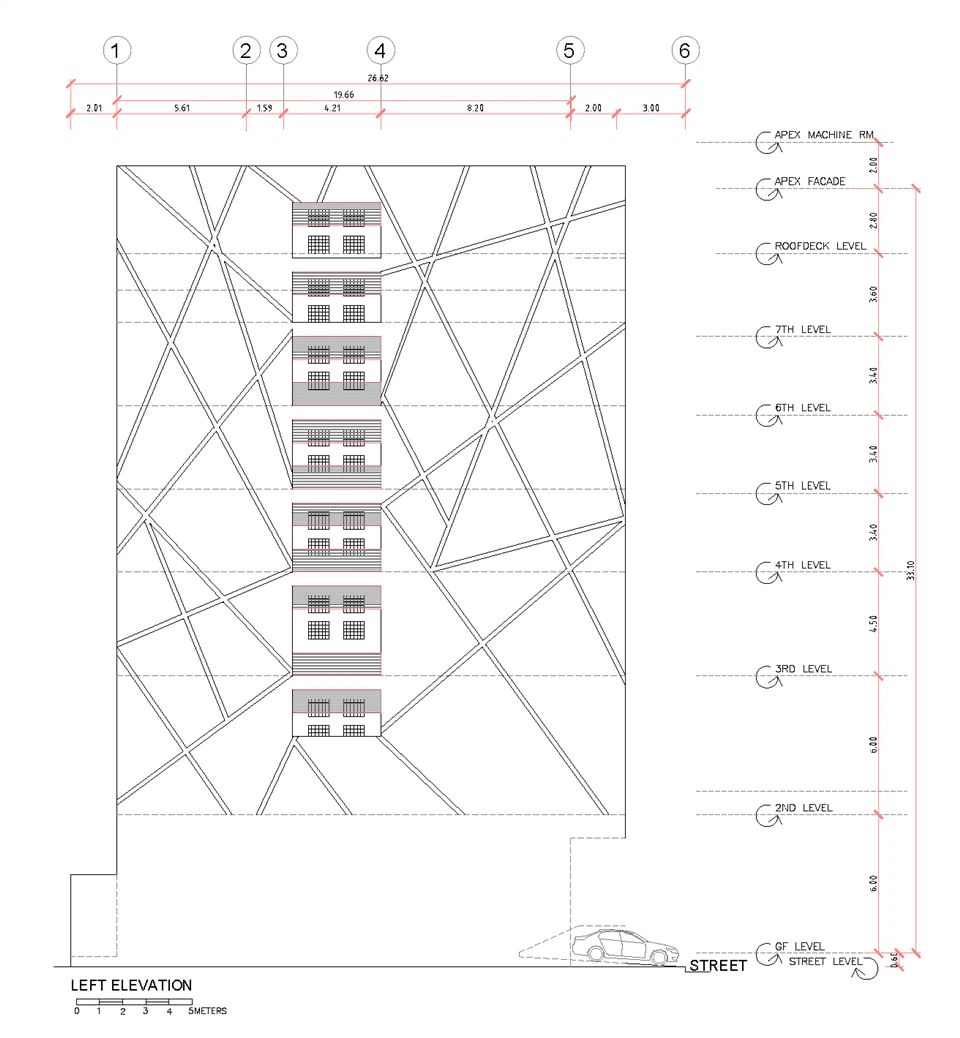
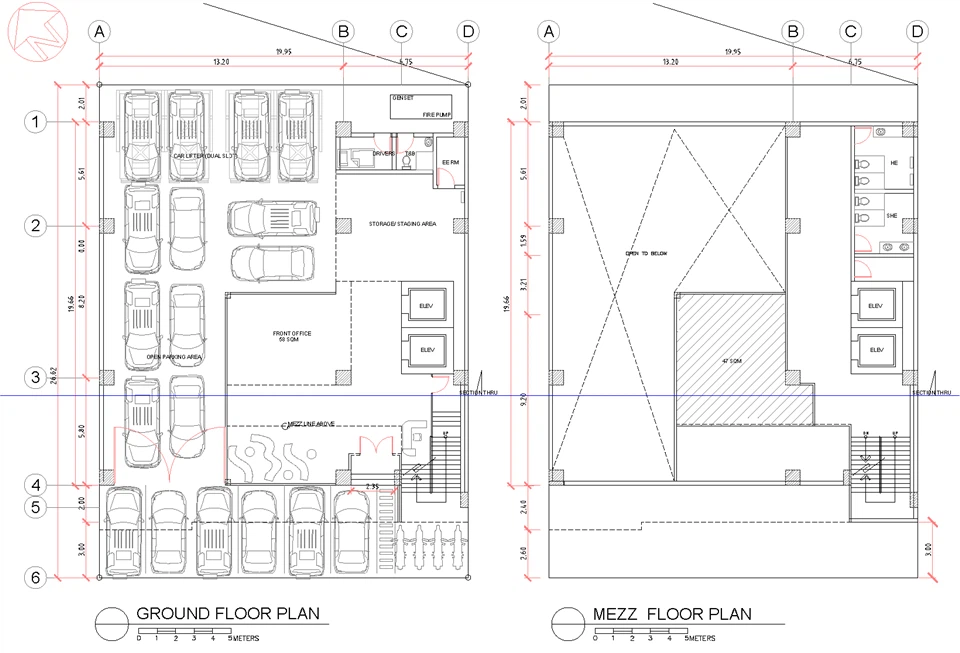
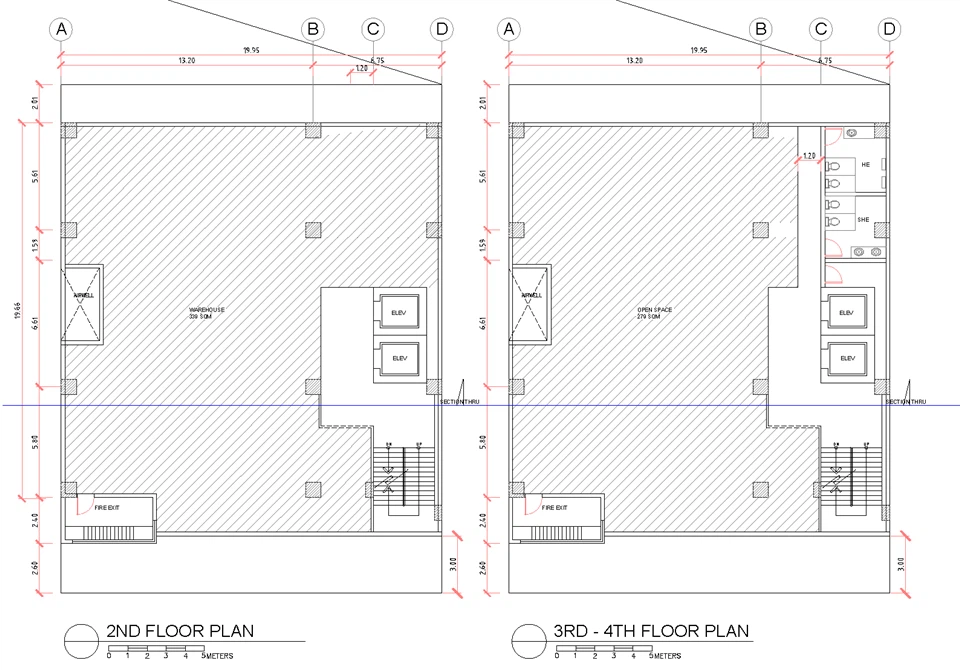
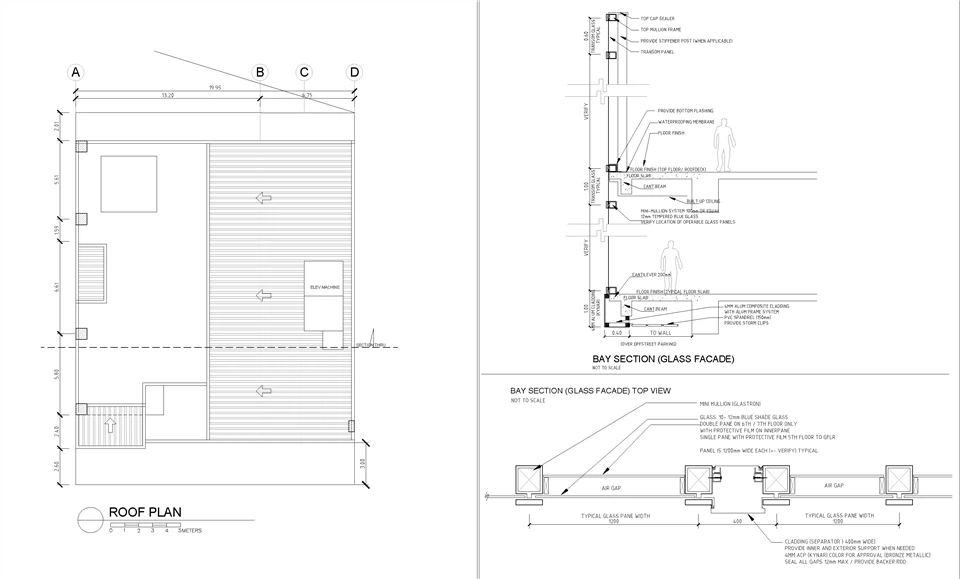
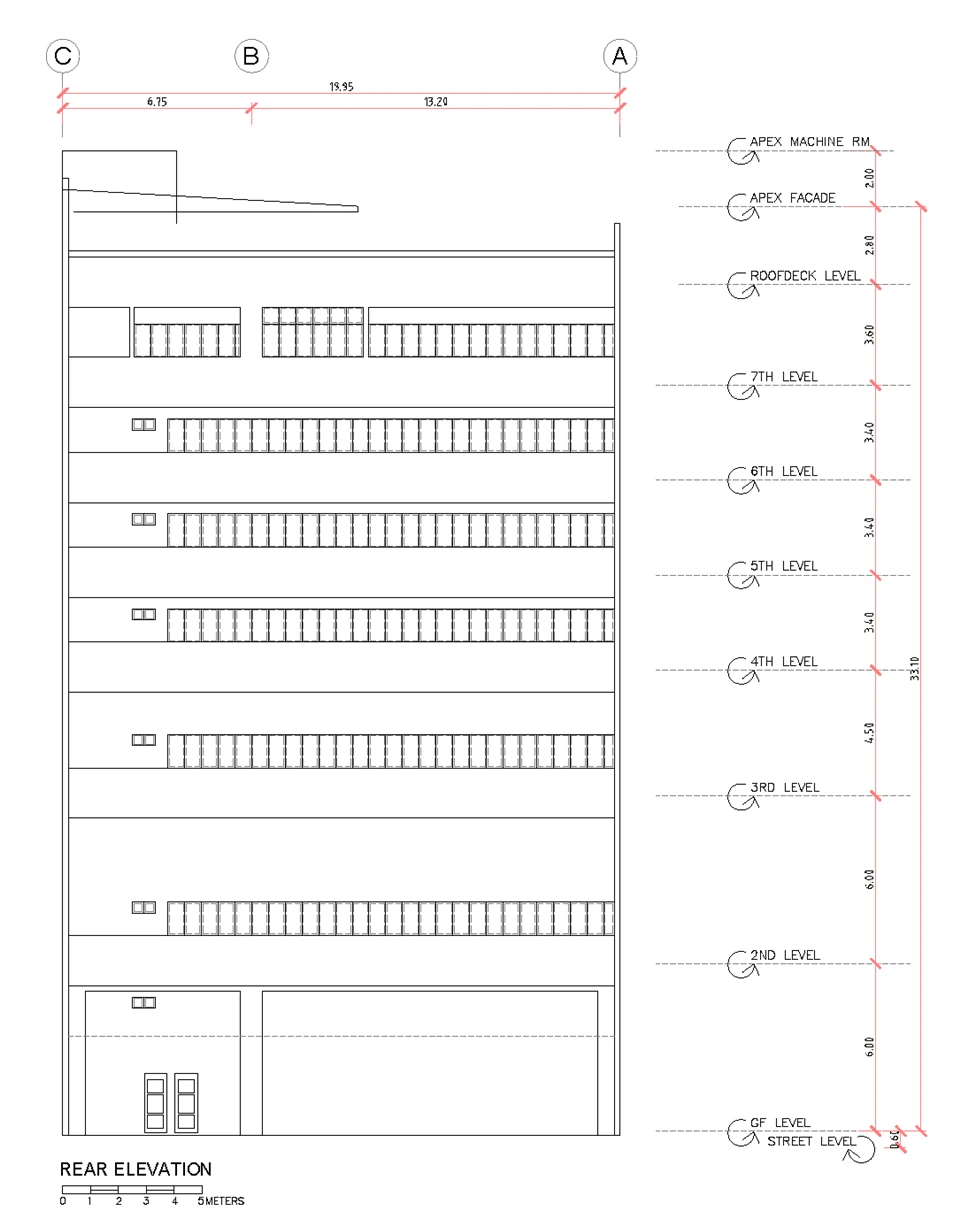
This project is an 8-story multifunctional building located in Manila, Philippines, with an overall dimension of 20m × 20m. The height of each floor is designed as follows: the 1st floor (parking lot) plus mezzanine totals in 6m; the 2nd floor (warehouse) is 6m high; the 3rd and 4th floors (office areas) are in 4.5m and 3.4m respectively; the 5th to 7th floors (residential areas) are each 3.4m high; the 8th floor (roof public space) plus roof height is 2.8m. For space optimization, only 3 rows of structural columns are arranged: Axis A has 4 columns in total, the spacing between Axis A and Axis B is 13.2m, and the spacing between Axis B and Axis C is 6.8m. The spacing between the 4 columns on Axis A is 5.9m (1-2 axis), 8.2m (2-3 axis), and 5.9m (3-4 axis) respectively.
2. Structural Design Basis
2.1 Local Codes and Standards (Manila, Philippines)
National Structural Code of the Philippines (NSCP) 2015: Governs the overall structural design, load calculation, material performance, and safety requirements.
Philippine Building Code (PBC) 2004: Regulates building use, fire safety, and structural durability corresponding to multifunctional buildings (parking, warehouse, office, residential, public space).
Seismic Design Criteria: Manila is located in a moderate seismic zone with a Peak Ground Acceleration (PGA) of 0.15g; the structural design adopts seismic intensity 7 (0.15g) for anti-seismic check.
Wind Load Criteria: Basic wind speed in Manila is 45 m/s (Category 3); wind load calculation follows NSCP 2015 Chapter 28, considering wind pressure distribution and structural wind resistance coefficient.
2.2 Load Requirements
Dead Load (DL): According to NSCP 2015, combined with the building function: roof (2.5 kN/m²), residential floor (2.0 kN/m²), office floor (2.5 kN/m²), warehouse floor (5.0 kN/m²), parking lot (4.0 kN/m²), mezzanine (3.0 kN/m²); self-weight of steel structure members is calculated based on actual section size.
Live Load (LL): Residential area (2.5 kN/m²), office area (3.0 kN/m²), warehouse (10.0 kN/m²), parking lot (2.5 kN/m² per vehicle, plus 1.0 kN/m² for pedestrian), roof public space (2.0 kN/m²).
Seismic Load (EL): Calculated using the response spectrum method, considering the structural mass distribution, stiffness characteristics, and damping ratio (0.05 for steel structures).
Wind Load (WL): Calculated as wind pressure (w = 0.613 × V², V = 45 m/s) and distributed to each floor according to the height and structural shape; wind-induced vibration is checked for high-rise parts (5-8 floors).
Other Loads: Snow load is not considered (Manila is a tropical region); earthquake-induced secondary loads (such as P-Δ effect) and temperature stress are included in the design check.
2.3 Structural System Selection
Considering the building function, space requirements, and local code requirements, a steel frame structure is adopted, which has the advantages of light weight, high strength, good ductility, and fast construction. The specific structural arrangement is as follows:
Columns: Steel H-beams are used; the column sections are determined according to the load-bearing capacity of each floor. The 1st-2nd floors (parking + warehouse) adopt H600×250×8×12 mm due to large load; the 3rd-4th floors (office) adopt H500×200×7×10 mm; the 5th-8th floors (residential + roof) adopt H400×200×6×8 mm.
Beams: Steel H-beams are used for floor beams and roof beams. The beams between Axis A and Axis B (13.2m span) adopt H500×200×7×10 mm (1st-2nd floors) and H450×180×6×9 mm (3rd-8th floors); the beams between Axis B and Axis C (6.8m span) adopt H400×180×6×8 mm (all floors); the mezzanine beams adopt H300×150×6×8 mm.
Floor Slab: Composite floor slab (steel deck + concrete) is adopted, with a concrete thickness of 120mm (residential/office), 150mm (warehouse/parking), and 100mm (mezzanine/roof); the steel deck model is B-120, with a thickness of 1.2mm.
Lateral Resistance System: The steel frame itself provides lateral stiffness; in addition, diagonal braces are arranged at the corners of the building (Axis A-1, A-4, C-1, C-4) to enhance lateral resistance against wind and seismic loads.

3. Steel Consumption Calculation
3.1 Calculation Scope
The steel consumption includes all main structural members: columns, beams, floor steel decks, diagonal braces, and connection components (bolts, welding materials, etc.). A 10% allowance is added for connection components (bolts, welding, etc.) based on the weight of main members, which is in line with the conventional calculation standard of steel structure projects.
3.2 Detailed Steel Consumption Calculation
|
Structural Component |
Specification |
Quantity |
Unit Weight (kg/m) |
Total Length (m) |
Total Weight (kg) |
|
Columns (1st-2nd floors) |
H600×250×8×12 |
12 (3 rows × 4 columns) |
118.5 |
144 (12 columns × 12m total height for 1st-2nd floors) |
17064 |
|
Columns (3rd-4th floors) |
H500×200×7×10 |
12 |
84.3 |
90 (12 columns × 7.5m total height for 3rd-4th floors) |
7587 |
|
Columns (5th-8th floors) |
H400×200×6×8 |
12 |
62.1 |
134.4 (12 columns × 11.2m total height for 5th-8th floors) |
8346.24 |
|
Beams (A-B axis, 1st-2nd floors) |
H500×200×7×10 |
24 (4 spans × 6 floors, 1st-2nd floors) |
84.3 |
316.8 (24 beams × 13.2m span) |
26706.24 |
|
Beams (A-B axis, 3rd-8th floors) |
H450×180×6×9 |
48 (4 spans × 12 floors, 3rd-8th floors) |
70.2 |
633.6 (48 beams × 13.2m span) |
44478.72 |
|
Beams (B-C axis, all floors) |
H400×180×6×8 |
72 (4 spans × 18 floors, all 8 floors) |
58.5 |
489.6 (72 beams × 6.8m span) |
28641.6 |
|
Mezzanine Beams |
H300×150×6×8 |
12 (4 spans × 3 rows) |
40.2 |
120 (12 beams × 10m average span) |
4824 |
|
Diagonal Braces |
H200×150×6×8 |
32 (4 corners × 8 floors) |
30.1 |
179.2 (32 braces × 5.6m average length) |
5393.92 |
|
Floor Steel Deck |
B-120 (1.2mm) |
1 set (all floors) |
12 kg/m² |
2880 m² (20m×20m×7.2 floors, excluding roof) |
34560 |
|
Roof Steel Deck |
B-120 (1.2mm) |
1 set |
12 kg/m² |
400 m² (20m×20m) |
4800 |
|
Main Members Total |
- |
- |
- |
- |
182407.72 |
|
Connection Allowance (10%) |
- |
- |
- |
- |
18240.77 |
|
Total Steel Consumption |
- |
- |
- |
- |
200648.49 kg (≈200.65 tons) |
3.3 Key Indicators
Total Steel Consumption: Approximately 200.65 metric tons (including 10% connection allowance).
Unit Steel Consumption: 200.65 tons / (20m×20m×8 floors) = 62.7 kg/m² (calculated based on the total floor area of 3200 m²).
The unit steel consumption is within the reasonable range (60-80 kg/m²) for steel frame multifunctional buildings, which is consistent with the design standards of similar projects in Manila.
4. Regional Applicability Analysis
The following analysis evaluates the applicability of the current structural design (based on Manila local codes) in CBC's main markets such as Tonga, New Caledonia, Papua New Guinea, Chile, and Peru, focusing on differences in local seismic, wind load, and building code requirements.
4.1 Tonga
Seismic Conditions: Tonga is located in a high seismic zone (Pacific Ring of Fire) with a PGA of 0.30-0.40g, which is much higher than Manila's 0.15g.
Wind Load: Basic wind speed is 55-60 m/s (cyclonic region), significantly higher than Manila's 45 m/s.
Code Requirements: Complies with the Tonga Building Code (TBC) 2018, which has stricter requirements for lateral resistance and structural ductility.
Applicability Judgment: Not Recommended. The current structural stiffness and seismic resistance are insufficient to withstand Tonga's high seismic and wind loads; the column-beam sections and lateral bracing system need to be significantly strengthened, and the steel consumption will increase by 30-40%.
4.2 New Caledonia
Seismic Conditions: Moderate seismic zone with a PGA of 0.20g, slightly higher than Manila's 0.15g.
Wind Load: Basic wind speed is 50 m/s (tropical cyclone-prone area), higher than Manila's 45 m/s.
Code Requirements: Follows the French Overseas Territories Building Code (RTC) 2020, which is similar to European standards and has strict requirements for structural durability and wind resistance.
Applicability Judgment: Requires Modification. The current design can be adapted after partial adjustments: strengthen the lateral bracing system, increase the thickness of column-beam flanges by 2-3mm, and adjust the seismic calculation parameters; the steel consumption will increase by 15-20%.

4.3 Papua New Guinea
Seismic Conditions: High seismic zone with a PGA of 0.25-0.35g, higher than Manila's 0.15g; seismic activity is frequent and intense.
Wind Load: Basic wind speed is 48-52 m/s, slightly higher than Manila's 45 m/s.
Code Requirements: Adopts the Papua New Guinea National Building Code (PNG NBC) 2015, which emphasizes seismic resistance and structural ductility for high-rise buildings.
Applicability Judgment: Requires Modification. The main adjustments include: increasing the column-beam section size (especially the 1st-2nd floors), adding more lateral braces, and optimizing the seismic energy dissipation system; the steel consumption will increase by 25-30%.
4.4 Chile
Seismic Conditions: One of the highest seismic zones in the world with a PGA of 0.40-0.50g, far exceeding Manila's 0.15g; large-magnitude earthquakes occur frequently.
Wind Load: Basic wind speed is 40-45 m/s, similar to Manila's 45 m/s.
Code Requirements: Follows the Chilean Building Code (NCh 433 Of. 2017), which has the strictest seismic design standards in the world, requiring high structural ductility and energy dissipation capacity.
Applicability Judgment: Not Recommended. The current structural system cannot meet Chile's ultra-high seismic requirements; a new seismic-resistant system (such as a steel frame-brace-energy dissipator system) needs to be redesigned, and the steel consumption will increase by 50% or more.
4.5 Peru
Seismic Conditions: High seismic zone with a PGA of 0.25-0.30g, higher than Manila's 0.15g; seismic intensity varies by region (coastal areas are more severe).
Wind Load: Basic wind speed is 42-48 m/s, slightly lower than or similar to Manila's 45 m/s.
Code Requirements: Adopts the Peruvian Building Code (E070) 2017, which has strict requirements for seismic design and structural stability of high-rise buildings.
Applicability Judgment: Requires Modification. The main adjustments include: strengthening the column-beam connections, increasing the lateral stiffness of the structure, and optimizing the seismic load calculation; the steel consumption will increase by 20-25%.
4.6 Summary of Regional Applicability
|
Region |
Seismic PGA (g) |
Basic Wind Speed (m/s) |
Applicability Judgment |
Key Modifications Required |
|
Manila (Philippines) |
0.15 |
45 |
Fully Applicable |
None |
|
Tonga |
0.30-0.40 |
55-60 |
Not Recommended |
Comprehensive redesign of structural system, significant increase in section size and lateral bracing |
|
New Caledonia |
0.20 |
50 |
Requires Modification |
Strengthen lateral bracing, increase flange thickness, adjust seismic parameters |
|
Papua New Guinea |
0.25-0.35 |
48-52 |
Requires Modification |
Increase column-beam section size, add lateral braces, optimize energy dissipation system |
|
Chile |
0.40-0.50 |
40-45 |
Not Recommended |
Redesign seismic-resistant system, add energy dissipators, greatly increase structural stiffness |
|
Peru |
0.25-0.30 |
42-48 |
Requires Modification |
Strengthen column-beam connections, increase lateral stiffness, optimize seismic calculation |
5. Structural Optimization Space
On the premise of meeting Manila's local codes and ensuring structural safety, the following optimization measures can be taken to reduce steel consumption, improve structural efficiency, and reduce project costs, without affecting the building's function and space requirements.
5.1 Section Optimization of Columns and Beams
Columns: For the 5th-8th floors (residential area, small load), the column section can be optimized from H400×200×6×8 mm to H350×180×6×8 mm. The stress ratio check shows that the optimized section can still meet the load-bearing requirements, reducing steel consumption by about 8% for these columns.
Beams: For the beams between Axis B and Axis C (6.8m span, small load), the section can be optimized from H400×180×6×8 mm to H350×180×6×8 mm, reducing steel consumption by about 6% for these beams.
5.2 Optimization of Lateral Bracing System
The current diagonal braces are arranged at all 8 floors; they can be optimized to be arranged at intervals (every 2 floors) for the 5th-8th floors (residential area, small lateral load). This adjustment can reduce the number of braces by 50% for the upper floors, while ensuring the lateral stiffness meets the requirements, reducing steel consumption by about 5% for the bracing system.
5.3 Material Optimization
The current design adopts Q235B and Q355B steel; it can be replaced with all Q355B or high-strength steel for the main columns and beams (1st-4th floors, large load). so the section size can be appropriately reduced while maintaining the same load-bearing capacity. This optimization can reduce steel consumption by about 10-12% for the main members.
5.4 Floor Slab Optimization
For the 5th-7th floors (residential area), the composite floor slab concrete thickness can be reduced from 120mm to 100mm, and the steel deck thickness can be maintained at 1.2mm. This adjustment can reduce the dead load of the floor, thereby reducing the load-bearing requirements of columns and beams, and indirectly reducing steel consumption by about 3-4%.
5.5 Optimization Effect Summary
After comprehensive optimization, the total steel consumption can be reduced by 15-20%, from the original 200.65 tons to 160.52-170.55 tons. The unit steel consumption will be reduced to 50.16-53.30 kg/m², which is still within the reasonable range and can effectively reduce project costs while ensuring structural safety and meeting local code requirements.
6. Conclusion
The structural design of the 8-story multifunctional building meets the requirements of Manila's local codes (NSCP 2015, PBC 2004) and load requirements, with a total steel consumption of approximately 200.65 tons and a unit steel consumption of 62.7 kg/m². For other regions: it is fully applicable in Manila; requires modification in New Caledonia, Papua New Guinea, and Peru (with corresponding steel consumption increases); and is not recommended in Tonga and Chile (due to ultra-high seismic/wind load requirements). Through section optimization, material replacement, and system adjustment, the steel consumption can be reduced by 15-20% without affecting structural safety, which has significant economic benefits.
You Might Also Like


Send Inquiry
