





8-Storey Mixed-Use Steel Framed Building In Manila Philippines
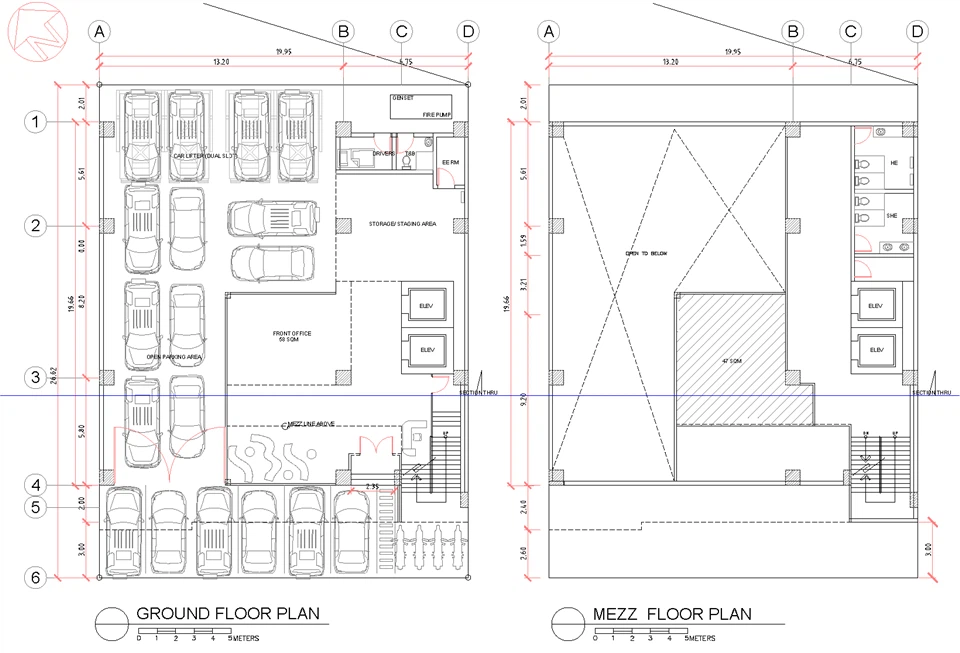
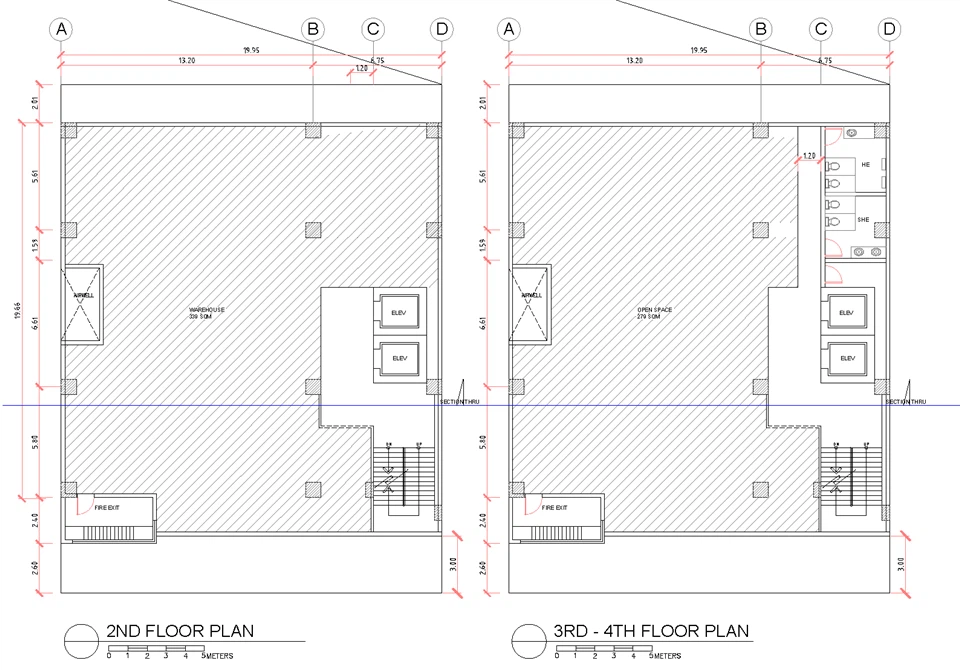
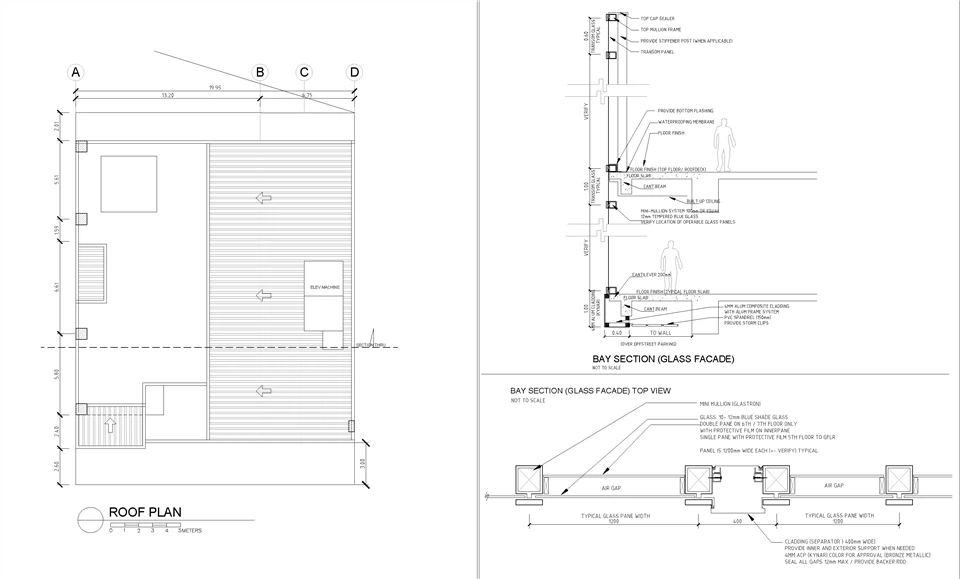
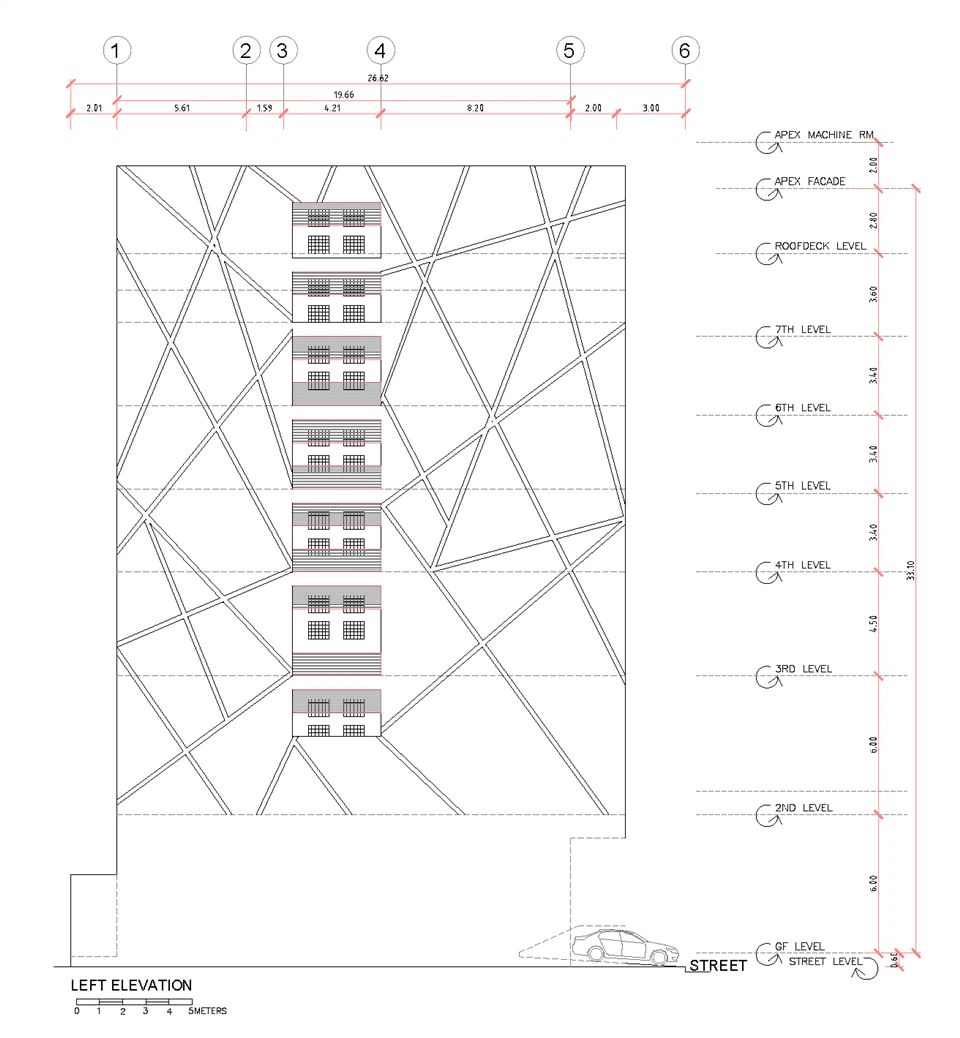
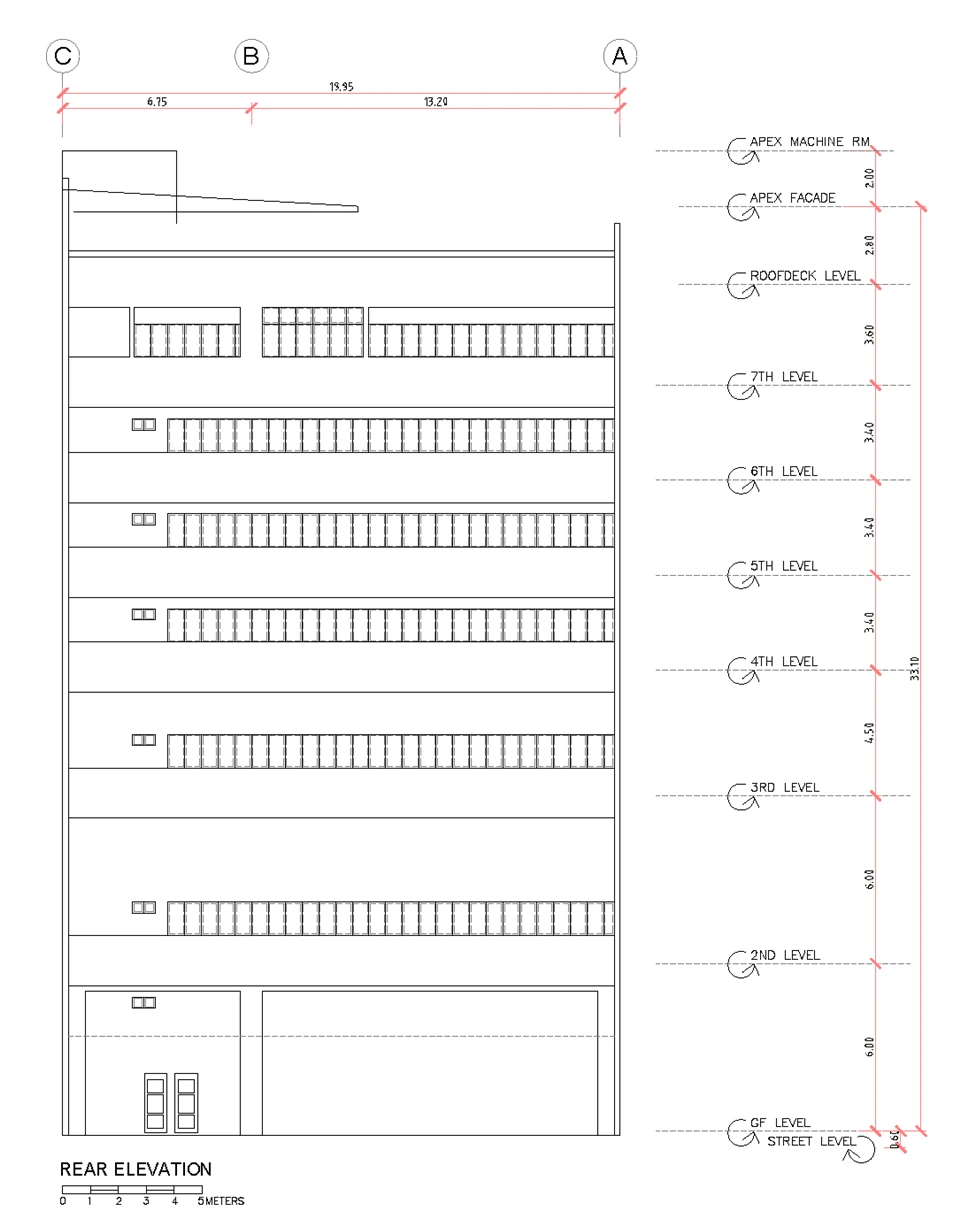
This project is an 8-story multifunctional building located in Manila, Philippines, with an overall dimension of 20m × 20m. The height of each floor is designed as follows: the 1st floor (parking lot) plus mezzanine totals 6m; the 2nd floor (warehouse) is 6m; the 3rd and 4th floors (office areas) are 4.5m and 3.4m respectively; the 5th to 7th floors (residential areas) are each 3.4m; the 8th floor (roof public space) plus roof height is 2.8m. For space optimization, only 3 rows of structural columns are arranged: Axis A has 4 columns in total, the spacing between Axis A and Axis B is 13.2m, and the spacing between Axis B and Axis C is 6.8m. The spacing between the 4 columns on Axis A is 5.9m (1-2 axis), 8.2m (2-3 axis), and 5.9m (3-4 axis) respectively.
Product Introduction
STRUCTURAL ANALYSIS REPORT
8-Storey Mixed-Use Steel Framed Building In Manila, Philippines
Project location: Manila (NCR), Philippines
Applicability review: Tonga, New Caledonia (France), Papua New Guinea, Chile, Peru
Design code: NSCP 2015 (Philippines)

1. Architectural & Structural Configuration
|
Parameter |
Description |
|
Plan dimensions |
20.0 m × 20.0 m |
|
Total height |
36.9 m (from ground floor to roof public space) |
|
Column grid |
3 longitudinal axes (A, B, C) |
|
A–B span |
13.2 m (large span) |
|
B–C span |
6.8 m |
|
Bay spacing (1–2 / 3–4) |
5.9 m |
|
Bay spacing (2–3) |
8.2 m (interior bay) |
|
Total columns |
12 (4 per axis) |
1.1 Storey Heights & Occupancy
|
Floor |
Occupancy |
Storey Height (m) |
Cumulative Height (m) |
|
1F |
Parking + Mezzanine |
6.0 |
6.0 |
|
2F |
Warehouse |
6.0 |
12.0 |
|
3F |
Office |
4.5 |
16.5 |
|
4F |
Office |
3.4 |
19.9 |
|
5F |
Residential |
3.4 |
23.3 |
|
6F |
Residential |
3.4 |
26.7 |
|
7F |
Residential |
3.4 |
30.1 |
|
8F |
Roof public space |
2.8 |
32.9 |
|
Total building height (above GL) |
~36.9 |
||

2. Design Loads per NSCP 2015
2.1 Gravity Loads
|
Occupancy |
Superimposed Dead (SDL, kPa) |
Live Load (LL, kPa) |
|
Parking (1F) |
1.5 |
5.0 |
|
Warehouse (2F) |
1.0 |
6.0 |
|
Office (3F–4F) |
1.5 |
3.0 |
|
Residential (5F–7F) |
1.5 |
2.0 |
|
Roof public space (8F) |
2.0 |
4.8 (public assembly) |
Floor system: 130 mm composite slab on steel deck (self-weight ~2.8–3.2 kPa including framing).
2.2 Wind Load (NSCP 2015 §207)
Basic Wind Speed: 250 kph (69 m/s, 3‑second gust) – Manila, NCR
Exposure Category: B (urban)
Occupancy Category: III (mixed-use, importance factor Iw = 1.15)
Design pressure @ roof: ~3.5–4.2 kPa (varies with zone & cladding)
Governing wind direction: 20 m face; overturning moment contributes significantly to column axial demands.
2.3 Seismic Load (NSCP 2015 §208)
|
Parameter |
Value |
Remarks |
|
Seismic Zone |
Zone 4 (Metro Manila) |
High seismicity |
|
Mapped Ss |
~1.10g |
Short-period spectral acceleration |
|
Mapped S1 |
~0.64g |
1‑second spectral acceleration |
|
Site Class |
D (assumed) |
Stiff soil; conservatively adopted |
|
SDS |
0.85g |
Design short-period spectral accel. |
|
SD1 |
0.64g |
Design 1‑s spectral acceleration |
|
Seismic Design Category |
D |
|
|
Response Modification Factor (R) |
8.0 |
Special Steel Moment Frame (SMF) |
|
Importance Factor (Ie) |
1.0 |
Standard occupancy |
Estimated seismic base shear coefficient Cs ≈ 0.106 (W). Base shear ≈ 0.106 × total seismic weight.
2.4 Load Combinations (NSCP 2015 §203 – Strength Design)
|
Combination |
Formula |
Governing Limit State |
|
LC1 |
1.2D + 1.6L + 0.5Lr |
Gravity (beams, composite slab) |
|
LC2a |
1.2D + 1.0E + 0.5L |
Seismic (columns, frame drift) |
|
LC2b |
0.9D + 1.0E |
Seismic overturning/net uplift |
|
LC3 |
1.2D + 1.0W + 0.5L |
Wind overturning lateral check |
|
LC4 |
1.2D + 1.0W + 0.5L + 0.5Lr |
Wind (cladding & drift) |

3. Structural System & Analysis
3.1 Lateral-Force-Resisting System (LFRS)
Special Steel Moment-Resisting Frame (SMF) in both directions.
With only 3 column lines, the 20 m × 20 m building relies on deep columns and girder-to-column moment connections. The 13.2 m span (A–B) demands relatively deep girders (W24–W27 range) for gravity plus seismic moments.
In the transverse direction (A–C), the frame comprises two unequal spans: 13.2 m + 6.8 m. Stiffness eccentricity is moderate; accidental torsion per NSCP §208.5.5.2 must be considered.
3.2 Floor Framing
13.2 m span: Primary composite girders @ ~2.5 m spacing with secondary beams spanning 5.9 m / 8.2 m.
6.8 m span: Conventional composite beam layout; steel section of W16–W18 range.
130 mm composite metal deck with concrete fill provides diaphragm action (topped with reinforcement for seismic diaphragm forces).
3.3 Foundation & Column Bases
Mat or piled foundation typical for Manila site (alluvial / lahar deposits).
Fixed-base column connections improve seismic drift performance and reduce overturning demand on the mat.

4. Steel Tonnage Estimate (Detailed Quantity Take-Off)
All steel sections are ASTM A572 Gr. 50 (Fy = 345 MPa) or ASTM A992 (Fy = 345 MPa). Weights based on AISC 360‑22 section tables(Will replaced by equal Chinese standards which will be Q355B/Q235B during fabrication).
4.1 Columns
|
Tier |
Floors |
Approx. Section |
Weight (kg/m) |
Length/item (m) |
Qty |
Total wt (kg) |
|
T1 (base) |
1F–2F |
W14×311 (W360×463) |
463 |
12.0 |
12 |
66,672 |
|
T2 |
3F–4F |
W14×211 (W360×314) |
314 |
7.9 |
12 |
29,773 |
|
T3 |
5F–7F |
W14×132 (W360×196) |
196 |
10.2 |
12 |
23,990 |
|
T4 (roof) |
8F |
W14×90 (W360×134) |
134 |
2.8 |
12 |
4,502 |
|
Subtotal – Columns |
124,937 |
|||||
4.2 Primary Girders & Secondary Beams
|
Span / Direction |
Typical Section |
Weight (kg/m) |
Total length (m) |
Qty |
Total wt (kg) |
|
A–B primary (13.2 m) |
W27×102 (W690×152) |
152 |
13.2 |
32 |
64,205 |
|
B–C primary (6.8 m) |
W21×62 (W530×92) |
92 |
6.8 |
32 |
19,986 |
|
Secondary beams (5.9 m) |
W16×31 (W410×46) |
46 |
5.9 |
120 |
32,568 |
|
Secondary beams (8.2 m) |
W18×40 (W460×60) |
60 |
8.2 |
60 |
29,520 |
|
Subtotal – Beams & Girders |
146,279 |
||||
4.3 Floor System & Miscellaneous Steel
|
Component |
Area / Qty |
Unit weight |
Total wt (kg) |
|
Composite metal deck (galvanized, 1.2 mm base) |
8 floors × 400 m² = 3,200 m² |
12 kg/m² |
38,400 |
|
Shear studs (19 mm dia × 80 mm) |
~6,400 studs |
0.26 kg/stud |
1,664 |
|
Lateral bracing (roof & floor diaphragm) |
L‑section & angles |
- |
12,500 |
|
Stairs, railings, roof screen |
Lump sum |
- |
8,500 |
|
Connections, base plates, splice plates |
~12% of frame wt |
- |
36,800 |
|
Subtotal – Floor & Misc. Steel |
97,864 |
||
4.4 Total Steel Tonnage Summary
|
Category |
Weight (kg) |
Tonnes (MT) |
|
Columns |
124,937 |
124.9 |
|
Beams & Girders |
146,279 |
146.3 |
|
Floor system & Misc. steel |
97,864 |
97.9 |
|
Total Structural Steel |
369,080 |
~370 |
|
+ Contingency (10%) for design development |
36,908 |
~37 |
|
Grand Total (Recommended Budget Weight) |
405,988 |
~480 |
Unit steel weight: ~480 kg/m² of gross floor area (8 storeys × 400 m² = 3,200 m²).
Estimated material cost (Philippines, fabricated steel): Please inquiry CBC for details. Erection and fireproofing are additional.

5. Key Design Considerations (Manila-Specific)
P‑Delta & drift: With storey heights up to 6.0 m and a total height of 36.9 m, second‑order effects are significant. The stability coefficient θ shall be ≤ 0.10. Provide SMF with strong-column/weak-beam proportioning.
Seismic irregularity: The unequal bay layout (5.9 m / 8.2 m / 5.9 m) and two dissimilar spans create plan irregularity (Type 1a). Accidental torsion amplification (Ax) per NSCP §208.5.5.2 required.
Soft‑story check: 1F parking (6.0 m) vs. 5F‑7F residential (3.4 m). Stiffness of moment frames must be proportioned to avoid vertical irregularity Type 1a (stiffness‑soft story).
Connection detailing: Bolted extended end‑plate (BEEP) or welded unreinforced flange (WUF‑W) connections, prequalified per AISC 358‑22 for SMF, are mandatory under NSCP Seismic Design Category D.
Corrosion protection: Tropical marine atmosphere in Metro Manila. HDG (hot‑dip galvanized) or inorganic zinc‑rich primer + epoxy intermediate + aliphatic polyurethane topcoat to meet C4 environment per ISO 12944, achieving a service life ≥ 30 years.
6. Applicability Assessment – Pacific Rim Countries
The proposed design is evaluated for transferability to five other Pacific Rim nations. "Directly applicable" means the Manila design can be adopted with minor adjustments; "Upgrade required" means member sizes or lateral system must be revised; "Major redesign" means a new structural system is needed.
6.1 Tonga
|
Parameter |
Manila (Baseline) |
Tonga (NBCKT / AS/NZS 1170) |
Assessment |
|
Wind speed (3‑s gust) |
250 kph (69 m/s) |
180–200 kph (Category N3‑N4) |
MS gust slightly lower, but up to 250 kph in cyclone zones. |
|
Seismic hazard |
High (Zone 4) |
Moderate (Zone 2, agR ~0.20g) |
Lateral forces are 40–50% of Manila demand. |
|
Structural implications |
Moment frame with deep girders |
Drift limits may be relaxed; sections could potentially be **reduced by 10-15%.** |
|
|
Overall suitability |
Good – applicable with moderate column/wind drift checks. |
||
6.2 New Caledonia (France)
|
Parameter |
Manila |
New Caledonia (EN 1998 / EN 1991) |
Assessment |
|
Seismic |
High |
Moderate (Zone 3, agR ≈ 0.16g) |
Seismic base shear ~30% of Manila; however EN 1998 ductility class DCM required. |
|
Wind |
250 kph |
36 m/s (10‑min mean), ~50 m/s gust (~180 kph) |
Wind pressure is lower; drift not critical. |
|
Structural implications |
Steel sections could be **reduced 15–25%** if European rolled sections (HEA/HEM) are substituted. |
||
|
Overall suitability |
Good – member optimization possible. |
||

6.3 Papua New Guinea
|
Parameter |
Manila |
PNG (PNGS 1001‑1982 / AS/NZS 1170) |
Assessment |
|
Seismic |
High |
Very High (Zone 1, PGA ≥ 0.40g) |
PNGS 1001 hazar maps comparable to Manila, but code lacks refined ductility provisions. |
|
Wind |
250 kph |
45 m/s (10‑min mean) ~160 kph gust |
Lower wind; seismic governs. |
|
Structural implications |
Adopt higher R‑factor? PNGS limited guidance; ISO 3010 or ASCE 7‑22 used. Sections likely **similar to Manila**, but **detailed seismic peer review required**. |
||
|
Overall suitability |
Conditionally suitable – requires local engineer certification & updated PNGS compliance check. |
||
6.4 Chile
|
Parameter |
Manila |
Chile (NCh 433 Of.96 Mod.2012) |
Assessment |
|
Seismic |
High |
Extreme (Zone 3, base shear 1.4–18.2% W) |
Chilean seismic base shear may be **2× to 3×** of NSCP depending on period. |
|
Wind |
250 kph |
Moderate (30–35 m/s gust) |
Not governing. |
|
Structural implications |
NCh 433 mandates strict drift limits (0.002 hsx). The 3‑column line layout creates severe torsional irregularity. **A dual system (SMF + EBF or concrete core) is recommended.** |
||
|
Overall suitability |
Major redesign required. Add braced bays or RC core; column sizes increase 30–50% over Manila baseline. |
||
6.5 Peru
|
Parameter |
Manila |
Peru (E.030‑2016) |
Assessment |
|
Seismic |
High |
Very High (Zone 4, coastal Lima Mw > 8.0 capable) |
Elastic base shear ~0.12–0.15 W; R = 7 for SMF. |
|
Wind |
250 kph |
Low (~30 m/s) |
Negligible. |
|
Structural implications |
E.030 enforces strong-column/weak-beam and drift ≤ 0.007 hsx. The existing SMF may **work**, but Peru's National Building Regulation requires **site‑specific hazard analysis**. Column sections likely need an **additional 15–25%** over Manila. |
||
|
Overall suitability |
Feasible with seismic upgrade. SMF is permitted; global stiffness must be verified against Peruvian drift limits. |
||

7. Structural Optimization Opportunities
|
Strategy |
Potential Saving (MT) |
Remarks |
|
1. Floor system revision (post‑tensioned concrete flat slab) |
80–100 |
Steel framing replaced by RC; steel weight savings offset by increased concrete cost. |
|
2. Composite columns (CFT – Concrete‑Filled Tube) |
40–55 |
Reduce column steel area; enhance stiffness and fireproofing. |
|
3. Optimized steel grade (Gr. 65 for columns) |
20–30 |
Higher strength allows smaller sections; check local availability. |
|
4. Refined connection design |
10–15 |
Use plastic design of connections to reduce stiffener count. |
|
5. Modular precast stairs & non‑structural steel |
5–8 |
Replace fabricated steel stairs with precast concrete or lightweight systems. |
|
Total Realistic Reduction |
100–130 |
~20–27% of baseline |
8. Conclusion & Recommendations
Manila baseline design is code‑compliant and robust. The 3‑column‑line Special Moment Frame (SMF) system can resist the combined wind (250 kph gust) and seismic (SDS=0.85g, SD1=0.64g) demands in the Philippines, provided strong‑column/weak‑beam proportioning and prequalified SMF connections are used.
Total structural steel weight ≈ 480 MT (405 MT base + 10% contingency).
Regional transferability:
Tonga & New Caledonia: Applicable with possible member reduction (lower seismic demand).
Papua New Guinea: Conditionally suitable – must verify with current PNGS seismic annex and local code updates.
Chile: Requires a dual system or braced frame due to extreme seismic base shear (NCh 433). Column steel may increase by 30–50%.
Peru: Feasible with 15–25% column upgrade and site‑specific hazard analysis per E.030.
Optimization potential: By adopting composite columns, optimized steel grades, or alternative floor systems, steel weight could be reduced to ~350–380 MT, saving ~$42,000–$55,000 USD in material.
Next steps: Perform 3D finite element analysis (SAP2000/ETABS) to verify natural period, drift and P‑Delta stability; refine column splices and connection detailing; and conduct site‑specific geotechnical investigation to finalize foundation design.

You Might Also Like


Send Inquiry
