



Steel Structure Mezzanine Design For Manila Warehouse
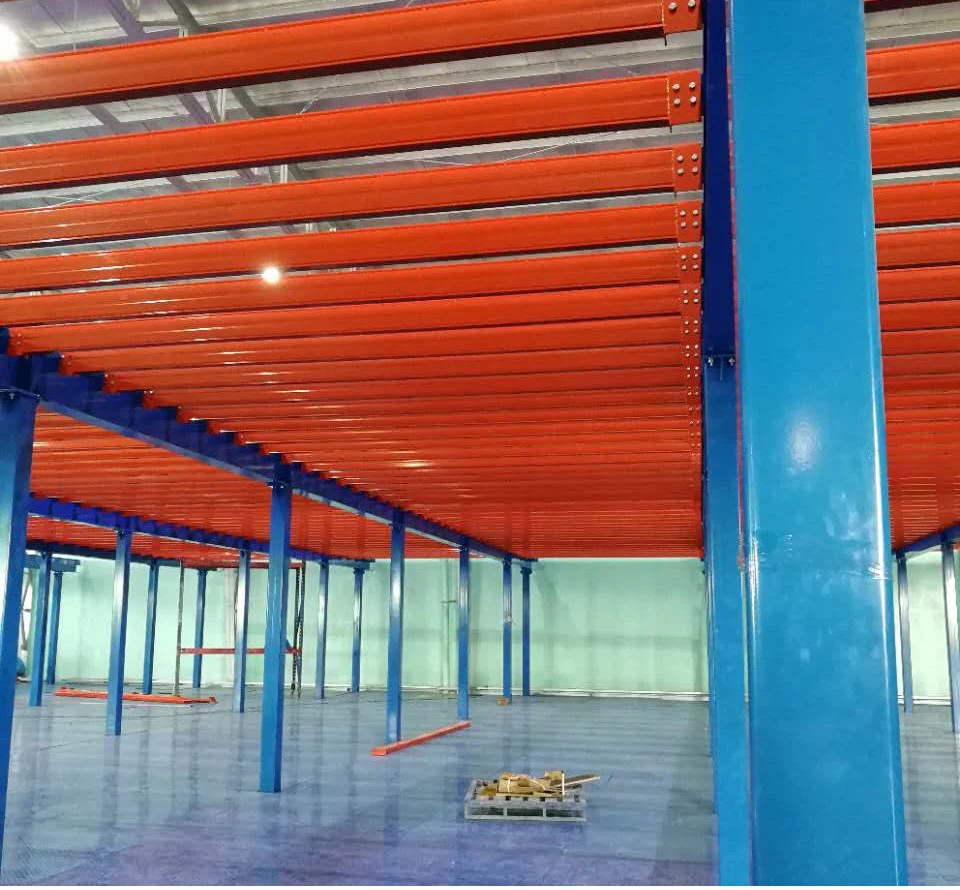
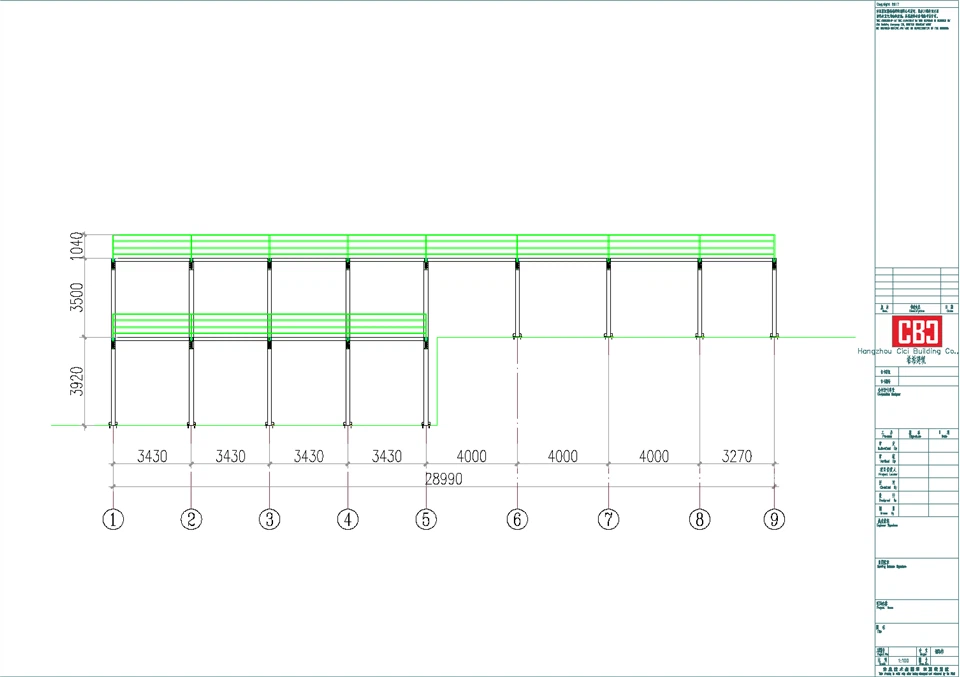
This project aims to add two steel structure mezzanines in an existing warehouse located in Manila, Philippines, to expand the usable storage area. The total area of the two mezzanines is 1460 square meters. The first mezzanine has a height of 3.92 meters (consistent with the existing mezzanine), and the second mezzanine is 3.5 meters high above the first one. Both mezzanines are surrounded by 1.2-meter-high railings
Product Introduction
Steel Structure Mezzanine Design for Manila Warehouse & Market Analysis
1. Structure Design and Analysis
1.1 General Overview
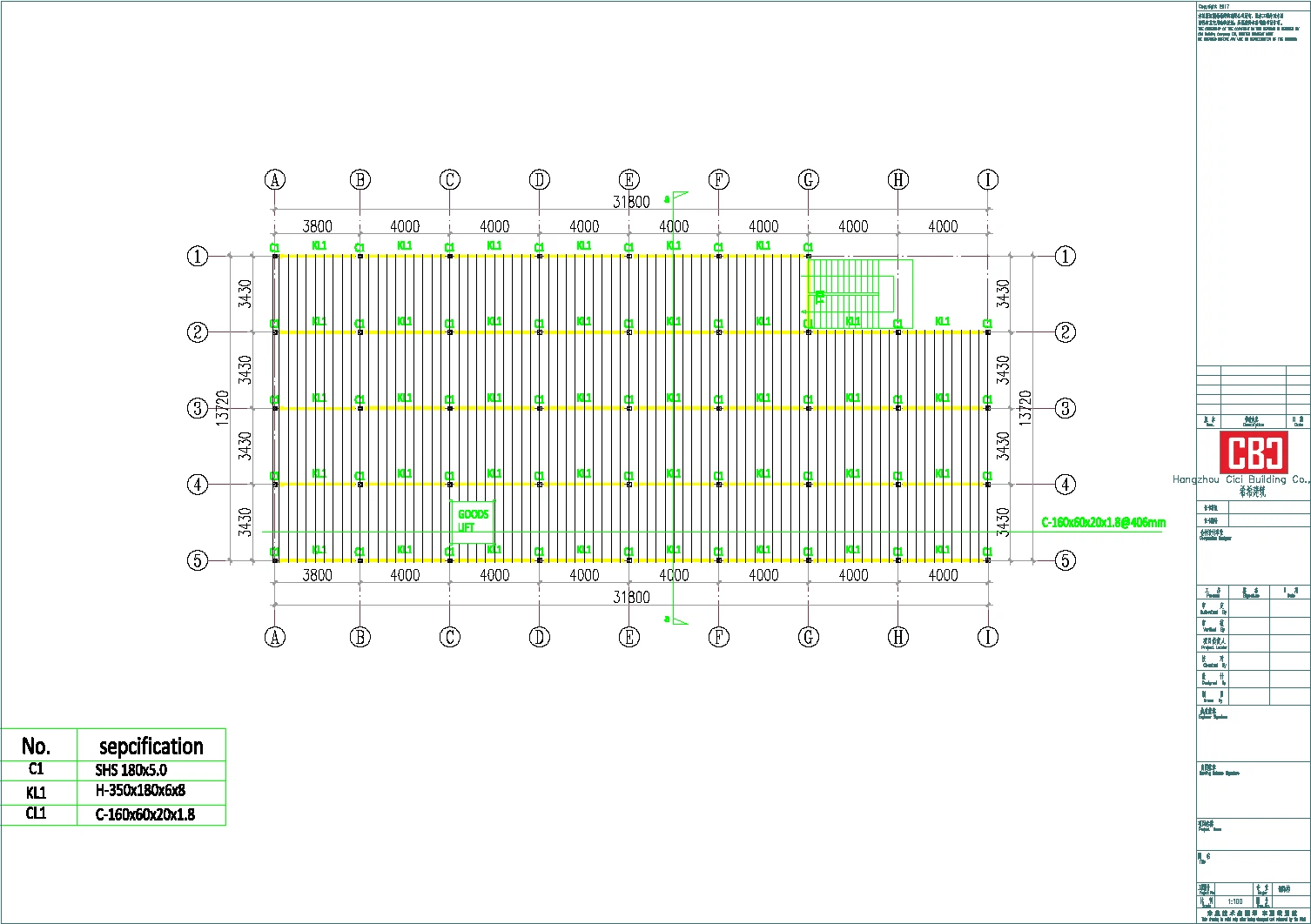
This project aims to add two steel structure mezzanines in an existing warehouse located in Manila, Philippines, to expand the usable storage area. The total area of the two mezzanines is 1460 square meters. The first mezzanine has a height of 3.92 meters (consistent with the existing mezzanine), and the second mezzanine is 3.5 meters high above the first one. Both mezzanines are surrounded by 1.2-meter-high railings. The floor deck consists of 18mm OSB boards combined with 3mm patterned steel plates, and the floor load-bearing capacity is required to be 5 tons per square meter. A 2m×2m goods elevator with a load capacity of 5 tons is installed in the middle of the first mezzanine, and an upper and lower staircase is arranged in the 7th and 8th bays on the east side.
1.2 Layout Design of Mezzanines
1.2.1 First Mezzanine
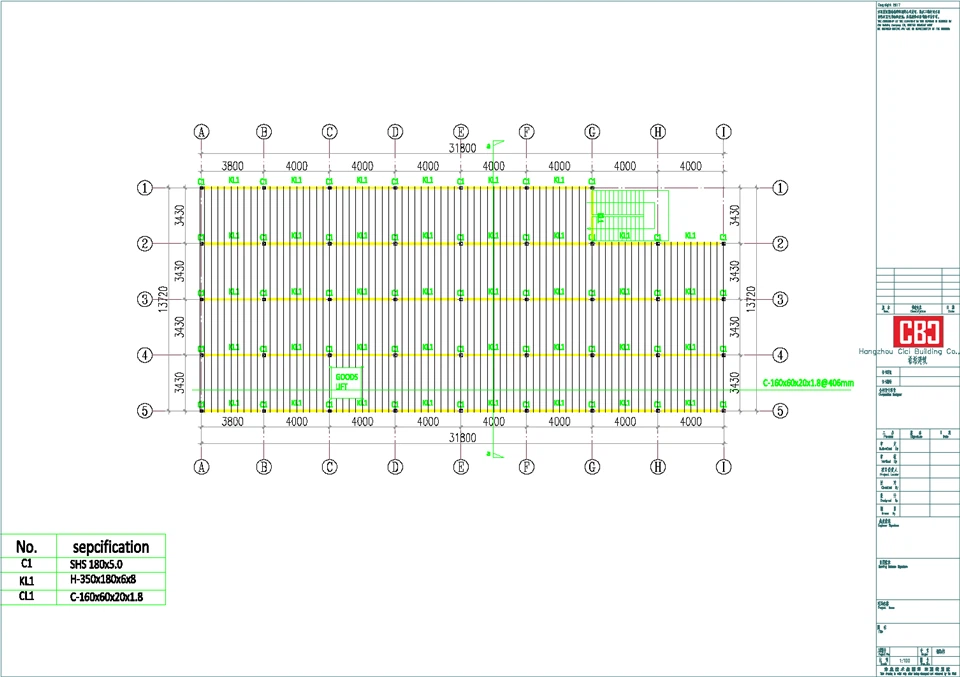
The first mezzanine is arranged along the north-south direction with 4 bays, each with a spacing of 3.43 meters, resulting in a total north-south length of 13.72 meters. Along the east-west direction, it has a total length of 31.8 meters, divided into 8 bays with lengths of 3.8m, 4m, 4m, 4m, 4m, 4m, 4m, and 4m respectively. Among them, the 7th and 8th bays on the east side are used for arranging the upper and lower staircases, and a 2m×2m goods elevator with a load capacity of 5 tons is installed in the middle of the mezzanine.
1.2.2 Second Mezzanine
The second mezzanine is 3.5 meters high, built on the basis of the first mezzanine, and extends 15.27 meters southward (above the existing mezzanine). The extended part is divided into 4 bays with lengths of 4m, 4m, 4m, and 3.27m respectively. The east-west layout of the second mezzanine is completely consistent with that of the first mezzanine, ensuring the continuity and stability of the overall structure.
1.3 Load-Bearing Analysis
The core load-bearing requirement of this project is 5 tons per square meter for the floor, and the goods elevator has an independent load-bearing requirement of 5 tons. The load calculation and structure design are carried out in accordance with the relevant standards of the Philippine Steel Institute (PSI) and the American Institute of Steel Construction (AISC) to ensure structural safety and stability.
Dead Load: Including the self-weight of steel structure components, 18mm OSB floor deck, 3mm patterned steel plate, 1.2m high railings, staircases, goods elevator and other accessories. The estimated dead load is 0.8-1.0 tons per square meter.
Live Load: The design live load is 5 tons per square meter, which is applicable to the storage of heavy goods in the warehouse. The goods elevator is designed according to a concentrated load of 5 tons, and the local structure around the elevator is reinforced to bear the concentrated load.
Wind Load and Seismic Load: Combined with the geographical location of Manila (near the coast, prone to typhoons and moderate earthquakes), the wind load is calculated according to 0.45 kN/m², and the seismic fortification intensity is 7 degrees (0.15g). The steel structure is designed with corresponding anti-wind and anti-seismic measures, such as setting lateral supports and strengthening the connection between the mezzanine and the existing warehouse structure.
1.4 Structural Stability Analysis
The steel structure mezzanine adopts a frame structure system, which has good rigidity and stability. The main beams and secondary beams are reasonably arranged according to the bay spacing and load requirements to ensure uniform force transmission. The columns are connected with the existing warehouse foundation (after inspection and reinforcement) to ensure sufficient bearing capacity. Lateral support systems are set along the east-west and north-south directions to resist lateral displacement caused by wind load and seismic load.
The 1.2-meter-high railings around the mezzanines are made of steel pipes, which are firmly connected with the floor beams to prevent safety accidents caused by personnel falling or goods sliding. The staircases and goods elevator are independently supported by steel frames, and the connection parts are reinforced to ensure stability during use.

2. Material Selection and Quantity Estimation
2.1 Material Selection Principles
All materials selected for this project comply with Philippine national standards and industry specifications, with high strength, good corrosion resistance and durability, suitable for the humid and high-temperature environment in Manila. The main materials are as follows:
2.2 Main Materials, Specifications and Quantities
|
Material Name |
Specification |
Usage Description |
Estimated Quantity |
|
Steel Beam (Main Beam) |
Customized H Profile H400×200×8×12 |
East-west main beams of the two mezzanines, bearing the load of secondary beams and floor |
180 meters, about 38 tons |
|
Steel Beam (Secondary Beam) |
Customized H Profile H300×150×6×8 |
North-south secondary beams of the two mezzanines, supporting the floor deck |
420 meters, about 52 tons |
|
Steel Column |
Customized H Profile H350×175×7×11 |
Columns supporting the two mezzanines, connected with the existing foundation |
60 pieces, about 28 tons |
|
OSB Floor Deck |
18mm thick |
Floor base of the two mezzanines, total area 1460㎡ |
1500㎡ (including loss), about 36 cubic meters |
|
Patterned Steel Plate |
3mm thick, checkered pattern |
Surface layer of the floor, covering the OSB board, anti-slip and wear-resistant |
1500㎡ (including loss), about 36 tons |
|
Steel Railing |
Steel pipe Φ50×3.5, Φ30×3.0 |
1.2m high railings around the two mezzanines |
220 meters, about 8 tons |
|
Staircase Steel Structure |
Customized H Profile H200×100×5×7, steel plate 10mm |
Upper and lower staircases in the 7th and 8th bays on the east side |
1 set, about 5 tons |
|
Goods Elevator Steel Support |
Customized H Profile H350×175×7×11, steel plate 12mm |
Support frame for 2m×2m goods elevator, load 5 tons |
1 set, about 7 tons |
|
Connecting Parts |
High-strength bolts M20, M16; welding electrodes E4303 |
Connection of beams, columns, floor decks and railings |
High-strength bolts: 3000 pieces; Welding electrodes: 2 tons |
|
Anti-corrosion Coating |
Epoxy zinc-rich primer + topcoat |
Anti-corrosion treatment for all steel components, adapting to the humid environment in Manila |
2000㎡ (coating area), about 3 tons |
2.3 Total Material Summary
The total weight of steel materials (including beams, columns, railings, staircases, elevator supports and connecting parts) is about 174 tons. The total area of OSB floor deck and patterned steel plate is 1500㎡ each. The total amount of anti-corrosion coating is about 3 tons, and the total amount of other accessories (high-strength bolts, welding electrodes, etc.) is about 5 tons.

3. Market Analysis
3.1 Target Customers
The target customers of this steel structure mezzanine project are mainly enterprises and individuals who own existing warehouses and need to expand storage space without demolishing or rebuilding the original buildings. Specifically, they include:
Logistics and Warehousing Enterprises: Such as third-party logistics companies, freight forwarders, and e-commerce logistics centers in Manila. These enterprises have a large demand for storage space due to the continuous growth of goods throughput, and the steel structure mezzanine can effectively expand the usable area at a low cost.
Manufacturing Enterprises: Including light industry, machinery manufacturing, electronics and other industries. These enterprises usually have their own warehouses to store raw materials, semi-finished products and finished products. The steel structure mezzanine can help them make full use of the vertical space of the warehouse and improve the storage efficiency.
Wholesale and Retail Enterprises: Such as large-scale wholesale markets, supermarkets and convenience store chains. These enterprises need to store a large number of goods, and the existing warehouse space is often insufficient. The steel structure mezzanine is a fast and economical solution to expand storage capacity.
Warehouse Owners and Operators: Individuals or enterprises engaged in warehouse leasing business. By adding steel structure mezzanines, they can increase the usable area of the warehouse, improve the leasing price and attract more customers, thereby increasing rental income.
3.2 Target Market
The target market of this project is mainly concentrated in Manila, Philippines, and can be extended to other major cities in the Philippines (such as Cebu, Davao, etc.). The specific market positioning is as follows:
Geographical Market: Manila, as the capital and economic center of the Philippines, has a large number of warehouses and logistics parks, and the demand for storage space expansion is huge. At the same time, Manila is a coastal city with a relatively developed economy, and enterprises have sufficient funds to invest in warehouse renovation projects. In addition, other major cities in the Philippines (such as Cebu and Davao) are also developing rapidly in logistics and manufacturing, and there is a potential demand for steel structure mezzanine projects.
Industry Market: Focus on the logistics, manufacturing, wholesale and retail industries. These industries are the main users of warehouses, and the demand for storage space expansion is stable. In addition, with the rapid development of e-commerce in the Philippines, the demand for logistics and warehousing is growing day by day, which will further drive the demand for steel structure mezzanine projects.
Market Characteristics: The target market is mainly small and medium-sized enterprises, which have limited funds and do not want to spend a lot of money on building new warehouses. The steel structure mezzanine project has the advantages of low cost, fast construction speed and small impact on the existing warehouse, which is very suitable for the needs of these enterprises.

3.3 Advantages and Disadvantages
3.3.1 Advantages
Cost-Effective: Compared with building a new warehouse, adding a steel structure mezzanine can expand the storage area at a lower cost. The construction cost is about 60%-70% of that of a new warehouse, and the investment recovery period is short (usually 1-2 years).
Fast Construction Speed: The steel structure components are prefabricated in the factory, and only need to be transported to the site for installation. The construction period of this project is about 45-60 days, which is much shorter than that of concrete structure (which usually takes 3-6 months). It has little impact on the normal operation of the existing warehouse.
Space-Saving: The steel structure mezzanine makes full use of the vertical space of the existing warehouse, expanding the usable area without occupying additional land resources. This is particularly important in cities like Manila where land resources are scarce and land prices are high.
Strong Load-Bearing Capacity: The steel structure has high strength and good load-bearing performance, which can meet the requirement of 5 tons per square meter in this project. It is suitable for storing heavy goods and is more durable than wood structure or concrete structure.
Flexible Renovation and Demolition: The steel structure mezzanine can be flexibly adjusted or demolished according to the changes of storage demand in the future. The components can be reused, which is more environmentally friendly and can reduce the waste of resources.
3.3.2 Disadvantages
High Initial Material Cost: Although the overall cost is lower than that of building a new warehouse, the cost of steel materials is relatively high, which accounts for about 60%-70% of the total project cost. Fluctuations in steel prices will have a certain impact on the project cost.
Need Anti-Corrosion Treatment: Manila is located in a tropical marine climate, with high temperature, high humidity and strong corrosiveness. The steel structure components need regular anti-corrosion maintenance (usually once every 2-3 years), which increases the later maintenance cost.
Dependent on Existing Warehouse Structure: The steel structure mezzanine needs to be connected with the existing warehouse foundation and wall. If the existing warehouse structure is not strong enough, it needs to be reinforced first, which increases the project complexity and cost.
Limited by Warehouse Height: The steel structure mezzanine requires a certain height of the existing warehouse. If the warehouse height is insufficient, it cannot be added or the usable height of the mezzanine will be limited, affecting the storage and use of goods.

4. Conclusion
The two steel structure mezzanines designed in this project fully meet the customer's requirements for expanding the warehouse usable area. The structure design is scientific and reasonable, the material selection is appropriate, and the load-bearing capacity and stability can meet the actual use needs. The project has the advantages of low cost, fast construction speed and space-saving, which is very suitable for the warehouse renovation needs in Manila.
From the market perspective, the target customers of this type of project are clear, the target market has huge potential, and it has obvious competitive advantages. Although there are some disadvantages such as high initial material cost and the need for regular anti-corrosion maintenance, the overall advantages outweigh the disadvantages. With the continuous development of logistics and manufacturing industries in the Philippines, the market demand for steel structure mezzanine projects will continue to grow, and this type of project has broad development prospects.
You Might Also Like


Send Inquiry
