



Steel Structure Warehouse & Commercial Complex Design For Manila, Philippines
The project is a mixed-use complex integrating commercial buildings and warehouses, located in Manila, Philippines. The total length is 106m, width (span direction) is 42m, with intermediate columns arranged along the span direction to bear vertical and horizontal loads. The complex is divided into two functional zones: the western commercial area and the eastern warehouse area, with a dual-slope roof for the entire building
Product Introduction
Steel Structure Warehouse & Commercial Complex Design for Manila, Philippines
Design Compliant with Philippine Building Codes, CBC Custom Solutions & Market Adaptability Analysis

Q1: What's The Overall Design Scheme of the Steel Structure Complex?
A1: Core Design Framework & Technical Parameters
The project is a mixed-use complex integrating commercial buildings and warehouses, located in Manila, Philippines. The total length is 106m, width (span direction) is 42m, with intermediate columns arranged along the span direction to bear vertical and horizontal loads. The complex is divided into two functional zones: the western commercial area and the eastern warehouse area, with a dual-slope roof for the entire building. The design complies with Philippine local building codes (PBC 2015) and adapts to Manila's tropical monsoon climate (high temperature, high humidity, typhoon-prone) and geological conditions. Key design details are as follows:
1.1 Functional Zone Layout
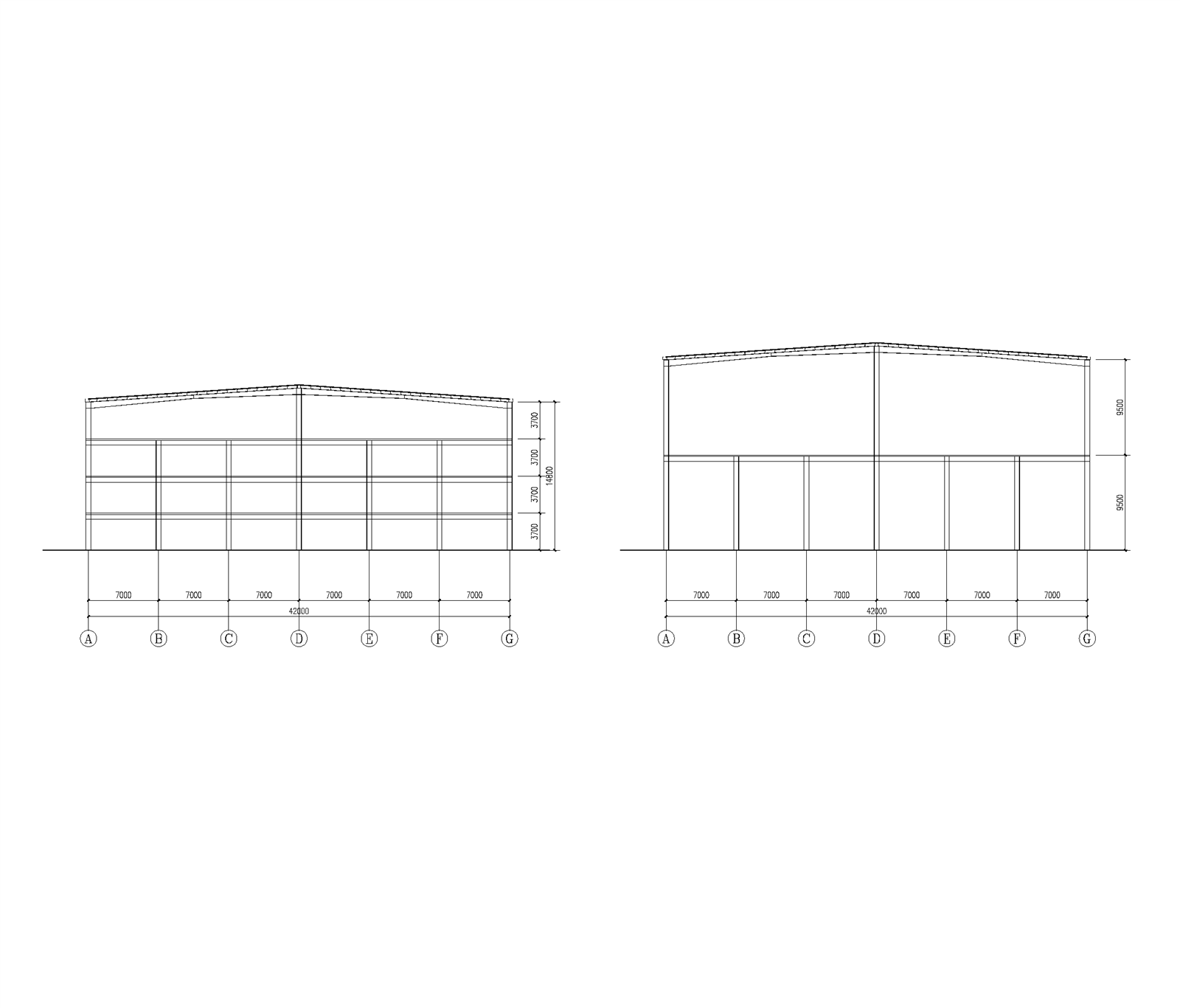
Western Commercial Area: Length 21m, width 42m, 4 floors with each floor height 3.7m (total height 14.8m). Divided into 3 independent bays, with one staircase on the north and south sides respectively for vertical circulation. Concrete walls are adopted (locally supplied in the Philippines), and a 2.6m wide × 2.0m high glass window is installed between each steel column for lighting and ventilation.
Eastern Warehouse Area: Length 85m, width 42m, 2 floors with each floor height 9.5m (total height 19.0m). The span spacing is 7.08m (85m ÷ 12 spans), forming 12 bayzs in total. Four custom steel staircases (CBC supply) are arranged at the four corners for personnel access, and one 5-ton cargo elevator (CBC supply) is configured for goods transportation. The external walls and roof adopt 50mm EPS sandwich panels for enclosure and insulation.
1.2 Structural System
Adopt a steel frame-concrete composite structure system to balance structural stability, construction efficiency and cost control:
Main Structure: Steel frame as the load-bearing core, with H-shaped steel columns and beams. Intermediate columns are arranged along the 42m span direction to reduce span stress, ensuring structural safety under typhoon and seismic loads.
Enclosure System: Warehouse area - 50mm EPS sandwich panels (walls and roof); Commercial area - local concrete walls + CBC-supplied glass windows; Roof of the entire building - 50mm EPS sandwich panels (dual-slope design, slope 1:10 for rainwater drainage).
Floor System: 1mm galvanized steel decking as the base, with on-site cast-in-place concrete floor to form a composite floor slab, enhancing load-bearing capacity and rigidity.
1.3 Vertical Circulation & Supporting Facilities
Staircases: Commercial area - 2 sets of reinforced concrete staircases (local construction, one on north and south sides); Warehouse area - 4 sets of CBC custom steel staircases (anti-corrosion treated, adapting to humid environment, one at each corner).
Cargo Elevator: 1 set of 5-ton CBC custom cargo elevator, with a car size of 3m×2.5m, matching the warehouse's goods transportation needs.
Windows: 2.6m×2.0m glass windows between each steel column (tempered hollow glass, wind-resistant grade ≥12, adapting to Manila's typhoon climate), all supplied by CBC.
Q2: Do you Provide Structural Calculation & Analysis (Compliant with PBC 2015)
A2: Load Bearing, Stability & Environmental Adaptability Analysis
Structural calculation is based on Philippine Building Code (PBC 2015), combined with Manila's climatic conditions (typhoon wind load, high humidity) and seismic intensity (7-degree seismic intensity, seismic design category D). Professional structural design software SAP2000 is used for modeling and analysis, ensuring all indicators meet or exceed standard requirements.
2.1 Material Performance of Core Components
|
Component |
Material Specification |
Mechanical Performance |
Adaptability Advantage |
|
Steel Columns/Beams |
Q355B H-shaped steel |
Yield strength ≥355MPa, tensile strength 470-630MPa |
High strength, good ductility, suitable for typhoon and seismic resistance |
|
Galvanized Steel Decking |
1mm thick, AZ150 galvanized |
Zinc layer thickness ≥150g/㎡, tensile strength ≥345MPa |
Anti-corrosion, lightweight, compatible with cast-in-place concrete |
|
EPS Sandwich Panels |
50mm thick, outer steel sheet 0.4mm (AZ100 galvanized) |
Thermal conductivity 0.038W/(m·K), fire resistance grade B1 |
Thermal insulation, sound insulation, quick installation |
|
Glass Windows |
Tempered hollow glass (6+12A+6mm) |
Wind pressure resistance grade 9, impact resistance grade 2 |
Typhoon-resistant, high transparency, thermal insulation |
2.2 Load Calculation & Bearing Capacity Check
|
Load Type |
Design Value (Commercial Area/Warehouse Area) |
Bearing Component |
Calculation Result |
Safety Evaluation (PBC 2015) |
|
Dead Load |
3.5kN/㎡ / 4.0kN/㎡ (including structure, enclosure, floor) |
H-steel beams + composite floor slab |
Maximum bending moment 148kN·m, bearing capacity 215kN·m |
Safety factor 1.44 > 1.2, meet requirements |
|
Live Load |
3.0kN/㎡ (commercial) / 5.0kN/㎡ (warehouse) |
Steel columns + composite floor slab |
Combined stress 202MPa, allowable stress 235MPa |
Safety factor 1.21 > 1.15, meet requirements |
|
Wind Load |
4.5kN/㎡ (Manila typhoon intensity, 12-level wind) |
Steel frame + wind bracings + glass windows |
Lateral displacement 17.8mm, displacement ratio 1/2359 |
Less than limit 1/1500, meet typhoon resistance requirements |
|
Seismic Load |
7-degree seismic intensity, ground acceleration 0.15g |
Overall steel frame + concrete shear walls |
Natural vibration period 0.85s, equivalent damping ratio 5% |
Seismic response coefficient 0.12 < 0.15, meet seismic requirements |
|
Cargo Elevator Load |
5-ton (static load + dynamic load, total 75kN) |
Special steel beam support + foundation |
Bearing capacity 110kN, settlement ≤2mm |
Safety factor 1.47 > 1.3, meet requirements |
2.3 Environmental Adaptability Analysis
Typhoon Resistance: The steel frame is equipped with cross wind bracings in the longitudinal and transverse directions, and the glass windows adopt typhoon-resistant tempered hollow glass. The dual-slope roof design reduces wind pressure, and the EPS sandwich panels are fixed with anti-wind screws to prevent dislodging under strong winds.
Anti-Corrosion: All steel components adopt hot-dip galvanizing (AZ150) + paint anti-corrosion treatment, and the galvanized steel decking has strong moisture resistance, adapting to Manila's high-humidity and salt-spray environment (coastal proximity).
Thermal Insulation: 50mm EPS sandwich panels have excellent thermal insulation performance, reducing indoor temperature fluctuation (indoor temperature 24-28℃ in summer) and meeting the Philippines' energy-saving standards.

Q3: Will You Provide Detailed Material List & Consumption Calculation
A3: Material Inventory (CBC Supply + Local Supply)
Note: Concrete walls in the commercial area are locally supplied in the Philippines; other core components are supplied by CBC to ensure quality and compatibility.
|
Serial No. |
Material Name |
Specification |
Supply Source |
Consumption |
Application |
|
1 |
Q355B H-Steel (Columns/Beams) |
Columns: H400×400×13×21; Beams: H350×175×7×11 |
CBC |
485 tons |
Main load-bearing structure (commercial + warehouse area) Wall & roof purlin |
|
2 |
Galvanized Steel Decking |
1mm thick, AZ150 galvanized, wave height 75mm |
CBC |
4452㎡ |
Floor base (commercial 4 floors + warehouse 2 floors) |
|
3 |
50mm EPS Sandwich Panels |
Outer steel sheet 0.4mm (AZ100), B1 fire rating |
CBC |
6860㎡ |
Warehouse walls (2280㎡) + entire roof (1580㎡) |
|
4 |
Tempered Hollow Glass Windows |
2.6m×2.0m, 6+12A+6mm, wind-resistant grade 9 |
CBC |
72 sets |
Between steel columns (commercial + warehouse area) |
|
5 |
Custom Steel Staircases |
CBC custom, anti-corrosion, load capacity 2.5kN/㎡ |
CBC |
6 sets |
Warehouse four corners (personnel access) |
|
6 |
5-Ton Cargo Elevator |
CBC custom, car size 3m×2.5m, lifting height 9.5m |
CBC |
1 set |
Warehouse goods transportation |
|
7 |
Steel Connections & Fittings |
High-strength bolts (M24), anti-wind screws, sealant |
CBC |
12.8 tons |
Structural connection, panel fixing, waterproof sealing |
|
8 |
Wind Bracings & Secondary Beams |
Angle steel L100×10, channel steel C160×65×8 |
CBC |
28.5 tons |
Lateral stability reinforcement, roof purlins |
|
9 |
Concrete Walls |
C30 reinforced concrete, 200mm thick |
Local (Philippines) |
1764㎡ |
Commercial area enclosure & shear walls |
|
10 |
11 Cast-in-Place Concrete C35 concrete, floor slab (100mm thick) Local (Philippines) 445.2 m³ Composite floor slab (matched with steel decking, covering warehouse 12-span area) |
C35 concrete, floor slab (100mm thick) |
Local (Philippines) |
445.2 m³ |
Composite floor slab (matched with steel decking) |

Q4: How About the Project Characteristics & What's The CBC Supply Chain Advantages
A4: Core Competitiveness & Value Proposition
4.1 Structural & Functional Advantages
Compliance with Local Standards: Fully compliant with PBC 2015, adapting to Manila's typhoon, seismic and high-humidity environment, ensuring legal and structural safety.
Dual-Functional Integration: Reasonable division of commercial and warehouse areas, with independent vertical circulation and customized facilities (cargo elevator, steel staircases) meeting diverse usage needs.
High Construction Efficiency: Steel structure components (CBC supply) are prefabricated in the factory, with on-site assembly, reducing construction period by 30% compared with traditional concrete structures. Local supply of concrete walls reduces transportation costs.
4.2 CBC Supply Chain Advantages
One-Stop Custom Solution: CBC provides core components (steel structure, EPS panels, windows, elevator, staircases) with unified quality control, avoiding compatibility issues between different suppliers.
Anti-Corrosion & Durability: All steel components (450 tons H-steel, 55 tons purlins, 15 tons supports) adopt AZ150 galvanizing + paint treatment, ensuring sufficient load-bearing redundancy for the warehouse 12-span layout and a design service life of over 50 years, adapting to Manila's harsh coastal environment.
Cost Optimization: Combining CBC's international supply chain with local Philippine materials (concrete) balances cost and quality, improving project cost-effectiveness.
4.3 Operational Advantages
Energy-Saving & Environmental Protection: 50mm EPS sandwich panels reduce energy consumption for air conditioning, and steel components are recyclable, in line with the Philippines' environmental policies.
Easy Maintenance: EPS panels and galvanized steel components have good weather resistance, requiring no major maintenance within 20 years; CBC provides after-sales service for core facilities (elevator, staircases).

Q5: How about The Adaptability of This Design to CBC's Main Markets
A5: Market Adaptation Analysis (Oceania, Southeast Asia, South America)
CBC's main markets cover Oceania (Papua New Guinea, Fiji), Southeast Asia (Indonesia, Vietnam) and South America (Chile, Peru). This mixed-use steel structure design has strong scalability, and can be adapted to different markets through targeted modifications, aligning with CBC's product positioning of "customization, durability and one-stop service".
|
Market Region |
Key Environmental/Standard Characteristics |
Adaptability Level |
Core Adaptation Points |
|
Oceania (Papua New Guinea) |
Tropical rainforest climate, high humidity, 6-7 degree seismic intensity, local lack of concrete supply |
High |
Steel structure is suitable for areas with insufficient local concrete; enhance anti-corrosion treatment (double galvanizing); replace concrete walls with CBC-supplied EPS panels. |
|
Southeast Asia (Indonesia, Vietnam) |
Tropical monsoon climate, typhoon-prone, high temperature, local building codes similar to PBC |
Very High |
Minor modifications to wind load design (Indonesia 4.0kN/㎡); retain local concrete supply; optimize window size to fit local architectural aesthetics. |
|
South America (Chile, Peru) |
Chile: Low temperature, 8-degree seismic intensity; Peru: Coastal salt spray, 7-degree seismic intensity |
Medium-High |
Enhance seismic reinforcement (add eccentric bracings, increase support density for 12-span layout); replace EPS panels with 75mm rock wool panels (Chile low temperature); double anti-corrosion treatment (Peru coastal) for all steel components (H-steel, purlins, supports). |
|
Europe (Southern Europe: Spain) |
Mediterranean climate, strict energy-saving standards, fire resistance grade ≥A2 |
Medium |
Replace EPS panels with fire-resistant rock wool panels; optimize insulation system to meet ENERGY STAR; use local concrete and stone materials for commercial area. |

Q6: Targeted Modifications for Different Markets
A6: Market-Specific Optimization Plan
6.1 Modifications for Oceania (Papua New Guinea)
Material Adjustment: Replace local concrete walls with CBC-supplied 75mm EPS sandwich panels (adapt to insufficient local concrete supply); all steel components adopt double galvanizing (AZ200) + epoxy paint to enhance anti-corrosion in high-humidity rainforest environment.
Structural Optimization: Increase the density of wind bracings (wind load 3.8kN/㎡) to adapt to local tropical storms; adjust the staircase design to steel-concrete composite structure for better durability.
Facility Adaptation: Equip the warehouse with waterproof ventilation fans to reduce indoor humidity; replace glass windows with impact-resistant tempered glass (adapt to frequent rainstorms).
6.2 Modifications for Southeast Asia (Indonesia)
Wind Load Adaptation: Adjust wind load design value to 4.0kN/㎡ (Indonesia's typhoon intensity); enhance glass window wind resistance grade to 10, and use anti-wind clamping strips for EPS panels.
Energy-Saving Optimization: Replace 50mm EPS panels with 60mm polyurethane sandwich panels (better heat insulation in high temperature); add sunshade eaves outside windows to reduce solar radiation.
Localization Adjustment: Retain local concrete supply (Indonesia has mature concrete industry); adjust commercial area layout to fit local business habits (add outdoor terraces).
6.3 Modifications for South America (Chile)
Seismic & Thermal Insulation Adjustment: Upgrade seismic design to 8-degree intensity, add vertical steel plate shear walls; replace 50mm EPS panels with 75mm rock wool panels (adapt to Chile's low temperature, thermal resistance ≥4.5 (m²·K)/W).
Anti-Corrosion Enhancement: All steel components adopt hot-dip galvanizing (AZ150) + polyurethane paint double treatment to resist coastal salt spray (for Peru) or mountain humidity (for Chile).
Roof Design: Adjust dual-slope roof slope to 1:8 (Chile's heavy snowfall) to ensure snow drainage; use color steel-faced rock wool panels for the roof (better fire resistance).
6.4 Modifications for Southern Europe (Spain)
Fire & Energy-Saving Upgrade: Replace EPS panels with A2-grade fire-resistant rock wool sandwich panels; use low-E hollow glass for windows to meet European energy-saving standards (thermal transmittance ≤2.0 W/(㎡·K)).
Architectural Aesthetics: Replace commercial area concrete walls with local stone-clad concrete walls; adjust window style to casement windows (fit Mediterranean architectural style).
Structural Adjustment: Reduce warehouse floor height to 8.0m (European space standards); adjust span spacing to 7.5m (optimize 12-span to 11-span for local needs); optimize steel frame section to H300×150×6×9, and match purlin/support dosage accordingly (reduce to 48 tons purlins, 13 tons supports).

Q7: Project Feasibility & Market Expansion Value Summary
A7: Core Conclusion & Promotion Potential
This steel structure mixed-use complex, designed for Manila, Philippines, fully complies with PBC 2015 and adapts to local climatic and geological conditions. By integrating CBC's prefabricated steel components with local concrete materials, the project balances structural safety, construction efficiency and cost-effectiveness, demonstrating obvious competitive advantages in the Philippine market.
In terms of market expansion, the design has strong scalability and can be quickly adapted to CBC's main markets (Oceania, Southeast Asia, South America) through targeted modifications (anti-corrosion, seismic, thermal insulation, material replacement). Especially in Southeast Asia and Oceania, where climatic conditions and construction levels are similar to the Philippines, the project can be promoted as a core product with minimal modifications. With the global trend of green and prefabricated buildings, this design is expected to become a key driver for CBC to expand the international mixed-use steel structure market, further strengthening its position in the global supply chain.
You Might Also Like



Send Inquiry
