

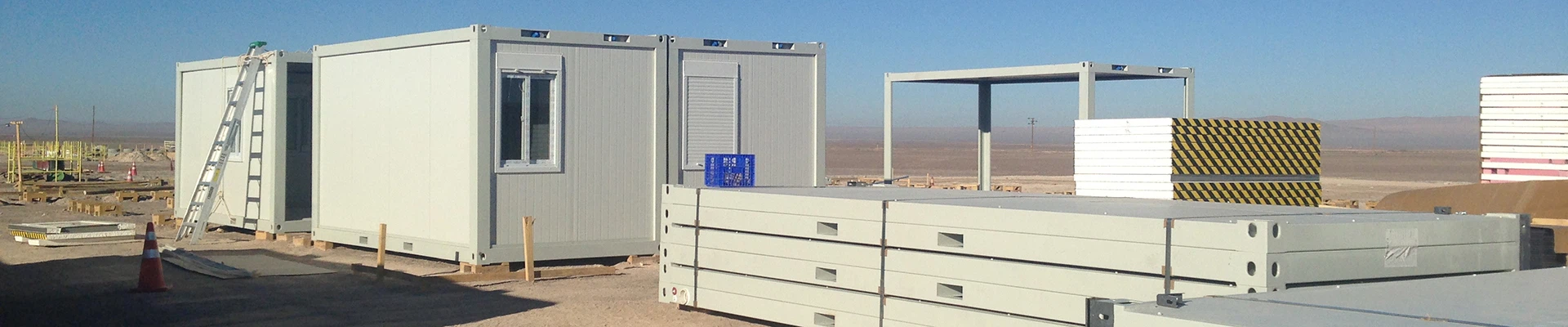


Custom Modular Building Design For Indonesian Mining Camp
This project is customized for a large Indonesian mining company, aiming to provide modular buildings for on-site accommodation, including two types of residential buildings: one for management personnel and the other for workers. Based on CBC’s Flatpack container house system, the project adopts a standardized modular design (2.25m×4m per container module) to facilitate mass production in factories, transportation to remote outer islands in Indonesia, and on-site assembly
Product Introduction
Custom Modular Building Design for Indonesian Mining Camp (CBC Flatpack Container House System) & Market Analysis

1. Project Overview
This project is customized for a large Indonesian mining company, aiming to provide modular buildings for on-site accommodation, including two types of residential buildings: one for management personnel and the other for workers. Based on CBC's Flatpack container house system, the project adopts a standardized modular design (2.25m×4m per container module) to facilitate mass production in factories, transportation to remote outer islands in Indonesia, and on-site assembly. The modular buildings are designed with high weather resistance to adapt to the harsh environment of Indonesian outer islands. The detailed requirements and design schemes are as follows:
CBC Flatpack Container House System: The core of the system is the customized 2.25m×4m flatpack container module, which is prefabricated in the factory and can be quickly assembled on-site. Two modules are spliced along their long sides to form a 4.5m×4m room (18 square meters). Both types of residential buildings adopt the same module size, which realizes mass production, reduces costs and shortens the construction period.
2. Modular Building Design
2.1 Management Personnel Accommodation Building
2.1.1 Basic Specifications
Each single room has a construction area of 18 square meters (meeting the 16-20 square meter requirement), including an independent bathroom. The total number of management rooms is about 250. The building is designed as a two-story structure, with 12 rooms per floor and 24 rooms per building. A total of approximately 11 buildings are required to meet the 250-room demand (11×24=264 rooms, slightly exceeding the demand to ensure flexibility).
2.1.2 Layout Design
Room Layout: Each floor has 6 rooms arranged opposite each other on the south side, with a 2-meter-wide corridor in the middle. The corridor adopts CBC's customized steel structure corridor system, ensuring stability and safety.
Room Structure: Each room is formed by splicing two 2.25m×4m flatpack container modules, with an overall size of 4.5m×4m (18 square meters). The room is divided into two parts: a 3m×4m (12 square meters) living area and a 1.5m×4m (6 square meters) bathroom area.
Facilities Configuration: The living area is designed for single occupancy (management personnel), with basic living space reserved. The bathroom is equipped with a toilet, a washbasin, and an integrated shower, meeting the independent sanitation needs of management personnel.
Stair Configuration: Two sets of upper and lower stairs are set at both ends of each building, ensuring smooth circulation of personnel and emergency evacuation.

2.2 Workers' Dormitory Building
2.2.1 Basic Specifications
Each single room has a construction area of 18 square meters (consistent with the management room, meeting the 16-20 square meter requirement), without an independent bathroom. Each room accommodates 4 workers, and the total number of workers to be accommodated is about 1600, so a total of 400 rooms are required (1600÷4=400 rooms). The building is a two-story structure, with 14 rooms per floor and 28 rooms per building. A total of approximately 15 buildings are required (15×28=420 rooms, reserved for future expansion).
2.2.2 Layout Design
Room Layout: Each floor has 7 rooms arranged opposite each other on the north and south sides, with a 2-meter-wide corridor in the middle (same as the management building's corridor system, ensuring standardized production and installation).
Room Structure: Each room is also formed by splicing two 2.25m×4m flatpack container modules, with an overall size of 4.5m×4m (18 square meters). The room is designed as an open living space, with 4 1.2m×2m beds placed reasonably and a 1.5m-wide corridor in the middle to ensure smooth passage for workers.
Public Sanitary Facilities: Two 4.5m×4m modules are added on the east side of each floor (one on the north and one on the south), serving as public toilets and showers. The public facilities are reasonably configured according to the number of workers (40 workers per floor, 2 public sanitary modules, ensuring sufficient usage space and efficiency).
Stair Configuration: Same as the management building, two sets of upper and lower stairs are set at both ends of each building, facilitating personnel flow and emergency evacuation.

2.3 Common Structural Design
Corridor System: All buildings adopt CBC's customized steel structure corridor system, with 18mm cement fiber floor boards + 2mm PVC floor covering, and corridor ceiling installed to improve comfort and durability.
Roof System: Each building is equipped with CBC's light steel roof system, consisting of 0.5mm color steel tiles + 100mm glass wool insulation layer. This system has good thermal insulation performance and weather resistance, adapting to the high-temperature and rainy environment of Indonesian outer islands.
Modular Features: All modules are designed with the same size (2.25m×4m) to facilitate mass production in the factory, reduce production costs, and simplify on-site assembly. The flatpack design ensures convenient transportation to remote outer islands (modules can be stacked and loaded into containers for transportation).
Weather Resistance: The modular buildings are designed with high weather resistance, including anti-corrosion treatment for steel structures, waterproof treatment for roofs and walls, and moisture-proof treatment for floors, adapting to the humid, high-temperature, and salt-spray environment of Indonesian outer islands.

3. Material List
3.1 Material Selection Principles
All materials selected for this project comply with international standards and CBC Flatpack container house system requirements, with high durability, weather resistance, and easy assembly. The materials are suitable for the harsh environment of Indonesian outer islands (high temperature, high humidity, salt spray) and can be prefabricated in the factory to ensure the quality and efficiency of modular production.
3.2 Detailed Material List (Per Building, Taking Management Building as Reference; Workers' Building Has Slight Differences in Sanitary Facilities)
|
Material Name |
Specification |
Usage Description |
Estimated Quantity (Per Management Building) |
Estimated Quantity (Per Workers' Building) |
|
Flatpack Container Module |
2.25m×4m, steel frame structure |
Basic module for rooms, corridor, and public facilities; prefabricated in factory |
24 modules (12 rooms × 2 modules/room) |
32 modules (14 rooms × 2 modules/room + 2 public modules/floor × 2 floors) |
|
Steel Structure for Corridor |
CBC customized steel frame, galvanized anti-corrosion |
Support for corridor floor and ceiling; ensuring stability |
40 meters (20m/floor × 2 floors) |
44 meters (22m/floor × 2 floors) |
|
Floor Board |
18mm cement fiber board |
Corridor floor base; moisture-proof and wear-resistant |
80㎡ (40m × 2m) |
88㎡ (44m × 2m) |
|
PVC Floor |
2mm thick, anti-slip and waterproof |
Covering corridor floor; improving comfort and easy cleaning |
80㎡ |
88㎡ |
|
Corridor Ceiling |
CBC customized light steel ceiling, fire-proof |
Corridor ceiling; sound insulation and beauty |
80㎡ |
88㎡ |
|
Light Steel Roof System |
0.5mm color steel tile + 100mm glass wool insulation |
Building roof; thermal insulation, waterproof and weather-resistant |
220㎡ (4.5m × 24.5m, including corridor and rooms) |
250㎡ (4.5m × 27.8m, including corridor, rooms and public facilities) |
|
Staircase Steel Structure |
CBC customized steel staircase, galvanized anti-corrosion |
Upper and lower stairs at both ends of the building |
2 sets (each set: 3m high, 1.2m wide) |
2 sets (same as management building) |
|
Bathroom Facilities (Management) |
Toilet, washbasin, integrated shower, waterproof floor |
Independent bathroom for management rooms |
12 sets (1 set/room) |
0 set (public facilities separately configured) |
|
Public Sanitary Facilities (Workers) |
Toilets, showers, washbasins, waterproof floor and wall tiles |
Public toilets and showers for workers |
0 set |
4 sets (2 sets/floor) |
|
Beds (Workers) |
1.2m×2m, steel frame bed with mattress |
Workers' dormitory accommodation |
0 set |
28 sets (14 rooms × 2 beds/room × 2 floors) |
|
Anti-Corrosion Coating |
Epoxy zinc-rich primer + topcoat |
Anti-corrosion treatment for all steel components; adapting to salt-spray environment |
300㎡ (coating area) |
350㎡ (coating area) |
|
Connecting Parts |
High-strength bolts, welding electrodes, sealing strips |
Connection of modules, steel structures, and facilities; waterproof and firm |
High-strength bolts: 2000 pieces; Welding electrodes: 1.5 tons; Sealing strips: 100 meters |
High-strength bolts: 2500 pieces; Welding electrodes: 2 tons; Sealing strips: 120 meters |

3.3 Total Material Summary (For Entire Project: 11 Management Buildings + 15 Workers' Buildings)
Flatpack Container Modules: 11×24 + 15×32 = 264 + 480 = 744 modules
Steel Structure for Corridor: 11×40 + 15×44 = 440 + 660 = 1100 meters
Cement Fiber Floor Board & PVC Floor: 11×80 + 15×88 = 880 + 1320 = 2200㎡ (each material)
Light Steel Roof System: 11×220 + 15×250 = 2420 + 3750 = 6170㎡
Staircase Steel Structure: (11+15)×2 = 52 sets
Bathroom Facilities: 11×12 = 132 sets (management); 15×4 = 60 sets (workers' public)
Workers' Beds: 15×28 = 420 sets
Anti-Corrosion Coating: 11×300 + 15×350 = 3300 + 5250 = 8550㎡
4. Project Feasibility & Applicability Analysis
4.1 Feasibility Analysis
Prefabrication & Mass Production Feasibility: Based on CBC's Flatpack container house system, all modules adopt the same size (2.25m×4m), which can be mass-produced in the factory. The prefabrication rate reaches over 90%, ensuring stable product quality and high production efficiency. The standardized design reduces design and production costs, making large-scale project implementation feasible.
Transportation Feasibility: The flatpack design of the modules allows for easy stacking and loading into standard shipping containers, which is suitable for transportation to Indonesian outer islands (where transportation conditions are relatively limited). Each shipping container can load 8-10 flatpack modules, reducing transportation costs and improving transportation efficiency. The modules are light in weight, and no large-scale transportation equipment is required for on-site transfer.
Construction Feasibility: The on-site assembly of the modules is simple and fast, requiring only a small number of professional workers and simple construction equipment. The assembly period of each building is about 7-10 days, and the entire project can be completed within 3-4 months (meeting the urgent accommodation needs of mining projects). The assembly process has little impact on the on-site environment, which is in line with the environmental protection requirements of Indonesian mining areas.
Weather Resistance Feasibility: The selected materials (galvanized steel structure, anti-corrosion coating, 0.5mm color steel tile, 100mm glass wool) have good weather resistance, which can effectively resist high temperature, high humidity, salt spray and heavy rain in Indonesian outer islands. The waterproof and anti-corrosion treatment of the modules ensures that the service life of the building reaches more than 15 years, meeting the long-term use needs of mining camps.

4.2 Applicability Analysis
Applicability to Indonesian Outer Islands: The modular buildings are designed with light weight, easy transportation and assembly, which is perfectly suitable for the remote location and limited transportation/construction conditions of Indonesian outer islands. The weather-resistant design adapts to the local tropical marine climate, avoiding damage to the building caused by harsh weather.
Applicability to Mining Camp Needs: The design of two types of buildings (management and workers) meets the different accommodation needs of mining personnel. The management rooms with independent bathrooms ensure privacy and comfort, while the workers' dormitories with public sanitary facilities meet the large-scale accommodation needs and control costs. The room layout is reasonable, and the supporting facilities (corridor, stairs, public facilities) are complete, ensuring the daily life of personnel.
Applicability to CBC System: The project is fully based on CBC's Flatpack container house system, making full use of the system's advantages of standardization, modularization and prefabrication. The consistent module size ensures the interchangeability of components, which is convenient for later maintenance, replacement and expansion. At the same time, it can give full play to CBC's technical and production advantages, ensuring the project quality and progress.
Applicability to Large-Scale Accommodation: The project can provide accommodation for about 264 management personnel (11 buildings) and 4200 workers (15 buildings), which exceeds the customer's demand (250 management personnel and 1600 workers), leaving sufficient space for future project expansion. The modular design allows for flexible adjustment of the number of buildings according to the actual number of personnel.

5. Advantages & Disadvantages Analysis
5.1 Advantages
High Standardization & Mass Production: The same module size (2.25m×4m) is adopted for all buildings, which can be mass-produced in the factory, reducing production costs and ensuring product quality consistency. The standardized components are convenient for later maintenance and replacement.
Easy Transportation & Fast Assembly: The flatpack design of the modules is suitable for long-distance transportation (especially to remote outer islands), and the on-site assembly is simple and fast, shortening the construction period and meeting the urgent accommodation needs of mining projects.
Strong Weather Resistance: The materials and structural design are optimized for the harsh environment of Indonesian outer islands, with good anti-corrosion, waterproof, thermal insulation and anti-wind performance, ensuring long-term stable use of the buildings.
Flexible & Expandable: The modular structure allows for flexible adjustment of the number of buildings and rooms according to the actual needs of the mining project. The modules can be disassembled and reused, which is environmentally friendly and can reduce the waste of resources when the project is completed.
Cost-Effective: Compared with traditional concrete buildings, the modular buildings have lower construction costs (about 50%-60% of traditional buildings) and shorter construction periods, reducing the investment risk of the mining company. The long service life and low maintenance cost further improve the cost performance.
Good Comfort: The corridor system with PVC floor and ceiling, the thermal insulation roof with glass wool, and the reasonable room layout improve the living comfort of personnel, helping to improve the work efficiency of mining personnel.

5.2 Disadvantages
High Initial Transportation Cost: Although the modules are easy to transport, the long-distance transportation from CBC's factory to Indonesian outer islands may lead to high transportation costs, especially when the number of modules is large (744 modules for the entire project).
Dependence on Professional Assembly Team: The on-site assembly of the modules requires professional workers familiar with CBC's Flatpack container house system. If the local assembly team is not professional enough, it may affect the assembly quality and progress, and additional training costs may be required.
Limited Space Flexibility in Rooms: The room size is fixed (4.5m×4m) due to the modular design, which cannot be flexibly adjusted according to the individual needs of the mining company. For example, it is difficult to expand a single room or change the room layout.
Higher Initial Material Cost: The steel materials and high-quality accessories used in the modular buildings have higher initial costs than traditional building materials, which may increase the initial investment of the project (but the long-term maintenance cost is lower, offsetting part of the initial cost).
Influence of Extreme Weather: Although the buildings have good weather resistance, they may still be affected by extreme weather such as strong typhoons in Indonesian outer islands, requiring additional reinforcement measures (increasing project costs).

6. Target Market & Target Customer Analysis
6.1 Target Market
The target market of this modular building project is mainly concentrated in Indonesia, especially the mining areas on outer islands, and can be extended to other Southeast Asian countries with similar geographical and industrial characteristics. The specific market positioning is as follows:
Geographical Market: Focus on Indonesian outer islands (such as Sumatra, Kalimantan, Sulawesi), where there are a large number of large-scale mining projects (coal, nickel, copper, etc.). These areas are remote, with limited transportation and construction conditions, and the demand for temporary/permanent accommodation for mining personnel is huge. At the same time, they can be extended to other Southeast Asian countries with remote mining areas (such as the Philippines, Malaysia, Myanmar).
Industry Market: Focus on the mining industry, including large-scale coal mines, nickel mines, copper mines and other mining projects. In addition, it can also be extended to other industries with remote construction sites and large-scale personnel accommodation needs, such as oil and gas exploration, infrastructure construction (highways, railways), and logging.
Market Characteristics: The target market is mainly large-scale projects with urgent accommodation needs, remote construction sites, and limited transportation/construction conditions. Customers in this market pay more attention to the transportation convenience, assembly speed, weather resistance and cost performance of the buildings, and have high requirements for the standardization and quality of the products.

6.2 Target Customers
The target customers of this project are mainly large-scale enterprises with remote project sites and large-scale personnel accommodation needs, especially mining companies in Indonesia. Specifically, they include:
Large-Scale Indonesian Mining Companies: Such as PT Freeport Indonesia (copper mining), PT Adaro Energy (coal mining), PT Vale Indonesia (nickel mining). These companies have a large number of mining projects on outer islands, with thousands of employees (management and workers) needing accommodation. They have sufficient funds and pay attention to the comfort and safety of employees' accommodation, which is the core target customer group.
International Mining Companies Investing in Indonesia: Such as BHP Billiton, Rio Tinto and other international mining giants. These companies have strict requirements on project quality, safety and environmental protection, and the modular buildings based on CBC's Flatpack system can meet their high standards. They are important potential target customers.
Engineering Construction Companies Undertaking Mining Projects: Companies engaged in mining infrastructure construction, mining equipment installation and other businesses in Indonesian outer islands. These companies need to provide accommodation for construction personnel (similar to mining workers), and the modular buildings are suitable for their temporary or long-term accommodation needs.
Government or Enterprise Units Undertaking Remote Area Development: Indonesian government departments or enterprises engaged in the development of outer islands (such as infrastructure construction, resource development) need to provide accommodation for on-site personnel, and the modular buildings can meet their needs for convenient transportation, fast assembly and weather resistance.

7. Conclusion
Based on CBC's Flatpack container house system, the customized modular camp designed for the large Indonesian mining company fully meets the customer's requirements for management and workers' accommodation. The two types of buildings adopt standardized modules, with reasonable layout, complete facilities, strong weather resistance and high cost performance. The project is feasible in terms of prefabrication, transportation, construction and weather resistance, and has strong applicability to Indonesian outer islands and mining camp needs.
Although the project has some disadvantages such as high initial transportation cost and dependence on professional assembly teams, its overall advantages (standardization, fast assembly, weather resistance, flexibility, cost-effectiveness) outweigh the disadvantages. From the market perspective, the target market (Indonesian outer island mining areas) has huge potential, and the target customers (large mining companies, international mining giants, engineering construction companies) are clear. With the continuous development of the mining industry in Indonesia and other Southeast Asian countries, the demand for modular accommodation buildings suitable for remote areas will continue to grow. This type of project based on CBC's Flatpack container house system has broad development prospects and market competitiveness.
You Might Also Like


Send Inquiry
