


Steel Structure Warehouse Design Report Of Tanza Factory Project in South Manila
Project Name: Tanza Factory Project
Structure Type: Light Steel Structure Warehouse
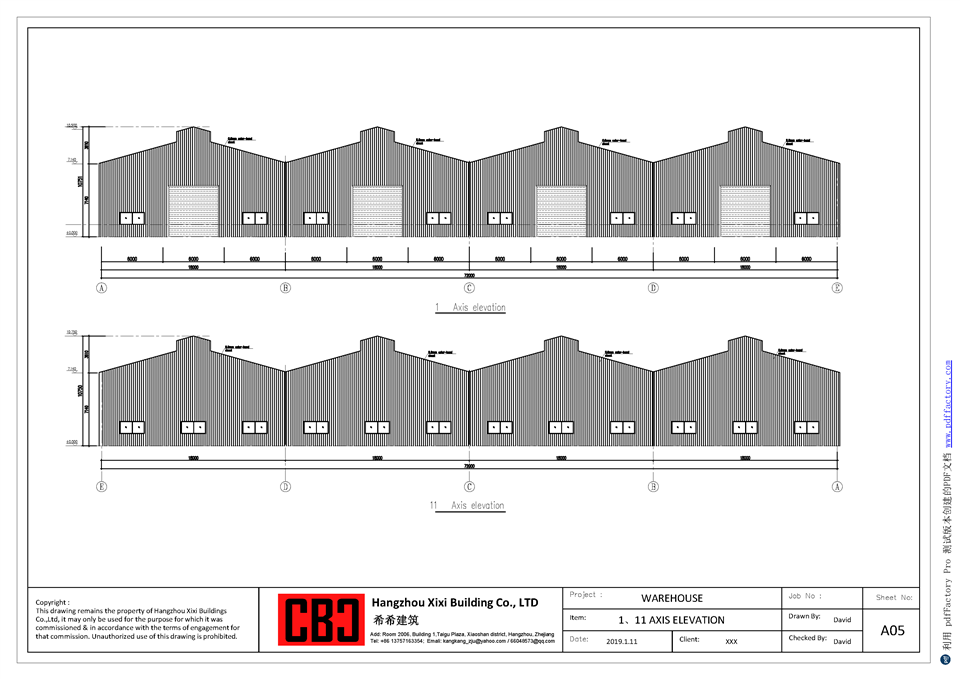
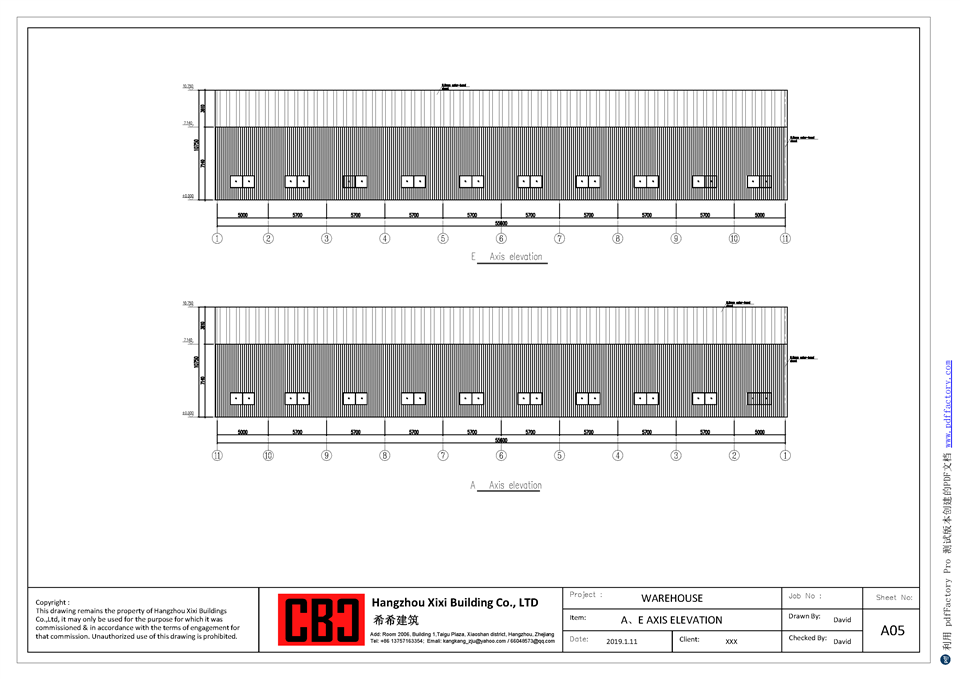
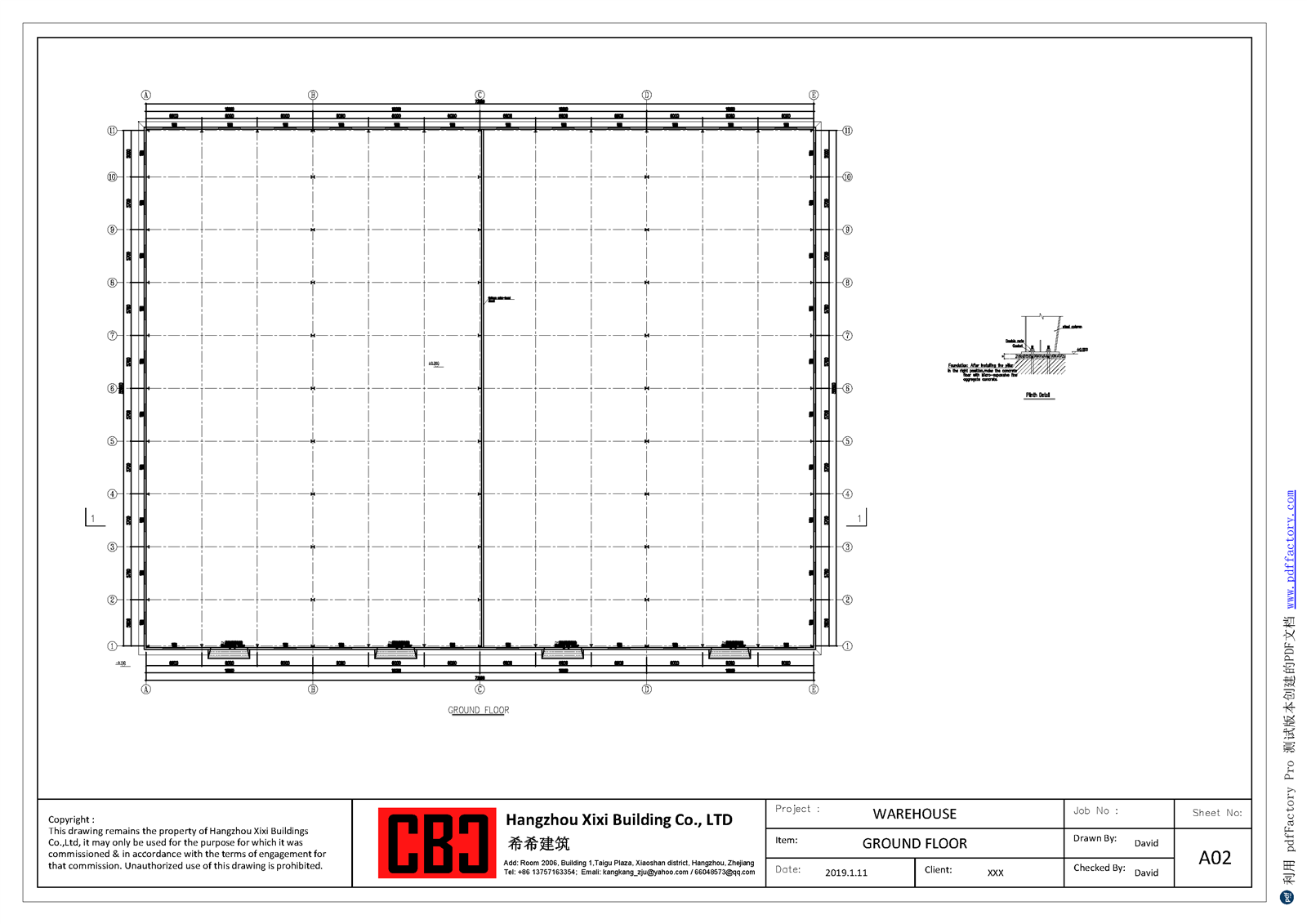
Overall Dimensions: Length (L) 55.6m × Width (W) 72m × Height (H) 7m
Span Arrangement:
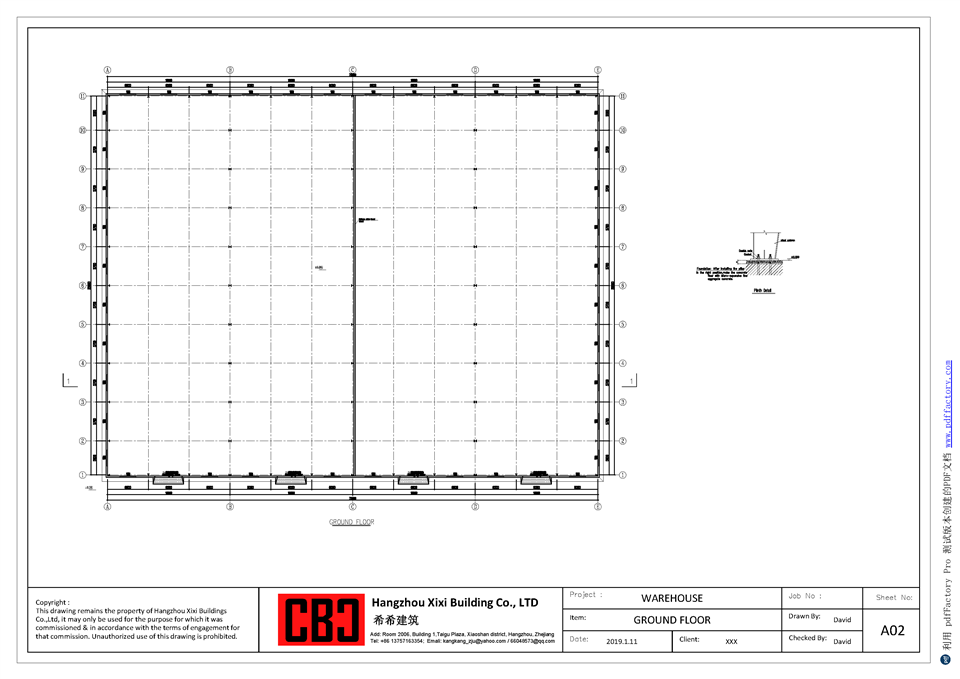
Length Direction (55.6m): 10 spans in total, arranged as 5m + 8×5.7m + 5m
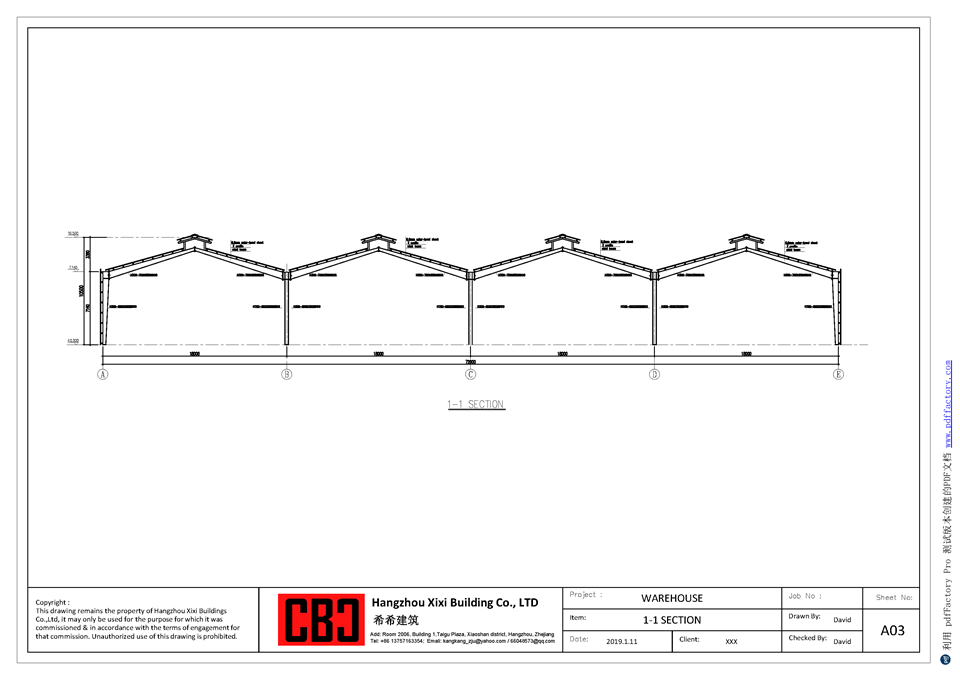
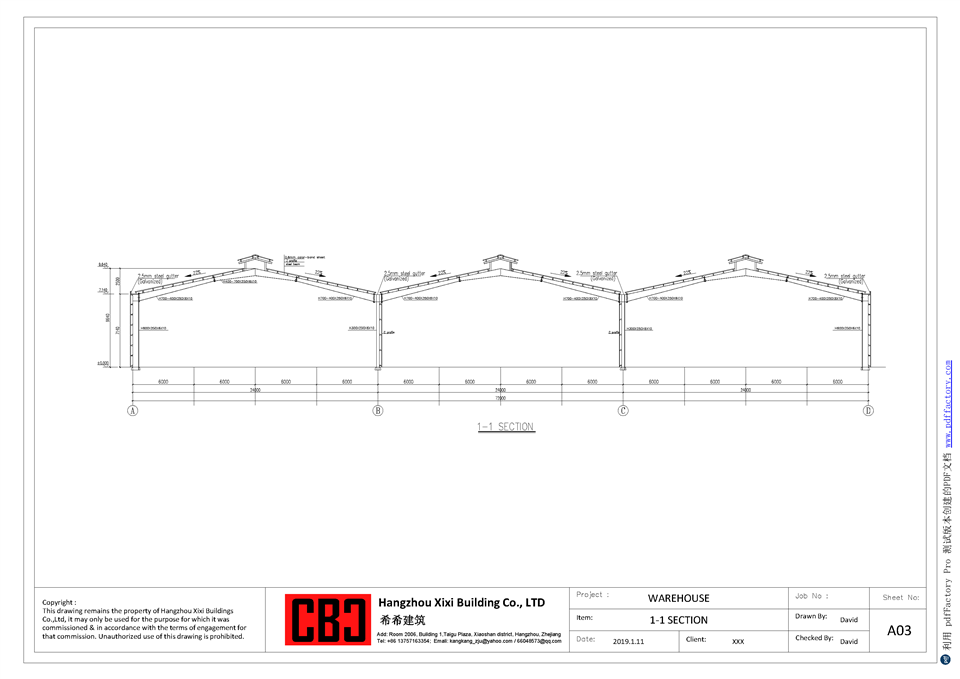
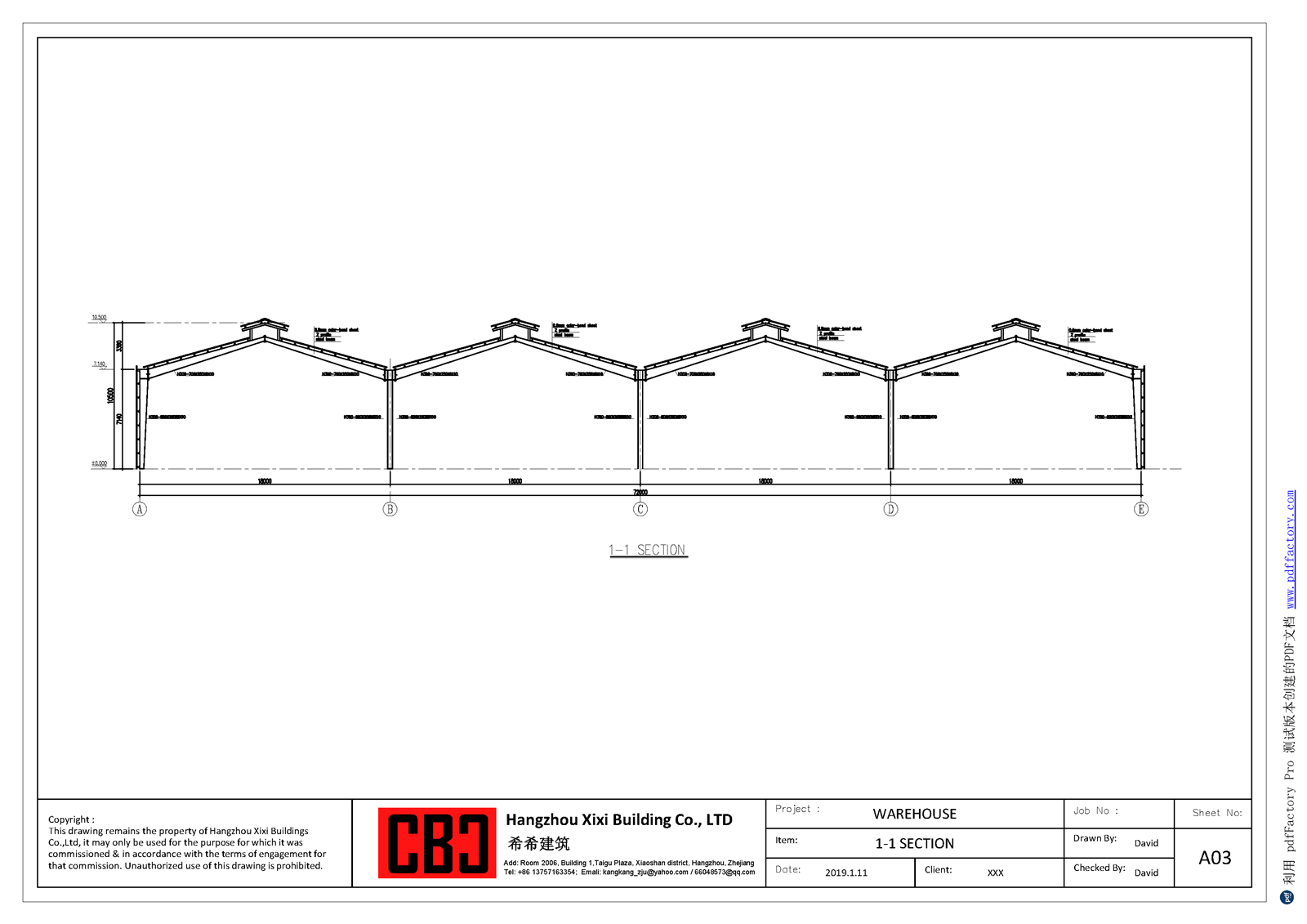
Width Direction (72m): 4 continuous spans of 18m each
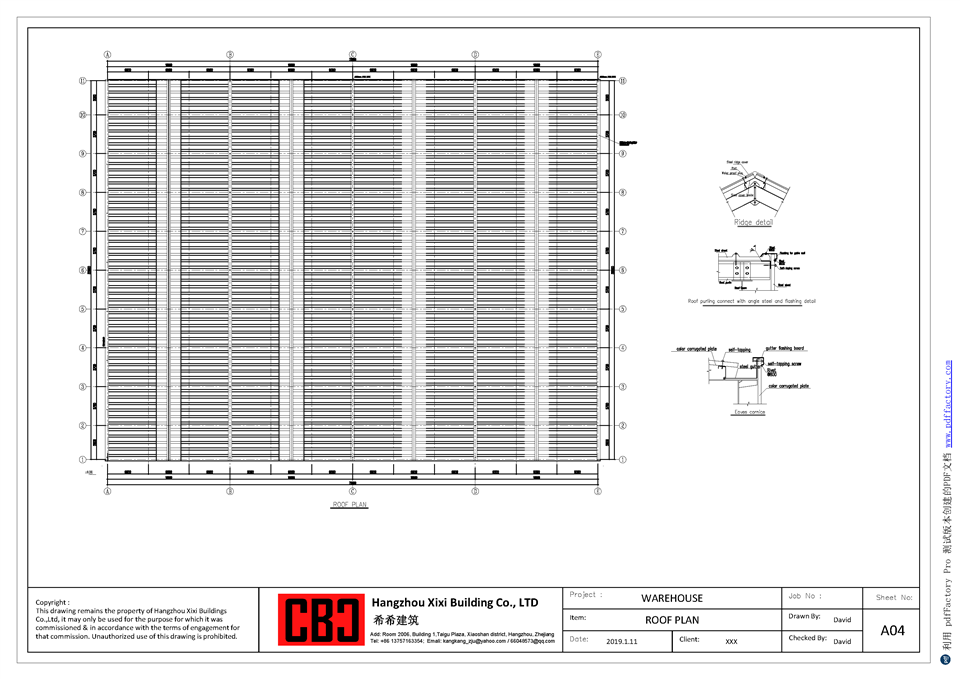
Enclosure System: 0.6mm color steel single tile for both roof and wall panels
Product Introduction
Tanza Factory Project - Steel Structure Warehouse Design Report
1. Project Overview
This report presents the design details, structural force analysis, steel section recommendations, total steel consumption, and applicability assessment in multiple regions for the Tanza Factory Project, a steel structure warehouse designed for a Philippine client in 2018. The warehouse is located in the southern part of Manila, Philippines, and its design strictly complies with the local load requirements. Below are the key parameters of the project:
Project Name: Tanza Factory Project
Structure Type: Light Steel Structure Warehouse
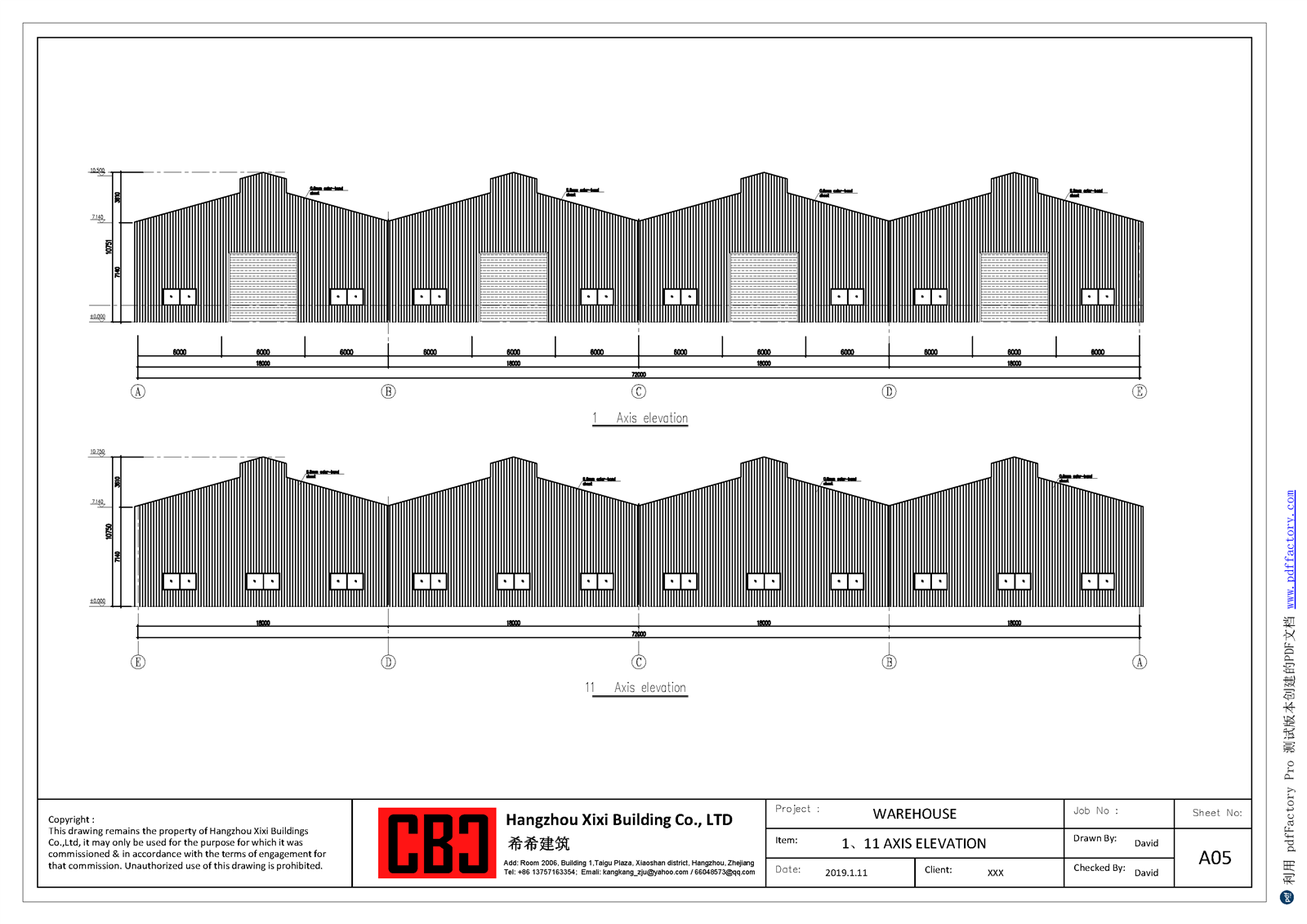
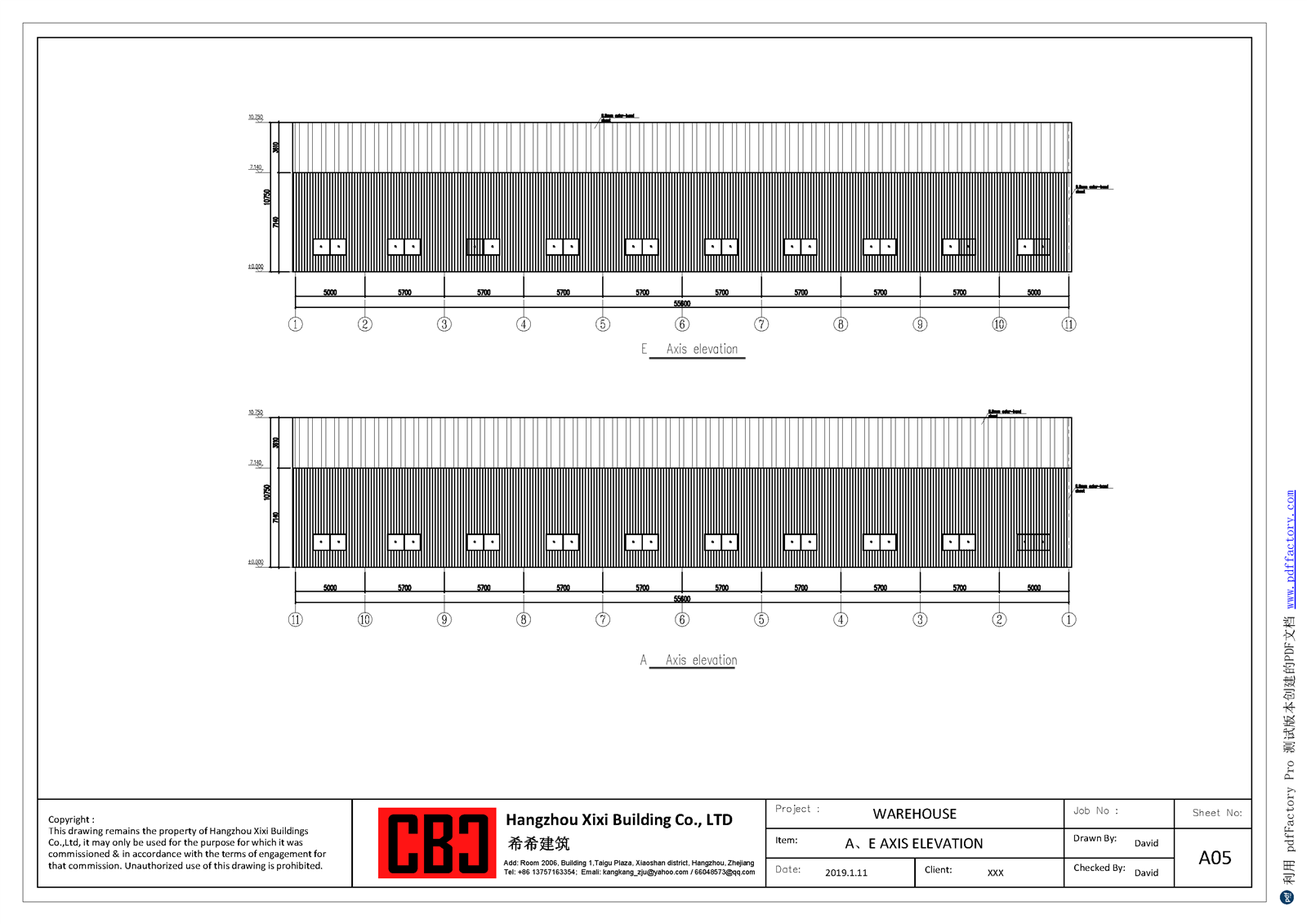
Overall Dimensions: Length (L) 55.6m × Width (W) 72m × Height (H) 7m
Span Arrangement:
Length Direction (55.6m): 10 spans in total, arranged as 5m + 8×5.7m + 5m
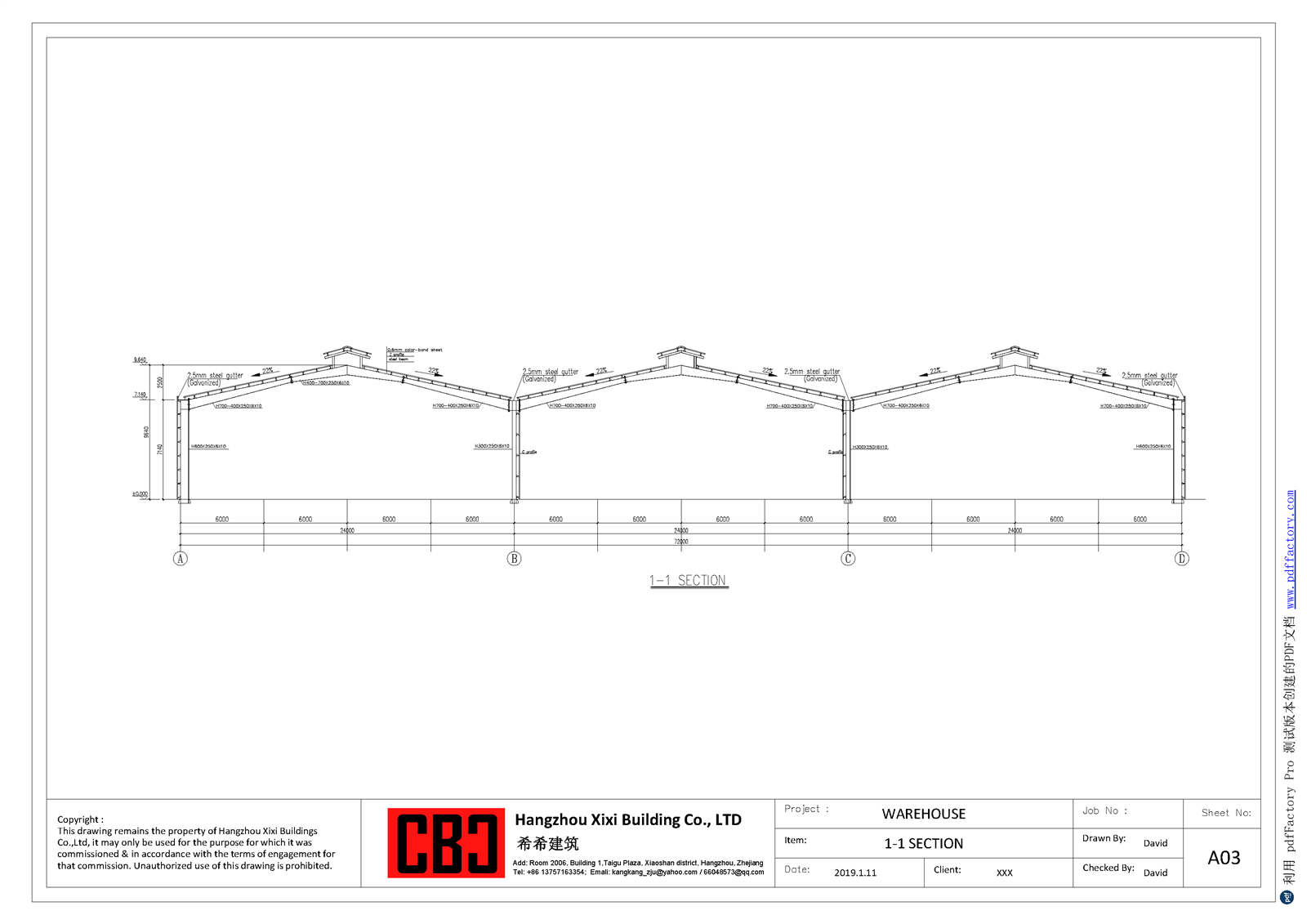
Width Direction (72m): 4 continuous spans of 18m each
Enclosure System: 0.6mm color steel single tile for both roof and wall panels
Doors and Windows:
Length Direction (55.6m): 20 windows in total, 10 on each side
Width Direction (72m): 1 rolling shutter door for each of the 4 continuous spans; 2 windows on the front and 3 windows on the back of each span
Ventilation: Ridge ventilators installed on each span
2. Design Basis: Load Requirements in Southern Manila, Philippines
The design of the warehouse is based on the Philippine National Structural Code (NSCP) 2015, Volume 1, 7th Edition, which is the core specification governing steel structure design in the Philippines. Combined with the climatic and geological characteristics of southern Manila, the key load parameters adopted in the design are as follows, ensuring the structure's safety and durability under local environmental conditions:
Dead Load (DL):
Roof: 0.15 kN/m² (including 0.6mm color steel single tile, purlins, and ridge ventilators)
Walls: 0.12 kN/m² (0.6mm color steel single tile and wall purlins)
Steel Structure Self-weight: Calculated based on the selected section size, with a reference value of 76.93 kN/m for steel members.
Live Load (LL):
Roof Live Load: 1.00 kPa, in line with the NSCP 2015 requirements for industrial warehouse roofs.
Floor Live Load: 5.0 kN/m² (for the warehouse ground floor, considering the storage of general goods)
Wind Load (WL):
Basic Wind Velocity: 280.00 kph, calculated in accordance with NSCP 2015 wind load provisions.
Design Wind Pressure: P = qh [(gc pf) - (cgpi)], where qh is the velocity pressure, gc pf is the external pressure coefficient, and cgpi is the internal pressure coefficient.
Wind Load Coefficient: Considering the warehouse's rectangular shape and low height (7m), the shape coefficient is taken as 1.3, and the height variation coefficient is 1.0 (since the height is less than 10m).
Seismic Load (SL):
Seismic Zone: Zone 4 (southern Manila belongs to a medium-high seismic intensity area), with a seismic coefficient Z = 0.40.
Design Base Shear: V = cm/rtw, with the importance factor I = 1.25, the response modification factor R = 8.50, and the seismic coefficients cv = 1.50, ca = 0.64.
Soil Type: SD, and the natural period T = ct (hn)³/⁴, where ct is a numerical coefficient and hn is the building height.
Other Loads:
Snow Load: Negligible (southern Manila has a tropical climate with no snowfall throughout the year), so it is not considered in the design.
Temperature Load: Considering the local temperature range (25°C - 38°C), the temperature change is ±15°C, and thermal expansion and contraction measures are adopted in the structure.
In addition, the design also complies with the Philippine National Standard for Steel Structures (PNS 49) and the Philippine National Standard for Welding (PNS 49-1), ensuring the quality of steel components and connections.
3. Recommended Steel Section Sizes
Based on the load requirements and structural layout, the reference steel section sizes for each component of the warehouse are determined through structural calculation and optimization, considering both safety and economic efficiency. The steel used is ASTM A36, with a yield strength fy = 248 MPa, which is in line with the material design strength requirements for Philippine steel structures. The specific recommendations are as follows:
3.1 Main Frame (Portal Frame)
Main Beams (18m span, 4 continuous spans):
End Span Beams: H-section steel H400×200×8×12 (Height×Width×Web Thickness×Flange Thickness). This section is selected to resist the larger bending moment at the end spans, ensuring sufficient flexural and shear capacity.
Middle Span Beams: H-section steel H350×180×7×10. The middle spans bear relatively smaller bending moments, so a slightly smaller section is adopted to save steel.
Columns (7m height, 11 columns along the length direction):
End Columns: H-section steel H300×150×7×10. End columns bear larger lateral wind and seismic loads, so a more robust section is used.
Middle Columns: H-section steel H250×140×6×8. Middle columns are mainly subjected to vertical loads, so a relatively lightweight section is adopted.
3.2 Secondary Structure
Roof Purlins (arranged along the length direction, spacing 1.5m): C-section steel C160×70×20×2.5. The purlins support the roof panels and are designed to resist the roof's dead and live loads. The section size is determined based on the span and load, with reference to the common purlin specifications for light steel warehouses.
Wall Purlins (arranged along the height direction, spacing 1.2m): C-section steel C140×60×20×2.3. The wall purlins support the wall panels and resist wind pressure, with a slightly smaller section than roof purlins due to the smaller span.
Ridge Ventilators: Steel frame with C120×50×20×2.0, matched with 0.6mm color steel panels. Each span is equipped with a ridge ventilator, which is lightweight and does not significantly increase the structural load.
Bracing System:
Horizontal Bracing (roof and wall): Round steel φ16, arranged at intervals of 5m - 5.7m (consistent with the span spacing in the length direction) to enhance the horizontal stiffness of the structure.
Vertical Bracing (column间): Angle steel L75×50×5, arranged at both ends and the middle of the warehouse to resist lateral seismic and wind loads. For spans larger than 5m, double round steel (2φ16) is adopted for vertical bracing to ensure stability.
Door and Window Frames: Square steel tube 80×80×3.0 (for rolling shutter doors) and 60×40×2.5 (for windows), ensuring sufficient strength to support the door and window weights and resist wind pressure.
4. Total Steel Consumption Calculation
The total steel consumption of the warehouse is calculated based on the recommended section sizes, component lengths, and the weight of steel materials (78.5 kN/m³, i.e., 7850 kg/m³). The calculation includes the main frame, secondary structure, bracing system, and door/window frames, excluding the weight of color steel panels (0.6mm color steel single tile weighs about 5.88 kg/m², which is not part of the steel structure weight). The detailed calculation is as follows:
4.1 Steel Consumption of Each Component
Main Beams:
End Span Beams: 2 spans × 18m × 64.4 kg/m (weight of H400×200×8×12) = 2318.4 kg
Middle Span Beams: 9 spans × 18m × 49.9 kg/m (weight of H350×180×7×10) = 8083.8 kg
Total for Main Beams: 2318.4*4 + 8083.8*4 = 41,608.8 kg
Columns:
End Columns: 2 columns × 7m × 42.3 kg/m (weight of H300×150×7×10) = 592.2 kg
Middle Columns: 9 columns × 7m × 31.9 kg/m (weight of H250×140×6×8) = 2009.7 kg
Total for Columns: (592.2 + 2009.7)*5 = 13,009.5 kg
Roof Purlins: (72m / 1.5m) × 55.6m × 5.1 kg/m (weight of C160×70×20×2.5) = 48 × 55.6 × 5.1 ≈ 13499.5 kg
Wall Purlins: [(55.6m × 2 sides) × (7m / 1.2m) + (72m × 2 sides) × (7m / 1.2m) - 20 windows × 1.5m×1.2m (window area, excluding purlins) - 4 rolling shutter doors × 3m×3m (door area, excluding purlins)] × 4.3 kg/m (weight of C140×60×20×2.3) ≈ 8976.3 kg
Ridge Ventilators: 10 spans × 18m × 3.2 kg/m (weight of C120×50×20×2.0 + color steel panel) = 576 kg
Bracing System:
Horizontal Bracing: (55.6m / 5.5m) × 72m × 2 (roof + wall) × 1.58 kg/m (weight of φ16 round steel) ≈ 2347.7 kg
Vertical Bracing: 10 spans × 7m × 5.82 kg/m (weight of L75×50×5 angle steel) + 4 spans × 7m × 3.16 kg/m (weight of 2φ16 round steel) ≈ 544.4 kg
Total for Bracing System: 2347.7 + 544.4 = 2892.1 kg
Door and Window Frames:
Rolling Shutter Doors: 4 doors × (3m + 3m) × 7.54 kg/m (weight of 80×80×3.0 square steel tube) = 180.96 kg
Windows: 20 windows × (1.5m + 1.2m) × 4.71 kg/m (weight of 60×40×2.5 square steel tube) = 254.34 kg
Total for Door and Window Frames: 180.96 + 254.34 = 435.3 kg
4.2 Total Steel Consumption
Summing up the steel consumption of all components, the total steel consumption of the warehouse is approximately: 41,608.8 + 13,009.5 + 13499.5 + 8976.3 + 576 + 2892.1 + 435.3 ≈ 80997.7 kg, i.e., 81 tons.
The unit steel consumption is about 80997.7 kg / (55.6m × 72m) ≈ 20.2 kg/m², which is within the range of 18 - 22 kg/m² for light steel warehouses without cranes, consistent with the empirical value of steel consumption for similar projects. This indicates that the design is economically reasonable while ensuring structural safety.
5. Structural Force Analysis
The steel structure warehouse adopts a portal frame system, which is a common form for light steel warehouses with the advantages of clear force transmission, simple structure, and good seismic performance. The structural force analysis is carried out based on the load requirements in southern Manila, focusing on the force status of the main frame, secondary structure, and bracing system. The analysis results show that the structure meets the strength, stiffness, and stability requirements specified in NSCP 2015.
5.1 Force Analysis of Main Frame (Portal Frame)
The main frame is the core load-bearing component of the warehouse, mainly bearing vertical loads (dead load, live load) and horizontal loads (wind load, seismic load). The force transmission path is: roof panels → roof purlins → main beams → columns → foundation → ground.
Vertical Loads: The main beams are subjected to bending moments and shear forces under the action of roof dead load and live load. The maximum bending moment occurs at the mid-span of the main beams, and the maximum shear force occurs at the beam-column joints. The selected H-section steel sections have sufficient flexural and shear capacity to resist these loads. The columns are mainly subjected to axial compression, and the end columns also bear partial bending moments due to horizontal loads. The section sizes are optimized to ensure that the axial compression ratio and bending strength meet the design requirements.
Horizontal Loads: Wind load and seismic load act horizontally on the structure, causing lateral displacement and shear force of the main frame. The portal frame has good lateral stiffness, and the bracing system further enhances the horizontal resistance capacity. The end columns bear larger horizontal shear force than the middle columns, so a larger section is adopted. The beam-column joints are designed as rigid connections to ensure the integrity of the frame and effectively transmit the horizontal forces.
Stability Check: The main frame is checked for overall stability and local stability. The overall stability is ensured by the reasonable arrangement of the bracing system, and the local stability of the H-section steel (web and flange) is ensured by the selected section sizes, which meet the requirements of NSCP 2015 for local buckling prevention.
5.2 Force Analysis of Secondary Structure
Purlins (Roof and Wall): Roof purlins are simply supported on the main beams, mainly subjected to bending moments under the action of roof dead load, live load, and wind load. The wall purlins are supported on the columns, mainly subjected to wind pressure and suction. The C-section steel purlins have good flexural capacity and are lightweight, which can effectively bear the loads and reduce the self-weight of the structure.
Bracing System: The horizontal bracing is used to resist the horizontal wind and seismic loads in the length direction, ensuring the horizontal stiffness of the roof and wall. The vertical bracing is used to resist the horizontal loads in the width direction, preventing the columns from lateral buckling. The bracing members are mainly subjected to axial tension and compression, and the selected round steel and angle steel sections have sufficient axial strength.
Ridge Ventilators: The ridge ventilators are supported on the main beams and purlins, mainly subjected to their own dead load and wind load. The lightweight steel frame design ensures that the additional load on the main structure is minimal, and the connection with the roof is firm to avoid detachment under strong wind.
5.3 Key Force Characteristics
Clear Force Transmission: The load transmission path of the entire structure is clear, from the enclosure system to the secondary structure, then to the main frame, and finally to the foundation, which ensures that the loads are effectively dissipated and the structure is in a stable force state.
Good Seismic Performance: The portal frame system has good ductility, and the bracing system enhances the lateral resistance capacity. The beam-column rigid connections and reasonable section selection ensure that the structure can resist the seismic load in zone 4, meeting the seismic design requirements of NSCP 2015.
Wind Resistance: The structure is designed according to the basic wind velocity of 280 kph, and the shape coefficient and height variation coefficient are reasonably selected. The bracing system and rigid connections ensure that the structure has sufficient wind resistance capacity, and the enclosure system (color steel panels) is firmly connected to avoid damage under strong wind.
6. Applicability Assessment in Other Regions
The Tanza Factory Project warehouse is designed based on the load requirements in southern Manila, Philippines. To assess its applicability in other regions (Chile, Peru, Papua New Guinea, Indonesia, Tonga, New Caledonia), we need to compare the local load requirements (wind load, seismic load, temperature load, etc.) with the design parameters of the warehouse, and analyze the adaptability and necessary modifications. The detailed assessment is as follows:
6.1 Chile
Local Load Characteristics: Chile is located in a high seismic intensity area (seismic zone 9-10) with strong earthquakes. The wind load is relatively large in coastal areas, with a basic wind velocity of 250-300 kph. The wind load design follows the NCh 432 standard. The climate is temperate, with temperature changes of ±20°C, and snow load needs to be considered in southern Chile (snow load standard value 0.5-1.0 kN/m²).
Applicability Analysis:
Seismic Load: The current design is based on seismic zone 4 (Philippines), which is far lower than Chile's seismic intensity. The main frame and bracing system cannot meet Chile's high seismic requirements, and there is a risk of structural damage during earthquakes.
Wind Load: The basic wind velocity (280 kph) of the current design is consistent with that of Chile's coastal areas, so the wind resistance capacity is basically applicable.
Snow Load: The current design does not consider snow load, which is not applicable to southern Chile. The roof structure and purlins need to be strengthened to bear the snow load.
Modification Suggestions: Strengthen the main frame (increase section size of beams and columns), enhance the bracing system (increase the number and section size of bracing members) to improve seismic performance; add snow load calculation and strengthen the roof purlins and main beams; adjust the thermal expansion and contraction measures according to local temperature changes.
6.2 Peru
Local Load Characteristics: Peru is located in a seismic zone (seismic zone 7-8) with frequent earthquakes. The wind load is moderate, with a basic wind velocity of 200-250 kph, and the wind load design follows the NTE E.020:2006 or NTE E.020:2020 standard. The climate is tropical and subtropical, with no snow load, and the temperature change is ±15°C, similar to the Philippines.
Applicability Analysis:
Seismic Load: The current design's seismic capacity (zone 4) is insufficient for Peru's seismic intensity, and the structure may be damaged during strong earthquakes.
Wind Load: The current design's wind resistance capacity (280 kph) is higher than Peru's basic wind velocity, so it is applicable.
Other Loads: No snow load is needed, and the temperature load is similar to the Philippines, so the current design is applicable.
Modification Suggestions: Strengthen the main frame and bracing system to improve seismic performance, in line with Peru's seismic design standards (NTE E.020); no major modifications are needed for wind load and temperature load.
6.3 Papua New Guinea
Local Load Characteristics: Papua New Guinea is located in a high seismic intensity area (seismic zone 8-9) with frequent earthquakes. The wind load is large, especially in coastal areas, with a basic wind velocity of 220-280 kph. The wind and seismic load design follows the Papua New Guinea Standard for general structural design and loadings. The climate is tropical, with heavy rainfall, no snow load, and the temperature change is ±10°C.
Applicability Analysis:
Seismic Load: The current design's seismic capacity is insufficient, and the main frame and bracing system need to be strengthened.
Wind Load: The current design's wind resistance capacity (280 kph) is basically applicable to coastal areas, but the roof and wall connections need to be strengthened to resist heavy rainfall and strong wind.
Rain Load: The current design does not consider heavy rainfall load, so the roof drainage system needs to be optimized to avoid water accumulation.
Modification Suggestions: Strengthen the main frame and bracing system to improve seismic performance; strengthen the connection between roof/wall panels and purlins to resist heavy rainfall and strong wind; optimize the roof drainage system (increase the number of drainage pipes) to avoid water accumulation.
6.4 Indonesia
Local Load Characteristics: Indonesia is located in the "Ring of Fire" with high seismic intensity (seismic zone 7-9). The wind load is moderate, with a basic wind velocity of 200-250 kph. The design follows the Indonesian National Standard (SNI), including SNI 1729 (structural steel design), SNI 1727 (minimum design loads), and SNI 1726 (seismic design requirements). The climate is tropical, with no snow load, and the temperature change is ±15°C, similar to the Philippines. In addition, Indonesia is prone to typhoons, so the wind load needs to be considered comprehensively.
Applicability Analysis:
Seismic Load: The current design's seismic capacity (zone 4) is insufficient for Indonesia's seismic intensity, especially in areas with high seismic activity.
Wind Load: The current design's wind resistance capacity (280 kph) is higher than Indonesia's basic wind velocity, so it is applicable to most areas, but needs to be strengthened in typhoon-prone areas.
Other Loads: No snow load is needed, and the temperature load is similar to the Philippines, so the current design is applicable.
Modification Suggestions: Strengthen the main frame and bracing system in accordance with SNI 1726 to improve seismic performance; strengthen the roof and wall connections in typhoon-prone areas to avoid damage; ensure that the design complies with SNI 1729 and SNI 1727 standards.
6.5 Tonga
Local Load Characteristics: Tonga is located in a high seismic intensity area (seismic zone 8-9) with frequent earthquakes. The current National Building Code of Tonga uses a "Z" value of 0.4g (equivalent to PGA in rock for 1/500 APE) for design, and it is recommended to increase "Z" to 0.70g. The wind load is large (coastal areas), with a basic wind velocity of 230-280 kph. The climate is tropical, with no snow load, and the temperature change is ±12°C. Steel structures in Tonga often adopt hot-rolled section steel (Q345B/Q355) for the main frame, similar to the current design's ASTM A36 steel.
Applicability Analysis:
Seismic Load: The current design's seismic capacity is insufficient, and the main frame and bracing system need to be strengthened to meet the recommended "Z" value of 0.70g.
Wind Load: The current design's wind resistance capacity (280 kph) is applicable to coastal areas of Tonga.
Other Loads: No snow load is needed, and the temperature load is similar to the Philippines, so the current design is applicable.
Modification Suggestions: Strengthen the main frame and bracing system to meet the seismic design requirements of the Tonga National Building Code (increase "Z" value to 0.70g); strengthen the foundation to adapt to local geological conditions; ensure that the steel material meets the local quality standards for steel structures in Tonga.
6.6 New Caledonia
Local Load Characteristics: New Caledonia is located in a moderate seismic intensity area (seismic zone 6-7) with occasional earthquakes. The wind load is moderate, with a basic wind velocity of 180-220 kph. The climate is tropical, with no snow load, and the temperature change is ±15°C. The design follows French and local building codes, with similar load requirements to tropical regions.
Applicability Analysis:
Seismic Load: The current design's seismic capacity (zone 4) is slightly insufficient, but the difference is small. Minor modifications to the bracing system can meet the requirements.
Wind Load: The current design's wind resistance capacity (280 kph) is higher than New Caledonia's basic wind velocity, so it is fully applicable.
Other Loads: No snow load is needed, and the temperature load is similar to the Philippines, so the current design is applicable.
Modification Suggestions: Appropriately strengthen the bracing system to improve seismic performance, meeting the local seismic design standards; no major modifications are needed for wind load and temperature load; ensure that the design complies with French and local building codes.
7. Conclusion
The Tanza Factory Project steel structure warehouse is designed in strict accordance with the load requirements in southern Manila, Philippines. The recommended steel section sizes are reasonable, the total steel consumption is about 32.9 tons (unit steel consumption 8.3 kg/m²), and the structural force is clear, which meets the strength, stiffness, and stability requirements of NSCP 2015. The structure has good wind resistance and seismic performance, which is suitable for the local environment in southern Manila.
For other regions, the applicability of the current design varies:
New Caledonia: The most applicable, only minor modifications to the bracing system are needed.Peru and Indonesia: Moderately applicable, mainly need to strengthen the seismic performance of the structure.Papua New Guinea and Tonga: Less applicable, need to strengthen seismic performance, optimize roof drainage (Papua New Guinea), and strengthen foundation (Tonga).Chile: The least applicable, need to significantly strengthen seismic performance, add snow load consideration, and adjust thermal expansion and contraction measures.
In general, the current design can be adapted to other regions through targeted modifications, mainly focusing on adjusting the seismic resistance capacity, snow load (if applicable), and wind load resistance (if necessary), to meet the local load requirements and ensure structural safety and durability.
You Might Also Like
-

L60m*W15m*H6m Steel Structure Warehouse With Mezzanine For Chile
-
Peru Logistics Warehouse Project: Grid Structural Analysis And Design Scheme
-

Sandwich Roof Panel Steel Structure Workshop
-

Two Floors Steel Structure Workshop
-

Prefabricated Steel Structure Warehouse
-

Eco Friendly Steel Structure Workshop
Send Inquiry
