

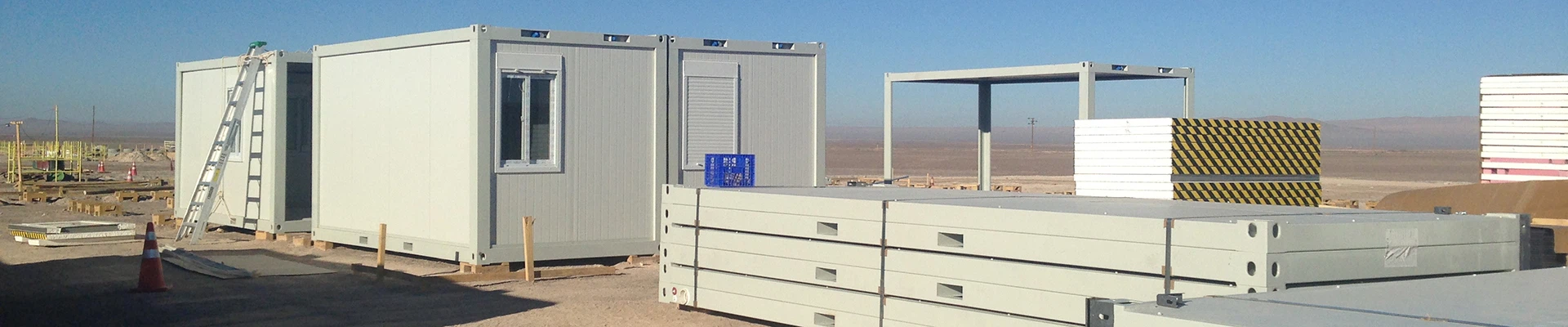


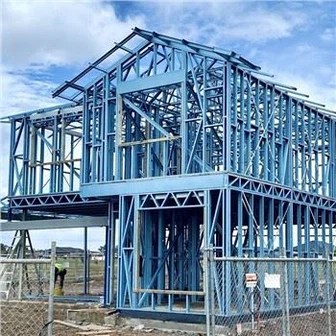
Light Steel Framed Townhouse Development For CBC Global Markets
Apply: CBC Integrated Solutions
Reference Project Location: Puerto Natales, Southern Chile
Total Units: 24 (Two rows of 12 units, Z-shaped layout)
Unit Dimensions: 9.35 m (W) × 7.6 m (D) × ~6.2 m (H)
Design Life: ≥50 years
Primary Structural Material: Cold-formed thin-walled C-sections: 140×41×39×11 mm @ 0.75 mm thick, G550 AZ150
Design & Fabrication Platform: FrameCAD (New Zealand)
Product Introduction
Light steel studs: Cold-formed thin-walled C-section with dimensions 140×41×39×11 mm (depth × flange width × lip height × return bend) and 0.75 mm thickness
CBC's primary markets: Chile, Peru, Philippines, Papua New Guinea, Tonga, Indonesia
The structural rationale, material take-offs, and market adaptability analysis.
Technical Design & Structural Analysis Report: Light Steel Framed Townhouse Development for CBC Global Markets
Apply: CBC Integrated Solutions
Reference Project Location: Puerto Natales, Southern Chile
Total Units: 24 (Two rows of 12 units, Z-shaped layout)
Unit Dimensions: 9.35 m (W) × 7.6 m (D) × ~6.2 m (H)
Design Life: ≥50 years
Primary Structural Material: Cold-formed thin-walled C-sections: 140×41×39×11 mm @ 0.75 mm thick, G550 AZ150
Design & Fabrication Platform: FrameCAD (New Zealand)
Date: January 26, 2026

Q1: What is the updated structural system based on the specified C-section profile?
A1:
The main load-bearing elements use cold-formed thin-walled C-studs with geometric dimensions 140 mm web depth × 41 mm flange × 39 mm lip × 11 mm return, fabricated from 0.75 mm thick G550 AZ150 steel. This profile-commonly denoted as C14041 with deep lips-offers enhanced buckling resistance and screw-holding capacity despite the reduced thickness.
Key structural components:
Wall studs: C14041 @ 0.75 mm, spaced at 600 mm o.c.
Floor joists: Same C14041 section, but doubled or spaced at 400 mm o.c. to meet deflection criteria (L/360)
Roof rafters: C14041 @ 600 mm o.c. for mono-pitch roof (5° slope)
Top/bottom tracks: U142×40×0.75 mm
Lateral stability: Provided by 12 mm OSB-3 sheathing acting as shear diaphragm, combined with continuous tie-down straps at corners
Although 0.75 mm is thinner than typical residential LSF (which often uses 0.95–1.2 mm), the deep lip (39 mm) and high-strength G550 steel compensate structurally. FrameCAD software validates member capacities per AISI S100-2020 and local codes.

Q2: Is 0.75 mm G550 AZ150 sufficient for a 50-year service life in harsh climates like southern Chile?
A2:
Yes-with proper detailing. While 0.75 mm is at the lower end for multi-story construction, the AZ150 coating (150 g/m² Al-Zn alloy) provides excellent corrosion protection, especially when:
Steel is fully enclosed within wall cavities (protected from direct weather)
Vapor-permeable but water-resistant barriers are installed on the exterior
No thermal bridges expose steel to condensation
In Puerto Natales' cold, wet, marine environment, this system remains viable if moisture management is prioritized. However, for high-exposure zones (e.g., coastal splash zones), critical connections may be upgraded to 1.0 mm thickness.
FrameCAD's corrosion module confirms 50+ year durability under ISO 9223 C4 classification (moderate-to-high corrosion risk).
Q3: How does the revised C14041 @ 0.75 mm affect material quantities and performance?
A3:
Compared to 1.0–1.2 mm systems, the 0.75 mm profile reduces steel weight by ~25%, lowering cost and transport emissions-but requires denser bracing and careful deflection control.
Updated Material Take-off (Per Unit)
|
Item |
Specification |
Quantity per Unit |
Total (24 Units) |
|
G550 AZ150 C14041 Steel (0.75 mm) |
Studs, joists, rafters, tracks |
~3,250 kg |
78,000 kg |
|
OSB-3 Sheathing (12 mm) |
Walls + Roof |
274 m² |
6,576 m² |
|
PU Metal Embossed Panels (27 mm) |
Exterior cladding |
210 m² |
5,040 m² |
|
Cement Fiber Board (18 mm) |
Floor decking |
71 m² |
1,704 m² |
|
0.6 mm Colorsteel Roofing |
Prepainted AZ150 |
80 m² |
1,920 m² |
|
Mineral Wool Insulation |
50 mm wall + 25 mm floor |
365 m² |
8,760 m² |
|
Vapor/Air Barrier |
Class II membrane |
274 m² |
6,576 m² |
Note: Floor joists may require supplemental bridging or reduced spacing to limit live-load deflection (<10 mm).

Q4: What are the key project advantages of this optimized light-gauge system?
A4:
Cost Efficiency: Lower steel tonnage reduces material and shipping costs-critical for remote markets.
Speed: FrameCAD enables full BIM-to-factory automation; wall panels assembled off-site in <48 hours.
Sustainability: High recycled content (>30%) in G550 steel; lightweight = lower carbon footprint.
Thermal Performance: PU panels + cavity insulation achieve U-value ≈ 0.21 W/m²K (walls), exceeding Chilean Zone 5 requirements.
Disaster Resilience: Performs well in seismic events (ductile) and resists rot/insects-unlike timber.
Q5: How applicable is this design across CBC's core markets, and what modifications are needed per region?
A5:
CBC operates in diverse climatic, seismic, and regulatory environments. Below is a market-specific adaptation matrix:
|
Market |
Climate & Risk Profile |
Required Modifications |
Rationale |
|
Chile (Southern) |
Cold, wet, seismic (Zone 3–4), wind |
- (Baseline design) |
Already optimized for low temp, rain, and earthquakes |
|
Peru (Coastal & Andean) |
Arid coast / cold highlands; seismic (Zone 3) |
• Increase roof slope to 10° in highlands |
Prevent snow accumulation (Andes); meet Peruvian seismic code |
|
Philippines |
Tropical, typhoon-prone, high humidity, seismic |
• Upgrade fasteners to stainless steel |
Typhoons (≥200 km/h winds); salt spray; termite risk |
|
Papua New Guinea |
Equatorial rainforest, high rainfall, seismic, informal settlements |
• Elevate floor on piers (min. 600 mm) |
Flood avoidance; mold prevention; limited grid access |
|
Tonga |
Small island, cyclonic (Cat 4–5), saline air, limited logistics |
• Use AZ200 coating minimum |
Extreme wind uplift; corrosion; transport constraints |
|
Indonesia (Java, Sumatra, Papua) |
Tropical, seismic, volcanic, high humidity |
• Fire-rated gypsum in kitchens |
Earthquake resilience; biological degradation; unstable ground |
Universal Adaptations for All Markets:
Local Code Compliance: FrameCAD libraries can be updated with national standards (e.g., NSCP for Philippines, SNI for Indonesia).
Labor Skill Level: Provide CBC-certified assembly training-LSF requires less skilled labor than concrete.
Supply Chain: Pre-kit all components in CBC's manufacture or regional hubs (e.g., Manila, Lima) to ensure quality.

Conclusion
The design-using 0.75 mm G550 AZ150 C14041 cold-formed sections-delivers an optimized balance of cost, speed, and durability for CBC's portfolio across Latin America and the Asia-Pacific. While suitable as-is for southern Chile, targeted enhancements (coating upgrades, wind/seismic detailing, foundation strategies) enable seamless deployment in Peru's mountains, the Philippines' typhoon belt, or Tonga's cyclone zones.
By leveraging FrameCAD's parametric design engine and CBC's integrated supply chain, this system offers a globally scalable, climate-responsive housing solution-ideal for affordable, resilient, and rapidly deployable urban or rural development.
You Might Also Like



Send Inquiry
