CBC Building Systems: A Catalyst For Iran's Post-War Reconstruction
CBC Building Systems: A Catalyst for Iran's Post-War Reconstruction

Iran's post-war reconstruction faces unprecedented challenges: a urgent housing shortage (over 101,000 homes damaged across 24 provinces in one month, with 33,000 in Tehran alone), a seismically active landscape, extreme climate conditions, constrained funding, and a need for rapid deployment. CBC's modular container housing, light steel villas, and prefabricated steel structures offer tailored solutions that address these pain points while aligning with Iran's reconstruction priorities. This analysis evaluates their technical, economic, and strategic value across key dimensions.
1. Context: Iran's Reconstruction Imperatives
1.1 Geographic & Climate Risks
Iran's terrain is defined by the "Zagros and Alborz mountain ranges" and a predominantly arid/semi-arid climate. Key challenges include:
- Seismic hazard: Located on the Arabian-Eurasian plate boundary, Iran experiences frequent earthquakes (e.g., 1968 7.3M, 1978 7.8M), with the Iranian Seismic Design Code No. 2800 mandating strict lateral load resistance.
- Extreme weather: Summer temperatures exceed 40°C in southern regions (e.g., Khuzestan), while northwest winters bring subfreezing temperatures and heavy snow. Dust storms and high winds (up to 120 km/h in Sistan) exacerbate material degradation.
- Water scarcity: Most regions receive <200mm annual rainfall, demanding water-efficient construction.
1.2 Reconstruction Constraints
- Housing demand: 70,000+ units require full reconstruction, with 40 trillion tomans ($8.4B) estimated for housing losses alone.
- Funding limitations: Sanctions have frozen $100–120B in overseas assets, with oil export revenue (52% of government income) reduced to 100–160 kbbl/day. Reconstruction costs are projected at $200–250B over 7–10 years.
- Speed imperative: Humanitarian crises require immediate shelter, while industrial/commercial recovery demands timely infrastructure restoration.

2. CBC Solutions: Technical & Operational Alignment
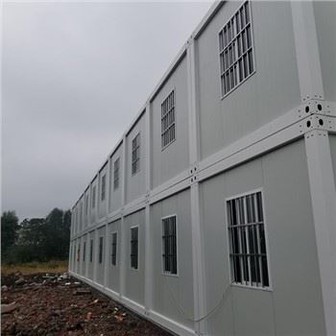
2.1 Container Housing: Rapid Emergency Shelter
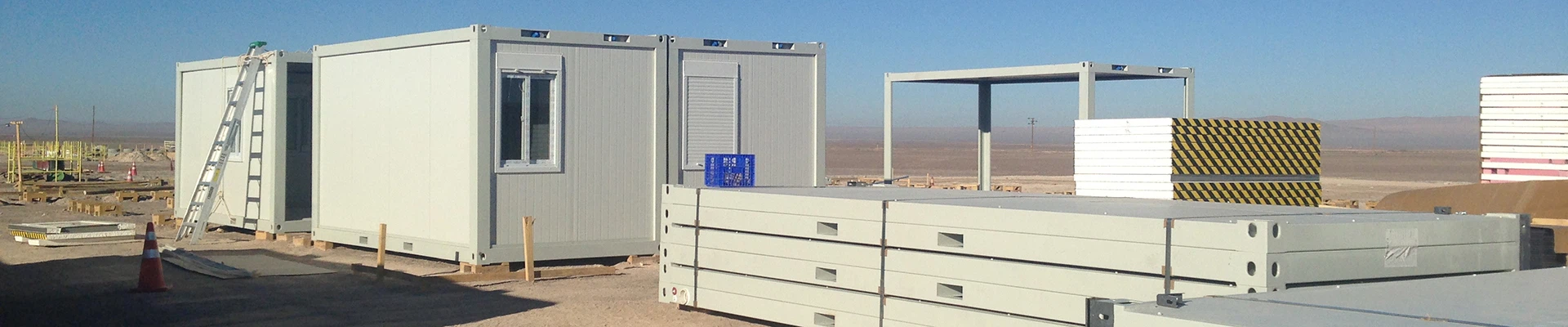
CBC's flat-pack container housing is engineered for "fast deployment" and climate resilience:
| Feature | Specification | Iran Reconstruction Value |
|---------|---------------|---------------------------|
| Setup Time | 2–4 hours per unit (factory-prefabricated) | Addresses urgent shelter needs for 1869 displaced families in Tehran |
| Structural Rating | Seismic Grade 8, Wind Load 120 km/h | Complies with Iran's strict seismic code (No. 2800) |
| Insulation| 70mm PU foam core (thermal conductivity 0.018–0.04 W/m·K) | Mitigates extreme temperature swings; reduces HVAC energy use by 30% |
| Modularity | Stackable up to 3 floors, horizontal combination | Scales to villages, camps, or dense urban sites (e.g., Tehran's 33,000 damaged units) |
| Transport | Flat-pack design: 40HQ container holds 8 units | Cuts logistics costs by 30–40% vs. on-site construction |
| Lifespan | 15–30 years (with galvanized steel & corrosion protection) | Transitions from temporary to permanent use (e.g., student housing, worker camps) |
Application: Ideal for emergency shelters, medical clinics, and temporary schools.
2.2 Light Steel Villas: Sustainable Permanent Housing
CBC's light gauge steel (LGS) villas leverage "high strength-to-weight ratio" and prefabrication to address long-term housing demand:
| Advantage | Technical Detail | Iran Relevance |
|-----------|----------------|---------------|
| Seismic Performance | Cold-formed C-sections, rigid frame design | Outperforms traditional masonry; reduces collapse risk in seismically active zones |
| Construction Speed | 30–40% faster than concrete (2–3 months per unit) | Accelerates delivery for 70,000+ reconstruction units |
| Energy Efficiency | 65% lower energy use via insulation & airtightness | Aligns with Iran's water scarcity goals; reduces cooling/heating loads |
| Space Efficiency | 5–13% more usable area (thinner walls) | Maximizes land use in dense urban areas (e.g., Tehran) |
| Durability | 50+ year lifespan with galvanized steel & corrosion protection | Low maintenance costs critical to constrained funding |
| Sustainability | 90% material recyclability, minimal on-site waste | Meets global green building standards; reduces carbon footprint |
Application: Suited for permanent residential communities, affordable housing projects, and rural reconstruction. CBC's FrameCAD system ensures precision design, complying with Iran's National Building Regulations (NBRI).

2.3 Steel Industrial/Commercial Structures: Economic Recovery
CBC's prefabricated steel buildings deliver "scalability and cost efficiency" for Iran's industrial and commercial rebound:
- Industrial Facilities: Warehouses, factories, and power plants (e.g., refineries in Khuzestan) benefit from:
- Load capacity: Customizable to handle heavy machinery (up to 50 kN/m²).
- Corrosion resistance: Hot-dip galvanization (80μm+ coating) withstands salt spray and dust.
- Speed: 50% faster erection than concrete; critical for restoring energy and manufacturing sectors.
- Commercial Spaces: Shopping centers, offices, and hotels require:
- Flexibility: Open floor plans adaptable to evolving market needs.
- Aesthetics: Custom cladding and insulation to meet local design standards.
- Compliance: Full alignment with NBRI's fire safety (e.g., 2-hour fire rating) and seismic requirements.
Strategic Value: Supports Iran's goal to rebuild critical infrastructure, attract foreign investment, and restore economic activity-key to long-term stability.
3. Economic & Financial Viability
3.1 Cost-Benefit Analysis
| Metric | Container Housing | Light Steel Villa | Steel Commercial/Industrial |
|--------|-------------------|-------------------|-------------------------------|
| Initial Cost | $150–$250/m² (lower than concrete for small units) | $180–$300/m² (competitive vs. masonry) | $50–$180/m² (50% lower than traditional steel) |
| Lifecycle Cost | 30% lower maintenance; 100% recyclable | 65% energy savings; 50-year lifespan | 20% lower operational costs; 70% material recyclability |
| ROI Timeline | 2–3 years (emergency use) | 5–7 years (permanent housing) | 3–5 years (industrial/commercial) |
| Funding Fit | Aligns with $600M+ in temporary housing loans | Qualifies for $200–300B in reconstruction funding | Attracts oil revenue-backed investments |
3.2 Sanctions & Logistics Mitigation
- Local Sourcing: CBC can partner with Iranian steel mills to source Q355 galvanized steel, reducing import costs and compliance risks.
- Modular Supply Chains: Flat-pack containers minimize transportation costs (40% lower than conventional materials), critical amid sanctions.
- Currency Flexibility: Accepts local currency (toman) payments via Iran's CIPS system, reducing hard currency dependency.

4. Strategic & Social Impact
4.1 Humanitarian Response
CBC's container housing directly addresses Iran's immediate shelter crisis:
- Scalability: Deploy 10,000+ units in 3 months to cover 10% of Tehran's damaged housing stock.
- Community Integration: Combine units into villages with shared amenities (water, sanitation, clinics), supporting UNHCR's refugee aid goals.
- Capacity Building: Train local workers in modular assembly, creating jobs and transferring technical skills.
4.2 Economic Diversification
- Industrial Revival: Steel factories and warehouses will restart production, creating 50,000+ jobs in manufacturing and logistics.
- Tourism & Services: Light steel villas and commercial structures will boost hospitality and retail sectors, reducing reliance on oil.
- Export Potential: CBC's modular systems can be exported to neighboring countries (Iraq, Afghanistan) with similar reconstruction needs, generating foreign exchange.
4.3 Environmental Sustainability
- Carbon Reduction: Prefabrication cuts on-site emissions by 60% vs. traditional construction.
- Water Conservation: Low-flow plumbing and drought-resistant landscaping reduce water use by 40%.
- Waste Minimization: 95% of materials are reused or recycled, aligning with Iran's 2030 sustainability targets.

5. Implementation Roadmap
5.1 Phased Deployment
1. Emergency Phase (0–6 months): Deploy 50,000+ container units to displaced families; establish 10 modular assembly hubs in Tehran, Isfahan, and Khuzestan.
2. Reconstruction Phase (6–36 months): Scale to 200,000 light steel villas; build 50+ industrial/ commercial steel structures (e.g., power plants, hospitals).
3. Sustainable Phase (3–10 years): Develop 10+ green residential communities; export modular systems to regional markets.
5.2 Compliance & Localization
- Code Alignment: Design all projects to meet Iran's "NBRI" and "Seismic Code No. 2800", with third-party certification.
- Local Partnerships: Collaborate with Iranian contractors, suppliers, and government bodies to ensure regulatory compliance and cultural sensitivity.
- Quality Control: Implement CBC's global quality standards (ISO 9001) with local inspections to meet international benchmarks.

6. Conclusion
CBC's modular container housing, light steel villas, and prefabricated steel structures are uniquely positioned to accelerate Iran's post-war reconstruction. By addressing the critical challenges of "speed, seismic resilience, climate adaptability, and constrained funding", these solutions deliver tangible economic, social, and environmental value.
The path forward requires:
1. Public-Private Partnerships: Collaborate with Iran's Ministry of Housing, Oil Ministry, and international donors to unlock funding.
2. Local Manufacturing: Establish joint ventures to produce steel components in Iran, reducing costs and supply chain risks.
3. Knowledge Transfer: Train local engineers and workers in modular construction, building self-sufficiency for future projects.
With its proven track record in global markets (Chile, Philippines, PNG), CBC is well-equipped to partner with Iran in rebuilding stronger, more resilient communities-laying the foundation for a sustainable and prosperous future.